

Dressed in a tuxedo-dapper but slightly self-conscious-Kevin Fox took his place at the wedding altar inside Holy Name Cathedral, awestruck by the majesty that surrounded him: the light slanting through the stained glass windows, the arches soaring up to gilt ceilings, the bas-relief of Abraham offering to sacrifice his child. A self-described small-town boy from Wilmington, Illinois, he was there to act as best man for his older brother, Chad. But if he felt out of place as the ceremony began, his discomfort melted at the sight of his two children now making their way down the aisle.
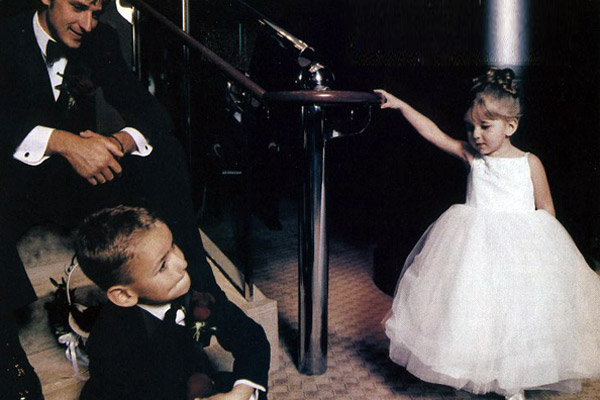
Tyler, the six-year-old spitting image of his dad, bore the ring; beside him toddled Tyler's three-year-old sister, Riley. Her hair a tiara of chestnut curls, she wore a snow-white "princess" dress, a gossamer confection of satin and lace over white satin slippers. Reaching into a tiny white basket, she doled red rose petals along the aisle like a pixie spreading fairy dust.
The ceremony's original choreography called for Riley to turn right at the front of the aisle and join her mother's pew. Instead, she marched up the marble stairs and past the groom. With a huge smile on her face, she headed straight to her daddy, who scooped her up into his arms. As Kevin and countless others in the sanctuary laughed with delight, he returned her to her mother, who shook her head with resignation and took the girl to the pew.
A few hours later, at a reception at the Park Hyatt, Kevin drew on the moment as he stood to toast his brother, Chad, and Chad's new wife, Stacy. "Throughout my life, I've always followed in your footsteps," Kevin said. "I tagged around when we were in high school. I made you drive me around when you got your license. I pledged the same fraternity. But now that I have a wonderful wife, and the two most beautiful children in the world, you get to finally follow me and make a family. It's your turn to follow in my footsteps."
Chad hugged Kevin as the room burst into applause. The band broke into song. The extended Fox family danced the night away, though before too long Riley and Tyler had curled up under a table and fallen sound asleep. A picture of the children would make its way into Chad's wedding album, a cherished memento of a perfect day.
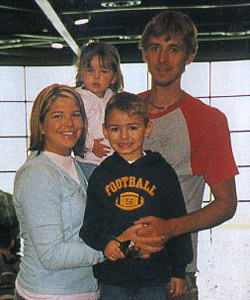
The image was almost as precious, in fact, as the photo a few pages later of Chad, Stacy, Kevin, Melissa, Tyler, and Riley smiling back at the camera in their wedding formalwear. At the time, it seemed like a happy though standard family portrait. In fact, it would be the last photo of all of them together, taken as it was just two weeks before the little girl would be found floating face-down in a creek.
Five months later, a gallery of stunned observers packed the hearing at the Will County Courthouse in Joliet. The collection of friends, family, reporters, and onlookers watched as Kevin Fox, red-eyed and shell-shocked, shuffled into the courtroom. He wore a red jump suit and was shackled at the legs and hands. Already, the shocking news had been splashed across the front of every local newspaper-Fox was being charged with an unspeakable crime, murdering his three-year-old daughter.
The state's attorney, a heavyset man named Jeffery Tomczak, swept into the room, shaking hands and nodding toward a line of police officers who stood stone-faced and imposing near a cadre of assistant prosecutors arrayed around the prosecution table. After the bailiff called the court to order, Tomczak laid out what he called cold, hard evidence of the father's guilt, including a confession. "He admitted duct-taping the child's mouth. He admitted placing her on the bank of the river, under the water. He admitted placing his finger in the vagina of the child. . . . He then went home and slept," the prosecutor said.
Tomczak added other details: The girl had been placed in the water while she was still "alive and moving and kicking." As if the image wasn't terrible enough, he said, she had been "able to remove the duct tape from her wrists prior to succumbing to drowning in the water."
At one point an assistant interrupted the presentation by bursting into the courtroom and thrusting a document into Tomczak's hand. "I've just been handed our certificate of intent to seek the death penalty in this case," the prosecutor declared. "I'm asking leave to file same." Tomczak wrapped up the hearing by asking for a $25-million bond, a request that drew gasps from the gallery.
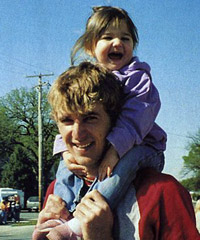
To the people who knew Kevin Fox, the hearing seemed unreal. The Kevin Fox they knew was a wonderful father, devoted to his wife and son and daughter. His little girl had seemed to hold a special place in his heart. If you saw Kevin, you most likely saw Riley, on his shoulders or carrying their fishing poles down to the lake together. To his family, the event seemed staged, a dog-and-pony show orchestrated by Tomczak. To those who didn't know Kevin Fox, the hearing seemed to offer a shocking solution to a terrible crime . . . the cops, the judge, the seeming confidence of the state's attorney, and, most of all, the confession. Who would admit to such horrible things if he hadn't really done them?
Yet, despite the overwhelming implication of guilt produced by the hearing, a number of troubling questions lurked within the prosecutor's case. How solid was the evidence? What about DNA testing? And what were the circumstances of the "confession"? The timing of the charges also seemed curious, coming just six days before a tight election for state's attorney between Tomczak, the incumbent, and a bitter rival, James Glasgow. What's more, Tomczak's father, Donald, second-in-command at the City of Chicago's water department, had just been named in a federal indictment for corruption.
As if in anticipation of unavoidable criticism, Tomczak had earlier stopped at the defense table where Kevin Fox's attorney, Kathleen Zellner, was seated. "This isn't political," he said. "We'll see," the defense attorney shot back.
The murder of Riley Fox has since turned into a mystery extraordinary for reasons beyond the heartbreaking death of a little girl. The case has set in motion a series of events that bitterly divided what had been a neighborly town; cast a shadow of suspicion over a tight-knit, well-respected family; and raised questions about whether justice was forsaken for personal and political ambitions.
Kevin Fox was eventually released, and the case against him was dismissed. The murder of his daughter remains unsolved. The aftershocks of his arrest, however, reverberate in the form of a lawsuit he and his wife have brought against Will County authorities. The complaint accuses them of conducting a sloppy investigation that, from the start, focused almost exclusively on Kevin Fox and ignored any evidence that might have cast doubt on his guilt. The interrogation and arrest of Fox, the suit alleges, was part of a last-ditch effort by Tomczak to win re-election.
Tomczak did not return calls requesting an interview, but in court pleadings he has denied any wrongdoing, including any suggestion that Kevin Fox's arrest was related to his re-election campaign. "Any charges of politics are baseless," Tomczak said in a statement the day after Fox's arrest. The Will County Sheriff's Office defends its detectives' handling of the case, including the 14 1/2-hour interrogation that led to Fox's confession. "We were not happy about [Fox's release]," says Pat Barry, spokesman for the Will County Sheriff's Office. "I'm not saying he shouldn't have been . . . but we firmly believe, and the sheriff firmly believes, that [the detectives] did a good job . . . and we stand behind them."
Virtually none of the principals involved in the case has gone untouched. The original detectives on the murder have been reassigned, the former state's attorney is now in private practice, and the little town where it occurred has suffered a loss of innocence, as well as wounds to its pride that may take years to heal.
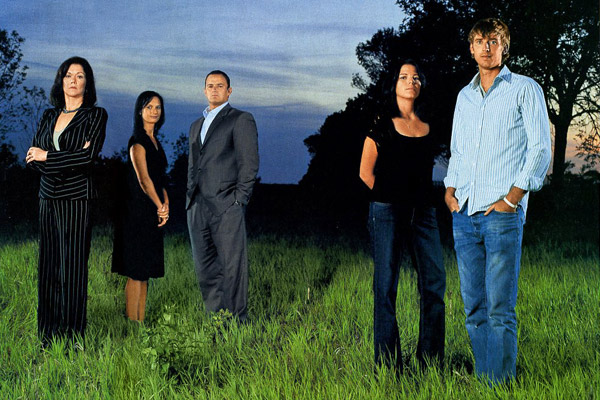
Until now, the Foxes have remained silent about their ordeal. They agreed to tell their story to Chicago, they say, in hopes of calling attention to the injustices they believe they have suffered and to breathe new life into an investigation that, even authorities admit, has not yielded any promising leads for months. Meanwhile, the members of Kevin's family hold firm to their unwavering belief in the man who they say became, like his murdered daughter, a victim.
The Murder
Wilmington, Illinois, just south of Joliet, stands amid the vast cornfields and high grass prairies of the Kankakee River valley, a little more than 50 miles southwest of Chicago. Its 4.2 square miles occupy a rural stretch of old Route 66 (now Route 53) and offer the picture-perfect icons of Midwestern America. A faded water tower bearing the words "Wilmington Wildcats" overlooks Main Street, and a collection of modest ranch homes, ornamented with basketball courts and large American flags, lie sprinkled along the tree-lined streets. There's a bowling alley and a post office and a small movie house. As often as not, the town's dozen full-time police officers are looked on less as faceless authorities than as neighbors and friends and former high-school classmates.
The Fox family had called Wilmington home for generations. Like their father before them, Kevin and his older brother, Chad, were born here, rode their bikes here, fished here and graduated from the town's only high school. While Chad talked about leaving for the big city, Kevin couldn't imagine living anywhere else. It was here, after all, that the lanky, blond, gentle-natured teenager had met a pretty, impetuous girl named Melissa Rossi, who eventually became his wife. The Rossi family had moved to Wilmington when Melissa was in the third grade. Her father, an avid fisherman, had learned he had cancer, and he wanted to spend what time he had left in a peaceful place along a river, she says. Melissa first saw Kevin at a high-school volleyball game. Sensing his shyness, she took matters into her own hands. "That night she asked me to her homecoming," Kevin recalls with a laugh. "I guess we were going out on a limb, but it turned out she was the one."
The relationship evolved quickly and, just after Kevin started college at Illinois State University, Melissa, then 18, became pregnant with Tyler. Kevin, 20, was overwhelmed by the sudden turn of events, and the two broke up for a short period. "We were still young, so it was scary," Kevin says. But Kevin knew he was meant to be with Melissa. And he realized he needed to take responsibility for his child. He quit school and the two moved in together. Three years later, in 2000, with Kevin having found work as a union painter and Melissa as a waitress, the two were married.
For all his initial trepidation, Kevin took to fatherhood in a way that surprised even his closest family. "He is an amazing dad, I tell you what," says his mother, Dawn. "He changed more diapers and fed and bathed the kids way more than the average father."
A year after their marriage, they added a daughter to the family-an apple-cheeked princess with a pile of light brown hair. She quickly became known around town as the precocious little girl who loved Dora the Explorer, the kind of child who insisted on picking out her own flower girl dress-only after pliés and curtsies in front of a mirror. She adored her father. "They did everything together," recalls Curt Fox, Kevin's dad. Kevin even attached a cart to his bicycle, and Riley quickly adopted it as her favorite mode of travel. "If you saw one, generally the other was right behind," Curt Fox says.
The parents' doting nature meant that Riley and Tyler rarely strayed far from their sight. Only once, in fact, had the little girl wandered away from the small ranch house-that time, to play with a friend. Which made what happened even more mysterious and frightening.
The weekend of June 5 and 6, 2004, Melissa Fox left Wilmington to participate in a breast cancer walk in Chicago. That Saturday night, she stayed at a campsite with friends in Skokie. It was one of the first times she had spent the night away from the kids, but for her, it was a worthy venture-a way to honor her late father.
That night, Kevin drove to Chicago, too, to attend a concert with a friend and one of Melissa's brothers. He left Tyler and Riley with Melissa's mother, Sandy Rossi. According to a statement he later gave police, he picked the kids up and drove them home at around 1 a.m. Then, too tired to make up their beds, he laid them down in the living room-Riley on the couch and Tyler on a chair with a footstool. He locked the front door and retired to his room. Unable to sleep at first, he watched some TV, snacked, then went to bed around 2:30, turning on a fan against the hot night in the un-air-conditioned house. He planned to drive the kids to Chicago in the morning to catch Melissa at the finish line.
A little before eight in the morning, however, Tyler came into Kevin's room. "Riley's gone," the boy said. Trying not to panic, Kevin searched the house. He immediately noticed that the front door and screen were ajar. He then ran next door, where Riley's best friend lived. No sign of her. He called Wilmington police, but not wanting to raise an alarm prematurely, he would later explain, he decided to call the nonemergency line-a choice that was later questioned. He says the police told him he was right not to panic, that "in a lot of cases a child wanders off, and they can't find them at first." Even so, as time passed and word spread that Riley Fox was missing, a search was mounted. In less than an hour, it seemed the whole town had turned out. Kevin told police that Riley was wearing a white T-shirt with a pink flamingo on it and pink capri pants.
Melissa got the word when she called Kevin to arrange to meet the family at the finish line. "He was crying," she recalls. "He said, ‘I can't find Riley.' I said, ‘What are you talking about?'" Within minutes, Melissa and a friend were barreling down Interstate 55. As she neared Wilmington, Melissa felt a chill. "For some reason," she says, "I had this terrible feeling that I was never going to see her again."
By now, hundreds of townsfolk were clawing through brush and woods. "They'd come back with their legs scratched up and bleeding," recalls Kevin. As the day wore on, local merchants pitched in with food and pop. Television satellite trucks roared into town, deploying their parabolic dishes and disgorging reporters. By the afternoon, more than 500 people were scouring the area, some on horseback, others on bicycles or all-terrain vehicles. At one point, Chad received a call from a friend watching the Cubs game. An Amber alert for Riley Fox had flashed on the scoreboard. "Isn't that your niece?" the friend asked.
Suddenly, at about three that afternoon, police jumped in their cars and sped off. Bewildered and frightened, Kevin and Melissa prayed that the sudden departure was less ominous than it looked.
About a mile away as the crow flies, a Wilmington mother and daughter had decided to search Forsythe Woods, a sprawling forest preserve with dense growth cut by a tributary of the Kankakee River called Forked Creek. The elder woman had just made her way to the edge of the creek when she noticed something that looked to her like a plastic bag. She screamed when she realized what she had found.
A Wilmington crime scene investigator arrived within minutes. In the cold, shallow, murky water of Forked Creek, Riley's body floated, face-down. She wore a flamingo decorated T-shirt, dirtied now by mud and silt. Gone were any underwear and capri pants. An autopsy would later reveal that the girl had been sexually abused and probably died from drowning. Her mouth had been covered with duct tape, and adhesive residue on her arms led authorities to surmise she had been bound. The medical examiner also noted light bruising on Riley's head. "Rape kits"-samples of DNA collected from Riley's body-were sent to the Illinois State Police crime lab for analysis. A preliminary report indicated no signs of foreign DNA-with one possible exception: a test for saliva in her vagina came back "inconclusive."
Three miles away, a Wilmington police cruiser returned to Kevin and Melissa's house. "We need you to come to the police station," an officer told them.
"What's happened?" Melissa recalls asking, still holding out hope that their daughter was alive. Police would reveal nothing.
At the small brick and concrete station, just off Main Street, police put Kevin in one room and Melissa in another. "They made me sit in a room for 45 minutes," Melissa says, still furious at the memory. "I kept saying, ‘What's going on? Why can't I see my husband!'" Finally they were brought out into a waiting room, where Curt, Dawn, Chad, and Stacy had already gathered.
Melissa knew by their faces that the news was grim. But when she looked for confirmation from two detectives who stood in the room-including Todd Lyons, a burly, bald Wilmington investigator to whom Kevin had delivered papers when he was a boy-they "just stared at us," she says.
"Where is she?" Melissa asked.
"They found her at Forsythe Woods," Curt answered in a broken voice. "She didn't make it."
Kevin began to pound the walls. He turned to Lyons, incredulous that the detective hadn't told him earlier. "Todd, what the hell! Are you kidding me?" The detective shook his head. Kevin's knees buckled. Melissa begged her husband, "Please hold me, hold me."
Today, Chad fumes that his brother was not told earlier. "What kind of Cracker-Jack-box cops don't have the decency to tell the parents of a murdered little girl that their daughter is dead?" he asks.
In hindsight, the couple believe that either the police "were just completely overwhelmed by the fact that there was a murder in Wilmington and they had no idea what to do," Melissa says, "-or they were watching to see how we would react." (Lyons did not return calls seeking comment.)
In fact, the case was already out of their hands. Will County sheriff's detectives had taken charge, assuming jurisdiction because the crime scene was in a forest preserve.
To accommodate the expected crowds, Riley's viewing, five days after the murder, was held at the town's largest church, St. Rose Catholic. The girl's body lay in a small polished white casket with stainless steel handles. She was wearing the same "princess dress" she had picked out and worn as a flower girl in Chad and Stacy's wedding. For hours, Kevin and Melissa shook hands and gave hugs, receiving mourners until they could barely stand.
More than 6,000 people attended the wake-nearly 1,000 more than the entire population of Wilmington. Hundreds more turned out the next day for the funeral, many wearing pink ribbons and ties and butterfly pins. A steady drizzle fell, while inside, mourners wept to a slide-show collage set to the songs "My Girl" and Sarah McLachlan's "Angel." "Let the little children come to me," said the Rev. Mark M. Strothmann, pastor of the First Presbyterian Church of Wilmington, quoting Mark 10:14. "For it is to such as these the kingdom of God belongs."
Among those in attendance, unobtrusive but noticeable, were two men holding video cameras. Their lenses, the family later learned, were trained not on the ceremony, or the casket, but on the mourners, including Kevin Fox. The men, the family learned, were Will County detectives.
The Investigation
In the weeks that followed, Melissa and Kevin found the investigators to be supportive, even friendly. One detective, Scott Swearengen, played toss with Tyler and often dropped by for coffee at Curt and Dawn's house, where Kevin and Melissa had moved after Riley's murder. He would eventually become such a fixture that the family would refer to him simply as "Scott."
From his Joliet offices, Will County State's Attorney Jeffery Tomczak kept close tabs on the investigation's progress. If charges were to be filed, he would be the one to bring them. Tomczak, 44 at the time, had earned his law degree in Chicago, but settled in Will County with his wife, who today is a judge there. A father of two, he made a failed run for Congress in 1994, but in the 2000 race for Will County state's attorney, the Republican Tomczak beat the incumbent Democrat, James Glasgow.
Bad blood had existed between the men for years. The two had clashed on nearly everything, from elections to court cases to ethical conduct. Everything about the men, even their appearance, seemed at odds. Tomczak was bulky with thinning hair. Glasgow was trim with a blow-dried pompadour of silver. In that summer of Riley's disappearance, the men were again locked in a tight race against each other in a campaign that, the Chicago Tribune said, "was bound to get ugly" given the men's history.
Kevin Fox and his family paid little attention to the politics of the race. But as the summer wore on, they came to believe that the investigation was dragging. "We felt we could never get an answer on the progress of the case," Kevin says. "We'd ask, but they'd always say something like ‘We can't really discuss it.'" More often than not, the detectives would instead question Kevin and Melissa.
On one level, the couple could understand that the authorities might hold them-or at least Kevin-under suspicion. With the death of a child under these circumstances, the police look first to the family. Kevin, after all, had been the last person known to have seen Riley alive. But the parents believed they had cooperated in every way possible, including providing DNA samples, consenting to searches, and answering questions.
Other family members were less comfortable. They urged Kevin to hire an attorney. But after briefly talking to one lawyer, Kevin dismissed the idea. "I felt like I had nothing to hide," he says, and he worried that hiring an attorney might make him look guilty. Most important, Kevin says, he trusted the detectives' motives. "I was raised with the idea that authorities were good people and that they should be respected."
In late June, Kevin and Melissa consented to letting the authorities question Tyler. After all, the boy could be crucial in helping the parents find their daughter's killer. A videotape captured the session, conducted by a forensic interviewer named Mary Jane Pluth, who works for the Will County Children's Advocacy Center. On the tape, her manner suggests a strict schoolteacher. Pluth starts off with basic questions about where Tyler lives and what kind of sports he likes. The boy, who is extremely shy with strangers, answers reluctantly, with head shakes and nods. The questions quickly shift to what Kevin did or didn't do that night. "I don't know," Tyler says. "Did he leave the house?" Tyler shakes his head "no" several times. Once, he nods. Pluth pursues. "What did he do when he left? Did he take Riley somewhere?" she asks. The boy shakes his head. Pluth asks again. "No." "Where did he take Riley? You can tell me," she says. The boy weeps. His little chest heaves and his thin shoulders shake. He claws his sweatshirt hood over his head. At one point, he asks for his "mommy and daddy." Still, Pluth pursues her questioning.
After an hour, the boy draws into a fetal position. His blotchy face shines with tears. He looks away. He struggles to catch his breath between sobs. Finally, after more than an hour of interrogation, Pluth reaches for a box of tissues and thrusts it at Tyler. He shakes his head one final time. No.
By the end he has answered "no" approximately 178 times. He has also, on matters unrelated to the case, been in error in at least 13 instances, according to the Fox suit. The entire time, detective Edward Hayes, who would become the lead detective on the case, watches from the other side of a one-way mirror. His image hovers ghostlike in the frame. (Pluth did not return calls or an e-mail message.)
Later that same afternoon, detective Michael Guilfoyle took Tyler to the Fox family's home. This time there were no cameras or tape recorders. Instead, Guilfoyle later wrote up a summary of the interview. According to that report, Tyler became much more specific and descriptive. He recalled that his father "took Riley somewhere" during the night. When pressed, however, the boy seemed less sure. Guilfoyle reported that Tyler claimed he stood in the kitchen and saw his father using the clothes dryer after he returned. (A water usage report from that night suggests that the washing machine did not run.) By Guilfoyle's account, the boy also said things that seem to contradict known facts-that Kevin had dressed Riley in pajamas, for instance.
Until the night of Kevin's long interrogation several months later, authorities never told him and Melissa what Tyler allegedly had said. Guilfoyle's report did not surface until May, seven months after Kevin had been arrested. His lawyer, Kathleen Zellner, says that when she asked to see the handwritten notes from which the summary was drawn, Will County authorities told her that they were gone.
Also unbeknownst to Kevin and Melissa, the police were pursuing another lead that might point toward Kevin. The Foxes owned a dark blue Ford Escape. A tip came in claiming that video surveillance cameras at the town's Mobil station might have captured a car like that at four in the morning of Riley's disappearance. If the car turned out to be the Fox vehicle, Kevin's alibi that he was asleep all night would be seriously undermined. What's more, investigators would be able to place the car along the route that led to Forsythe Woods, where Riley's body had been found. Will County detectives spent considerable time and effort establishing that other local owners of dark Ford Escapes were not in sight of the video camera that morning. But Zellner, who has viewed a copy of the videotape, says it's too fuzzy to make out a license plate or even to positively identify any vehicle. The authorities have not mentioned the videotape in court, though they did bring it up during the interrogation before Kevin confessed. (Will County investigators refuse comment on the quality of the videotape.)
Around Wilmington, rumors began to swirl that the Foxes were using money donated to a "Riley fund" for extravagant vacations and luxury purchases. Melissa was seen getting a fancy haircut at the mall. She had traded in the Ford Escape for a new car. The couple had gone gambling in Las Vegas. They were vacationing in the Ozarks. Some questioned why a reward had never been offered. On October 11th, a report by Amy Jacobson, the tall blond reporter from Chicago's NBC 5, gave voice to the whispers. A "source," his face hidden behind a black blob, his voice disguised, repeated the rumors in Jacobson's "exclusive" interview. (Today, Jacobson tells Chicago that she later "felt awful" and regretted the report. But because so many people had called with similar observations about the Foxes' spending habits, the station decided it couldn't ignore the rumors.)
The next day, an article and editorial in the local paper, The Free Press Advocate, excoriated Jacobson and NBC 5 and told the family's account: Melissa had traded in the car because she couldn't bear how it reminded her of trips around town with Riley. The Las Vegas trip was to attend a friend's wedding and had been planned and paid for months before Riley's death. The trip to the Ozarks had been for another friend's wedding. And the Fox family had indeed suggested a reward be offered, only to be told by police it was unnecessary.
Nonetheless, the family members were deeply hurt by the TV report, as well as by the realization that people in town were gossiping about them. Chad Fox looked on the rumors as confirmation that Kevin-still not represented by a lawyer-was a suspect, perhaps the only suspect. In early October, Chad, a stockbroker, approached Zellner, who coincidentally worked across the hall from Chad in Naperville. She had been following the case in the media, and she urged Chad to get his brother to talk to her. Kevin again refused. "He kept saying, ‘The DNA will clear me,'" Chad says. "I felt helpless and frustrated."
The Confession
Indeed, by late October of 2004 Kevin was the prime suspect. "Everything that [detectives] had was still pointing to this guy," says Will County Sheriff's spokesman Pat Barry. "There was nothing to eliminate him." Zellner insists that there was exculpatory evidence-in the so-called rape kits with material taken from Riley. But after the initial testing by the state crime lab, with its inconclusive finding on saliva, the DNA had been sent to the FBI lab in Quantico, Virginia, which had a nine-month backlog.
Meanwhile, Tomczak and Glasgow were said to be running neck and neck in the state's attorney's race. A break in the case could well tip the scales. For Tomczak it could also provide a diversion from a new headache that had suddenly surfaced. On October 21st, his father, Donald Tomczak, was arrested on a federal indictment in the Hired Truck scandal in Chicago. Among the allegations was that the father had made illegal contributions to his son's campaign. Glasgow seized on the charges, suggesting his opponent would be soft on crime. The Tribune quickly threw its editorial support to Glasgow, saying on October 22nd that he didn't "carry the burden of doubts about the ethical conduct of his campaign."
On October 25th, a little more than a week before the election, the four detectives working on the Riley Fox murder-Scott Swearengen, John Ruettiger, Michael Guilfoyle, and Edward Hayes-convened at the Will County sheriff's office in Joliet to discuss bringing Kevin in for an interrogation.
Pat Barry insists that Tomczak knew nothing of the meeting, and that, no matter how questionable the timing appears, politics had nothing to do with it. Zellner is skeptical. "For a state's attorney not to know of such a meeting of his detectives in such a high-profile case would be unheard of," she claims. Fox's lawsuit alleges that the meeting was conducted with Tomczak's support and consent.
In preparation for the possible interrogation, the detectives contacted several polygraph experts, including Fred Hunter, a Hinsdale-based examiner with more than 30,000 tests under his belt. None was available. (Hunter says today that even if he had been available, he would have refused to give the test on that occasion because Fox's interrogation had been so lengthy and confrontational.) Ultimately the detectives went with a far less experienced examiner-Richard C. Williams, a Cook County detective who, according to the Fox lawsuit, had conducted only about 90 tests.
On October 26th, Swearengen called Kevin Fox to say, by Kevin's account, that there was news about the case and that the Foxes should come to the police station that night. The timing was less than ideal for the couple. Kevin had been up since 4:30 that morning and had spent much of his day working at a painting job. He'd barely had time to grab a bite to eat all day. Still, he says, "we had waited so long. Months. This was our daughter, our little girl. We wanted to know if they had found out what had happened."
Kevin alerted his parents and Chad, who was immediately wary. "Something didn't feel right," Chad recalls. "I told my mom that they should not answer any questions. And if it became clear that there was no new information they should leave immediately."
The couple held hands as they made their way across the parking lot to the Will County sheriff's office in Joliet at about 7:30 that night. "We felt like we were finally going to find out what had happened," Kevin says. "We put all our faith in them. We thought, This is the night."
They were greeted at the door by Swearengen. He was cordial, they recall, but he also insisted that the two be separated. "I thought it was a little strange," Melissa says. "But Scott said not to worry, that they just needed to ask us a few questions before they told us whatever they wanted to tell us."
They took Kevin into another part of the building. Melissa, meanwhile, was led into a conference room where, Swearengen told her, detective Guilfoyle would be along shortly to ask a few questions. What more can they possibly want to know? she thought. And why did the door lock when he left the room?
Elsewhere in the building, in a small, cramped room with a low ceiling and a one-way mirror about the size of a cereal box, Kevin sat in a corner, facing a group of detectives, including an intense man with strawberry-blond hair and a flushed complexion: Ed Hayes. The questions started out easy, but quickly became pointed. Why did Kevin call the nonemergency line instead of 911 the morning of Riley's disappearance? Why would Tyler say Kevin had walked out during the night with Riley? Did he know his car had been spotted passing the Mobil station at four in the morning?
Kevin says he told the detectives that he didn't call 911 because he didn't want to panic prematurely. As for Tyler, Kevin had no idea his son had made such a statement-it was the first he'd heard of it. Maybe the boy thought Kevin had left when he stepped outside for a quick smoke. And he had no idea how his car wound up on a security tape. Again, this was the first he'd heard of it. When pressed about the car, Kevin recalls, he became exasperated and suggested sarcastically that someone must have snuck into his house, stolen his keys, taken the car, and returned it later. But if Kevin was joking, the police apparently didn't get it. They later portrayed his statement as an attempt to provide a possible alibi.
Kevin says Swearengen's tone changed abruptly. "We think you know more than you're telling us," Kevin says the detective told him. "We think you were involved." Kevin says he was incredulous. "Are you kidding me?" he recalls saying. "You guys are nuts!"
After three hours alone, Melissa grew furious. "I finally kicked the door really hard," she says. Within moments, Swearengen appeared and led her into an adjoining room. "There are some red flags that are making us look at Kevin," Melissa recalls the detective saying.
Melissa says that Swearengen told her about the videotape of the car and about Tyler's statement and then laid out an "accident" scenario for the death of Riley. By her account, Swearengen said that he suspected that Kevin had bumped Riley's head, perhaps while opening the bathroom door, and had panicked when it appeared she was dead. The detective surmised that Kevin had applied the duct tape and committed the sexual assault to make it look as if the little girl had been kidnapped.
Melissa reeled. The story seemed preposterous. Even if Kevin had accidentally hurt Riley, he would have tried to resuscitate her-he was certified in CPR. As for sexual abuse, "I'm not a stupid person," Melissa says. "If someone was abusing my child, I would have known about it. There would have been some sign. I knew it wasn't true."
And yet, "I'm sitting there thinking there's videotape of the car," she says. "And wondering, Why would they lie to me?" For the briefest of moments, "they were making me question myself. I hated that, but I had no idea what to believe."
By now, Melissa's brother had arrived at the jail, as had Kevin's father. Chad was on the phone to his father, desperately urging Kevin and Melissa to leave. According to the sheriff's summary of the interrogation, when Curt Fox told the detectives that he wanted them to stop questioning his son, Swearengen replied, "Kevin is 27 years old and he came to the investigation office voluntarily." Kevin claims he asked for an attorney and his father several times, but was given the same response: "[The detectives] said, ‘You're 27 years old. You don't need your father.'"
By midnight that night, Kevin says, the detectives had dropped all pretense of friendliness. "We know you killed your daughter," they said, according to the suit. The only way to dissuade them, he says they told him, would be to take a polygraph test.
At 12:20 a.m. on October 27th, according to the detectives' summary of events, detective Richard Williams arrived to administer the exam. Williams told Kevin that if he passed he would be cleared in his daughter's death, according to the lawsuit; if he failed, he would be charged with murder. (Williams refused to comment because of the pending litigation.)
The exam began at just before one in the morning and took a little over an hour. When it was over, Williams told Kevin that he had failed. (Today, Fox's legal team says that the results were at best unreliable.) As for the murder of Riley, "You did it," the lawsuit quotes Williams as saying. "It's all right to say you did it." Melissa, who was also told that Kevin had failed, demanded to see the results. She was led into Kevin's room where, she claims, Williams showed her a computer screen. "See all that red?" she quotes him as saying. "That's ‘failed.'"
At this point, Melissa says, she knew something wasn't right. She put her hand on Kevin's leg. "Everything's going to be OK," she told him. "I didn't do it, Melissa," he answered back, looking her in the eye. "I swear to God I didn't do it." Suddenly, she says, Ed Hayes "got right in my face. He yelled, ‘Your fucking husband killed your fucking daughter and he doesn't love you or her.'
"I started shaking and crying," she says. "I had never even met him before and he was just screaming in my face. I had never been treated like that before. I told him, ‘Don't you talk like that about my husband and family.'" From that moment, Melissa says, she never doubted Kevin. "They thought they had me convinced," she says. "When I reached out to Kevin and said, ‘I believe you,' I think they got pissed." (Through his attorney, Gerald Haberkorn, Hayes denied any allegations of impropriety. The sheriff's summary report portrays Melissa as expressing doubts about her husband's innocence.)
The detectives then took Kevin back to the interrogation room and resumed the questioning, according to the lawsuit. Hayes made Kevin watch as he filled out an arrest sheet for first-degree murder. Guilfoyle, meanwhile, began banging handcuffs on the table in front of Kevin. "You don't have much time," Hayes warned. "If I finish the sheet, you are being charged with first-degree murder with 30 years to life."
At one point, according to the lawsuit, Hayes leaned close and told Kevin that he "knew people" at the jail, "and would ‘make sure' that Kevin was ‘fucked' every day unless he told them what they wanted to hear." Ruettiger straddled Kevin's legs, pressing his testicles into Kevin's knees. He grabbed the back of Kevin's shirt and pulled his face close. "Your family doesn't love you," he shouted. "So just say you did it." Finally, Kevin claims in the suit, he was shown pictures of his dead daughter, her mouth still covered with duct tape, nude from the waist down, taken moments after she had been pulled from the creek. "Riley is in the room with you right now," the lawsuit quotes Guilfoyle as saying. "She is in pain and needs closure."
Today, in recalling this part of the interrogation, Kevin weeps. "I didn't know what had happened to her," he says. "When I saw the pictures . . . I don't even know how to describe it. When you see your daughter dead, with dirt and mud on her face . . . ." His voice trails off. "But the awful truth is," he says, "I wanted to see more. I wanted to see if I could find anything in those pictures that would help me figure out for myself what had happened, who had done this to my baby."
Kevin's account of the interrogation continues: Swearengen burst into the room, out of breath and saying he had just talked to Tomczak. "Hurry back. I can help this kid if he acts now," the detective quoted the state's attorney as saying. "I can make a deal for him."
Kevin says that Swearengen suggested the same "accident" scenario that he had proposed to Melissa nearly nine hours earlier. "It's now or never," the lawsuit claims the detective said. "Say it was an accident. Get your help from the State's Attorney so you can go home to your family. If you pass it up, you will spend your life in prison. If you say it was an accident, it's involuntary manslaughter with a three to five year sentence. You'll serve half. Go home now on bond."
Promising a suspect leniency to confess is forbidden under Illinois law, and the detectives have denied in court pleadings that they did so. Since the prelude to Kevin's confession was not videotaped-a law requiring interrogations be videotaped would not go into effect for several more months-the purported promise pits detectives' word against Kevin's.
It was now after six in the morning. Beyond the walls of the sheriff's building dawn was arriving. Kevin had been up for more than 24 hours and he'd had little to eat. He had been undergoing questioning for nearly 12 hours. The terms of the "offer" echoed in his head. He knew he was innocent, he says. But if he could get out on bond, he could straighten this mess out.
At 8:32 a.m., detectives turned on the video camera and began to tape Kevin's statement. According to the sheriff's summary, this is what he said: He came home at about 1:30 a.m., ate a snack, and then watched television, including an adult video. Around 2:15, he went to the bathroom and swung the door open quickly, striking Riley and knocking her down. The girl appeared "lifeless," and Kevin thought she was dead. Panicking, he scooped her up and carried her to his car, retrieving some duct tape from the back. According to the summary, Kevin thought of driving to his mother-in-law's house, or perhaps taking Riley to the hospital. Instead, he decided to make her death look like an abduction. He duct-taped his daughter's mouth and bound her wrists together with tape. He drove to a bridge over Forsythe Creek and then carried the girl down a muddy bank, slipping on the way down. Before putting the girl in the water, he inserted his finger inside her to make it look like she had been sexually assaulted. He then went home, cried for a while, and went to sleep.
A copy of the tape has not been released to the public, but Zellner has viewed it and she claims Kevin's manner is vague and halting. "They were putting words in his mouth," she claims. Rather than providing a running narrative, she says, Kevin often simply answered "yes" or "no" to the detectives' questions. Beyond that, she says, the details left several obvious questions unanswered. Why would a father with CPR training make no attempt to revive his daughter? Why was no duct tape found? If he slipped in the mud, why were his clothes not muddy? How could a lightweight bathroom door knock a little girl out so completely that she appeared dead? Why was no blood or other physical evidence found in the Ford Escape? And, most telling, how could detectives ignore that Kevin had not provided a single piece of information that only the killer would have known, such as the whereabouts of Riley's capri pants?
All told, Kevin was interrogated that night for more than 14 hours; only 20 minutes were taped. Just before he was booked and taken to jail, Kevin says, the last thing he heard was the sound of the detectives in the hallway, laughing and congratulating themselves.
The DNA
After being photographed and fingerprinted, Kevin arrived at the Will County Adult Detention Center less than a mile from the sheriff's office, spent and sick with anxiety. The enormity of what had just happened, what he had just done, had not yet sunk in. But the sense of betrayal he felt at the hands of the detectives, especially when he learned that he would not, indeed, be "bonded out" to go home and straighten things out, was crushing. Not only was he not being charged with involuntary manslaughter, as he believed he'd been promised, but he was now facing first-degree murder, a charge that carried the possibility of the death penalty.
It had all happened so quickly-had seemed to make so much sense in the moment. Experts on interrogation and false confessions say that's not uncommon. They describe a codified series of emotional and intellectual manipulations designed to break down even the strongest of personalities. Northwestern University School of Law's Center on Wrongful Convictions reports that 60 percent of the 42 wrongful murder convictions since 1970 in Illinois have rested in whole or in part on false confessions. Kevin knew virtually nothing about such statistics or the theories of interrogation techniques. But it slowly dawned on him that the whole thing-the supposed sympathy of the detectives, the "friendship" of "Scott," the seemingly cordial questioning-had been a ruse. Now, just a handful of minutes after giving his statement, he sat behind a Plexiglas window with a phone in his hand, shaking his head and crying as his older brother, Chad, and Kathleen Zellner watched helplessly and offered what comfort they could.
Tall and striking, with dark brown shoulder-length hair, Zellner has made a name for herself by winning wrongful conviction cases. In one resolved in December 2001, she helped free three men who had falsely confessed to the 1986 murder and rape of a Rush University medical student named Lori Roscetti.
That morning in the Will County jail, Zellner watched the interaction between the two brothers closely. Chad recalls the moment vividly: "Kevin looked at me and said, ‘I didn't do this. They tricked me.' Immediately, we both started crying. I looked at him square in the eyes the whole time, and I knew my brother was not lying to me."
Today, Zellner says that what impressed her was Kevin's immediate denial of the crime. "It wasn't like there was any time to cook up a story," she says. "Within minutes he was sitting there saying he felt like they'd tricked him, they'd lied to him." Zellner says she also was struck by the unwavering belief in Kevin's innocence by the family, particularly Melissa. "I've had other families come in a situation like this and they've had some hesitancy-‘Well, he's always been kind of troubled but I don't think he'd do anything violent.' But this family's response-and I have to say when I met Kevin I understood-was that it isn't conceivable that someone like Kevin Fox could hurt anybody."
Shortly after the bond hearing, Tomczak, Will County Sheriff Paul Kaupas, and other authorities held a press conference outside the Wilmington police station. Kaupas acknowledged that the detectives had had no substantial new evidence when they called in Kevin. Instead, going on a "gut feeling," he said, they "rolled bones" in the hope they could elicit a confession. Among the questions the two men fielded were queries about whether politics influenced the timing of the interrogation. Absolutely not, Kaupas said. "We really tried to stay the course," he told reporters. "We didn't want to turn it into another JonBenet Ramsey case."
The people of Wilmington seemed to divide into two camps. Most of those who knew Kevin and the rest of the Fox family believed in his innocence. Many of them questioned the confession. Many other people assumed he was guilty. Some expressed bitter feelings of betrayal to reporters. "He watched everybody search for his child the whole day," one woman, a ten-year resident of Wilmington, told the Chicago Sun-Times. "I feel sad for the whole community that we were betrayed." Another resident told the paper, "It's what a lot of people suspected."
The Fox family expressed staunch support of Kevin. Melissa, describing her husband as a wonderful father, made it clear immediately that she believed he had been railroaded. A statement by Kevin himself saying he had been tricked into confessing was posted on a Web site three days after the interrogation.
With bond set at $25 million, the family decided, on Zellner's advice, not to try to get Kevin out, but to put their money toward clearing his name. "I hated leaving him there," Chad says. "But she was right."
Meanwhile, several statements by Tomczak, which later proved unfounded, cast another shadow over Kevin. The state's attorney was quoted in the Chicago Tribune on October 29th as saying "the evidence shows us that [Riley] was sexually abused during life." The claim triggered an investigation from a representative of the Illinois Department of Children and Family Services. More than six months later, DCFS reported finding no evidence to support the allegation. Riley's pediatrician has said there was never a hint of prior sexual abuse.
Also, Tomczak alleged during Kevin's initial hearing that "the autopsy report indicated [Riley] was alive and struggling when placed in the water." This gruesome detail helped form the basis for the death penalty charge. Later, Scott Denton, the forensic pathologist who performed the autopsy on Riley, signed an affidavit swearing that he had never talked to Tomczak and did not share his opinion about Riley's being alive when she was placed in the water.
On November 2nd, six days after Kevin's arrest, Glasgow defeated Tomczak 121,000 votes to 112,000 to win the state's attorney's race. Chad and Zellner viewed the change in office with a wary eye. Glasgow seemed like a fair man, but he had given no indication that he planned to drop charges against Kevin. Indeed, he had promised to press ahead with the death penalty.
With the possibility of a trial, Zellner began to reinvestigate the case. She initially hired Ernie Rizzo, the big, blustery, and controversial private eye. With his help, an investigative team began to re-enact each element of Kevin's statement to test it for plausibility. They first tested where Kevin said he had left the body-according to his confession, he had placed it in the water at the base of the Kahler Bridge, slipping once as he made his way down the muddy embankment. But when one of Zellner's assistants tried to do so with a 40-pound bag-the approximate weight of Riley at the time of the murder-the bag was blocked by debris. When the bag was thrown from the bridge, however, it twice floated to the spot where the body had been found.
Zellner also re-examined the bathroom door that had supposedly hit Riley. "That door was paper thin," Zellner says. "And you'd have to have hit her on the head with a hammer to get the effect" Kevin described in the interrogation. (Tomczak later accused Kevin of lying during his confession-concocting the story of the bathroom door to hide his guilt in molesting Riley.) Zellner also began looking into an element that seemed to have been forgotten: the DNA evidence taken from Riley.
Meanwhile, the family launched a public-relations counteroffensive against the barrage of media coverage suggesting Kevin's guilt. As they had wanted to do all along, the family began to offer a reward, for $20,000. Chad Fox took the lead, assuming the role of family spokesman and coordinating other family interviews, including an unequivocal expression of support by Melissa. For Chad, the fight to clear his kid brother's name became a crusade. "I knew he was innocent, and I knew my family was in for the fight of its life," he says.
Christmas passed with Kevin still in jail, then New Year's, and Kevin's 28th birthday on January 4th. He had been moved to protective custody, but that didn't protect him from threats on his life and threats of being raped. "People would walk by my cell and sit in front and look at me," he says. "I felt like a zoo animal."
On the outside, the stress of trying to free Kevin weighed heavily on the Fox family, especially Chad. He began having nightmares in which he would see Kevin strapped to a gurney, about to receive a lethal injection. "I felt as if I had aged five years since Kevin's arrest," he says.
At a hearing on January 28, 2005, Will County prosecutors turned over several police reports to Zellner and her defense team. As for the long-awaited DNA evidence originally taken from Riley, the news was not good for Kevin. As far as Glasgow knew, the little girl's rape kits had not contained sufficient genetic material to yield a usable profile. The FBI would be returning the DNA evidence within a week, he said.
What neither Zellner nor Glasgow apparently realized was that the FBI had not tested Riley's DNA. In fact, a day after the election, an order had come from the Will County Sheriff's Office halting any testing of DNA evidence in the Riley Fox murder. The order, it would later be revealed, had come from detective Ed Hayes.
Zellner returned to her office facing the daunting prospect of going to trial with a client who had confessed. "The only way to guarantee that Kevin Fox would not be executed was to find DNA that excluded him with 100-percent certainty," she says. And that she did not have.
But several days later, while reviewing the state crime lab's report, Zellner puzzled over the "inconclusive" finding for the presence of male saliva. She phoned a forensic scientist, who explained what that meant: the state crime lab simply didn't have the sophisticated capabilities that would be needed to test properly for the substance.
Buoyed over the finding, Zellner secured a court order to have the material tested by a private lab-Bode Technology Group in Virginia. The judge ordered that the genetic material be sent right away. After three weeks, however, the lab still had not received Riley's DNA. On April 5th, Zellner says, she learned why. The DNA had been sent to the state crime lab, not Virginia, and then returned to Joliet. The person behind the mixup, the lawsuit alleges, was Ed Hayes.
The delay enraged the family. Worse, when Bode finally got the DNA, the family was told testing would take two months, and that the chances of finding male saliva in Riley's DNA were slim because there was so little genetic material to test.
The weeks dragged by. Then, on June 7th, came the answer. The lab had found a man's saliva-just enough to extract a full DNA profile. The next day, Kevin Fox's DNA was compared with the sample. He was not a match, Bode reported. Not even close. When Zellner told Chad, the older brother laid his head down on a table and wept.
The Fox family wanted Kevin's immediate release. But Bode, insisting on following protocol, said they'd have to wait for the final report. At last, eight days later, Zellner stood near a fax machine in Glasgow's office. The lab had said the results would arrive around 6 p.m. The machine clicked on at a couple of minutes before the hour. Glasgow would later say he was "shocked" at the results. But he agreed with Zellner. Kevin would have to be freed.
Nine days later, Chad and Stacy packed more than 100 T-shirts bearing the words "Test Before Arrest" and "376 Days of a Killer on the Loose" in bold black lettering into a van that Zellner had rented for the occasion. Then they drove to the Will County courthouse, where Kevin had first been charged with murdering his daughter. On this day, however, the mood was festive. Outside the courtroom, more than 100 friends and family greeted them. Once the hearing was under way, Glasgow came right to the point: the DNA resulted in an "absolute exclusion of Kevin Fox as a donor," the prosecutor told the judge. "The people lack the probable cause to continue to hold him on these charges and would be unable to meet our burden of proof beyond a reasonable doubt." (The DNA was subsequently retested at a different laboratory, and the results again excluded Kevin.)
As Glasgow spoke, Kevin began to weep. By the time the state's attorney had finished, Kevin's shoulders were shaking. During his stay in jail he had lost more than 20 pounds. He had suffered threats and the ridicule of guards, according to his lawsuit. Now he was free. When Judge Dan Rozak dismissed the case, the courtroom exploded into applause and cheering. After a brief reunion with Melissa and Tyler, Kevin emerged from the jail with his arms raised in triumph and stood before a mob scene of cameras and well-wishers. What did he want to do on his first night out, he was asked. "Spend it with my wife and son," he said, something he had dreamed about "every day, every single day" since the ordeal had begun.
At a press conference, Glasgow stopped short of directly criticizing Tomczak, but the implication was clear: he thought the case had been mishandled, particularly when it came to the long delay in DNA testing. "So when you send something to the lab, you monitor it," the Tribune quoted Glasgow as saying. "The state's attorney's office at that point needs to get involved and say, ‘Wait a minute. We've got to get this to the laboratory so that we can process it quickly.'" (A spokesman said Glasgow wouldn't comment for this story because of the pending litigation.)
After Champagne and pizza at Zellner's office, Kevin, Melissa, and Tyler spent the evening at Chad and Stacy's apartment in Chicago, safely away from the media. That night, before turning in, Chad peeked into the guest bedroom, where Kevin, Melissa, and Tyler had already crashed. There he saw three pairs of feet poking out of the bottom of the bedcovers. "I don't think I've ever seen a more beautiful sight," he says.
Later, however, he would reflect on the bittersweet nature of the day. "My niece was kidnapped and murdered from her own home," he said, "-no answers from the cops for months, a deliberate railroading of my brother, my family nearly falls apart because of the sadness and stress, the terrible perception by the public of us defending Kevin. . . . Life will never be the same for any of us."
Pat Barry continues to defend the work of the Will County detectives. Nonetheless, since Kevin's release, a fresh group of investigators has taken over the case, though nothing promising has turned up.
Zellner filed the lawsuit on behalf of the Foxes in November 2004, in U.S. District Court in Chicago, claiming a violation of due process, malicious prosecution, false imprisonment, and defamation. The original defendants included Will County detectives Hayes, Swearengen, Guilfoyle, Ruettiger, and two others. Tomczak, now in private practice in Joliet, was added in July 2005. Also added were the polygraph examiner, Richard C. Williams, Pluth, Kaupas, and a jail guard. The defendants have sought to have the claim dismissed, arguing among other things that prosecutors are immune from such claims. In early May, U.S. District Judge John W. Darrah rejected those arguments with one exception (a claim against Sheriff Kaupas).
The Fox family has also pushed for the passage of "Riley's Law," a measure that would expedite DNA testing after child murders. In his 2007 budget, Illinois Governor Rod Blagojevich included a similar initiative that would add eight forensic scientists to the state's crime labs. In addition, the family has upped its reward to $100,000 for information leading to the arrest of Riley's killer. "We don't want to lose sight of one of the big tragedies-and major points-of this case," Zellner says, "the fact that, because the wrong man was pursued, a killer is still on the loose."
The town of Wilmington, struggling to heal, tends a small garden that honors Riley's memory. Set just off a playground around the corner from the house where she disappeared, the garden includes a statue of a young girl with butterflies alighting on her raised hands. Kevin and Melissa have visited it many times, as they have Riley's grave in Wilmington's Oakwood Cemetery. "It's hard," Kevin says. "You look at a stone with your daughter's picture, knowing that her body is in the dirt rather than in your arms. . . . But we feel closer to her when we go there."
The couple, however, have moved out of Wilmington. They live in Naperville now, a place they feel has given them a fresh start. "I used to love it," Kevin says of his hometown. "But I lost so much there. The only reason I go back now is to visit Riley's stone."
Despite the elimination of all charges against Kevin, some still wonder how a child could be abducted from under a father's nose. One study suggests that, though rare, it happens. From 1997 to 1999, more than 50,000 children in the United States were abducted by persons other than family members, according to a 2002 study funded by the U.S. Department of Justice. Eighteen of those children were stolen from the home.
Meanwhile, the mystery of what happened to Riley Fox remains. The few clues that might have pointed to other suspects were either discounted or ignored. Police have tested the DNA found in Riley against every male in the Fox family, as well as numerous people in the neighborhood, including several previously convicted sex offenders, with no luck.
As to the question of who would confess to a crime so heinous if they didn't do it, Steven Drizin, a leading authority on false confessions, says that is the least mysterious part of the story. The tactics that produced Kevin Fox's statement, he says, are a case study in how to get someone to railroad himself. "Before people simply say, ‘There's no way I would ever do that,' you have to put yourself in the position of someone like Kevin Fox," says Drizin, legal director of Northwestern University's Center on Wrongful Convictions. "You're overcome by grief. You're put into a cramped room and subjected to an unusually long interrogation. You're told there is overwhelming evidence against you, including a failed polygraph. You're offered a less serious offense and the chance to go home to your family and clear things up later in court. They simply broke him down psychologically to a point where he believed that the only way he was going to get this nightmare to stop was to confess. People wonder: who would do it? The answer is: far too many people."
In the sorrow-filled twilight of their little girl's death, in the aftermath of an ordeal that could have sent Kevin Fox to death row, Kevin and Melissa have searched for meaning in their anguish. On a recent April evening, however, their attentions are devoted to gentler undertakings: their new baby girl, Teagan, who was born on March 8th. Though the girl has Riley's apple cheeks and sweet disposition, neither parent would ever look on the child as a replacement for their lost daughter. Still, both wept when they learned Melissa was carrying a girl. "In a way, though, it's hard," Kevin admits. "Because I think to myself what Riley would be doing right now. She'd be a great big sister."
For a long time, the family could not bear to look at photos of Chad's wedding, of Kevin in his tuxedo with the single red rose, of Riley and Tyler sleeping under the table. Harder still was the family portrait with Riley in her princess dress and white satin slippers. On this night, however, leafing through a picture book, with Kevin holding Teagan, and Tyler peering over Melissa's shoulder, they can smile when they reach the photograph of the happy family they once were, when the biggest worries were a best man's toast and a little girl wanting to stand beside her daddy. And they turn the page.
Comments are closed.