


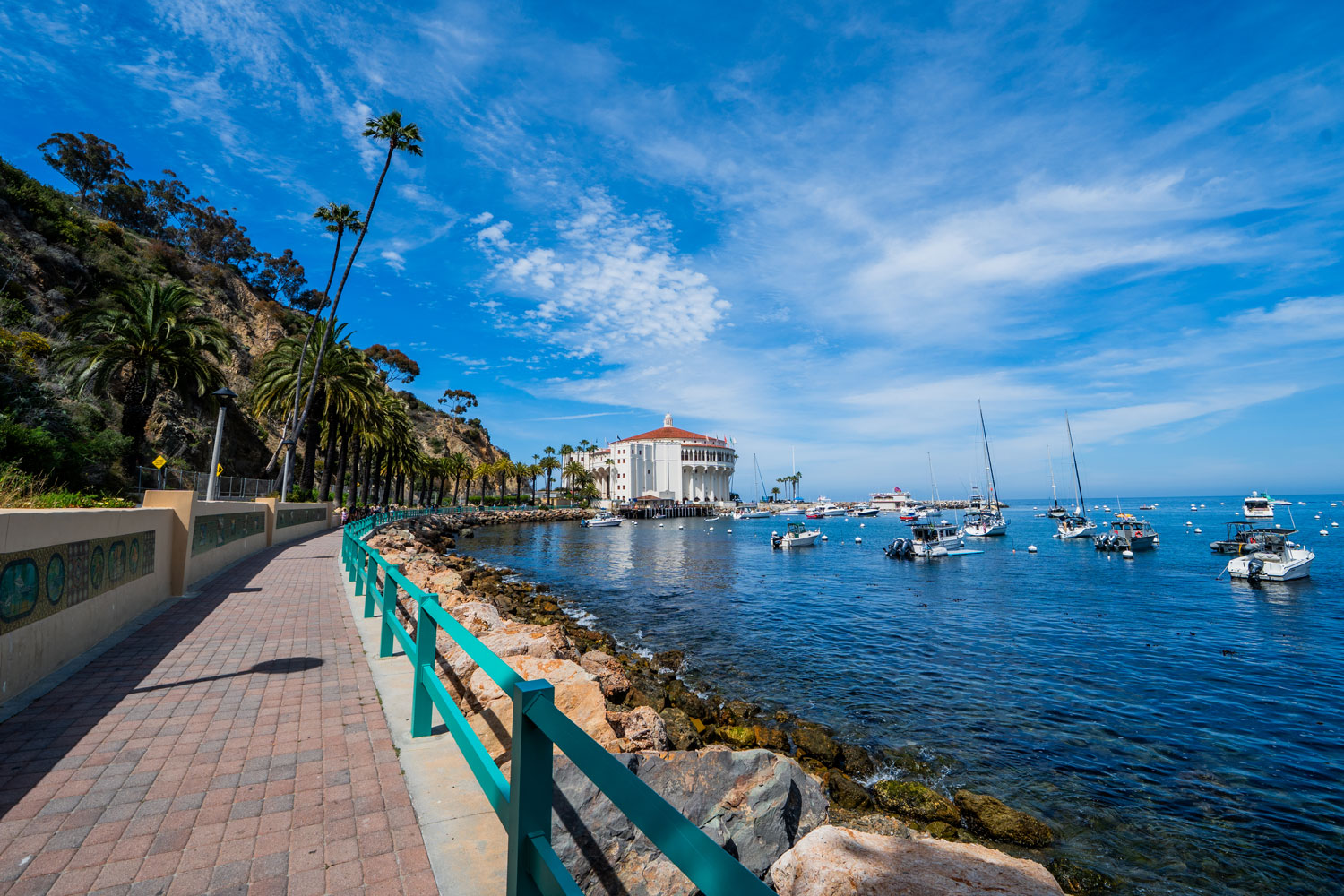
Southern California is the heart of Dodgers country. But take the ferry over the Pacific to Catalina Island, just off the coast of Los Angeles, and you’ll feel a little like you’ve disembarked on a castaway Wrigleyville. It’s largely forgotten now, but before the Cubs started playing spring training games in Arizona, they held their preseason here, on a mountainous island that feels like a European getaway in the middle of the Pacific Ocean.
Last May, I took the hourlong Catalina Express from Long Beach to learn about the history of the Cubs here. In 1919, William Wrigley Jr. purchased a controlling interest in Catalina Island. When he took over the Cubs a couple of years later, the eccentric owner — ever the enterprising businessman — hatched a plan to combine his enterprises to his promotional advantage.
Starting in 1921, he brought the team out to the island for spring training. To make them feel at home, he built a practice facility in Avalon with dimensions matching Wrigley Field perfectly. Aside from a hiatus between 1942 and 1945 when the island was repurposed for military use during World War II, this was the Cubs’ spring home from 1921 to 1951. In all, 19 hall of famers, including Rogers Hornsby, Dizzy Dean, and Hack Wilson, spent their springs on Avalon’s diamond and working out on the sandy beaches, with Wrigley himself often watching from the bleachers.
To a certain generation, Catalina Island is best known as the site of the “fucking Catalina Wine Mixer” in Step Brothers, but long before the fictional prestige helicopter conference, it was a playground for baseball royalty and actual movie stars. Escape artist Harry Houdini flew to the island to film Terror Island in 1919, calling it the most ideal spot he’d ever seen. Marilyn Monroe lived there briefly when she was still just known as Norma Jeane. And the wild buffalo roaming the island’s interior are the descendants of a herd brought over for a 1920s movie shoot. When they escaped, Wrigley just let them stay, seeing it as an opportunity for a new island attraction, and you can still take guided tours into the preserved fields to see them today.
It was the kind of place where a young Iowa radio announcer named Ronald “Dutch” Reagan could come to call games, narrowly dodge a punch in a local tavern from a disgruntled Chicago sportswriter, and end up taking a Warner Bros. screen test a few days later. Before the 1936 and 1937 seasons, the future president convinced WHO Radio in Des Moines to let him ditch the Morse code telegraph slips he used to recreate play-by-plays back in the Midwest and travel out to cover spring training in person. He was such a hit with the roster that they actually let him don a uniform and work out with the team on the diamond. The old-school print reporters, however, weren’t exactly thrilled by this handsome radio kid encroaching on their turf. The tension finally boiled over at a favorite Avalon watering hole when Chicago reporter “Jimmy the Cork” Corcoran threw a wild swing at Reagan. “Dutch” ducked, the punch landed squarely in another sportswriter’s breadbasket, and Reagan walked out without a scratch. Parlaying his proximity to Los Angeles, he took that screen test shortly after, trading the baseball diamond for the silver screen, some 40 years before he took to the White House.
I’m learning about all of this at the Catalina Island Museum for Art & History. The marquee attraction, a permanent exhibit titled “Cubs on Catalina,” is a deep dive into the Wrigley era packed with relics, including a 1931 signed team ball, five-time All-Star Stan Hack’s mitt, and a stunning relief map of the island from the 1933 Chicago World’s Fair. It also highlights Wrigley’s knack for international spectacles, like the 1927 Wrigley Ocean Marathon, where he offered a massive $25,000 prize for a brutal cross-channel swim. Only one competitor finished the freezing, grease-coated race, but Wrigley generously handed out $2,500 consolation prizes to two women who had nearly made it.
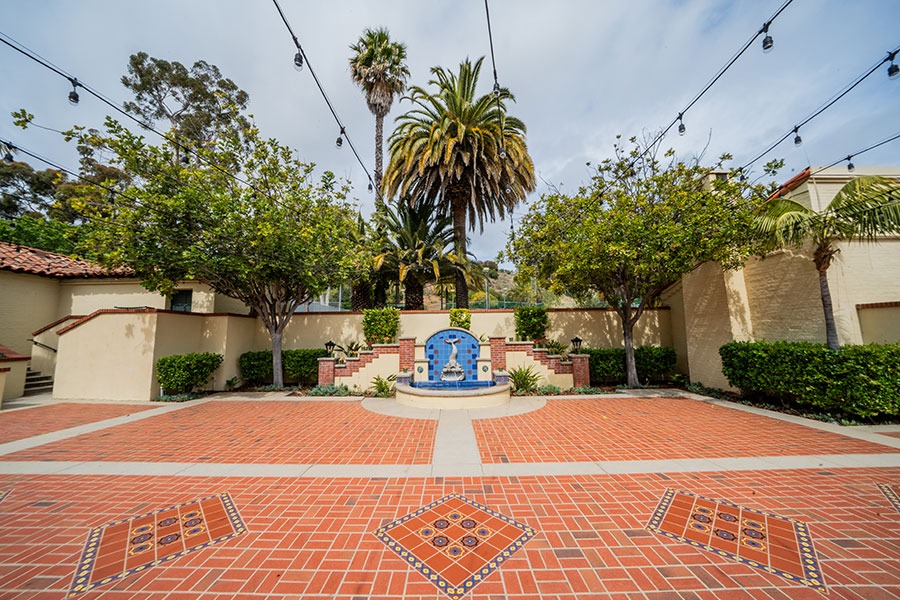
Stepping out of the museum, the lore remains, if buried just beneath the island’s surface. The original Avalon ballpark is completely gone, marked now only by a memorial plaque, but its footprint is still felt. The old players’ locker room is now the local golf course clubhouse. It’s a private facility but available for rental, making it a dreamy destination wedding spot for the ultimate die-hard Cubs couple, complete with an outdoor patio, string lights, and walls adorned in vintage memorabilia.
Overlooking Avalon rests the Hotel Atwater, named after Wrigley’s daughter-in-law Helen. After a complete renovation in 2019 ahead of its 100th anniversary, the lobby operates like a mini-museum. You can see her personal harp alongside historic photos of the 1947 Cubs squad arriving right out front.
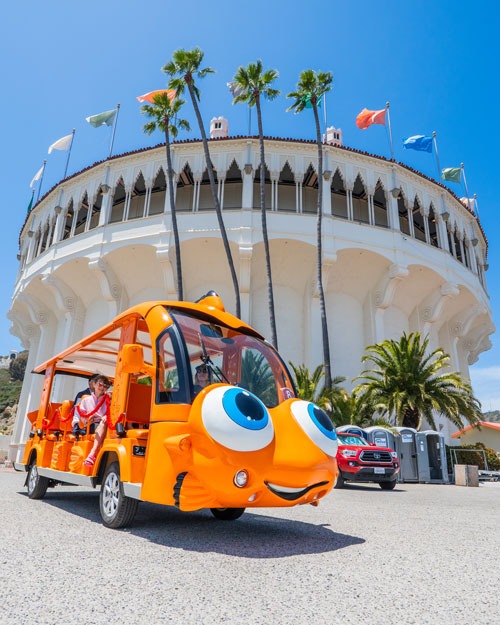
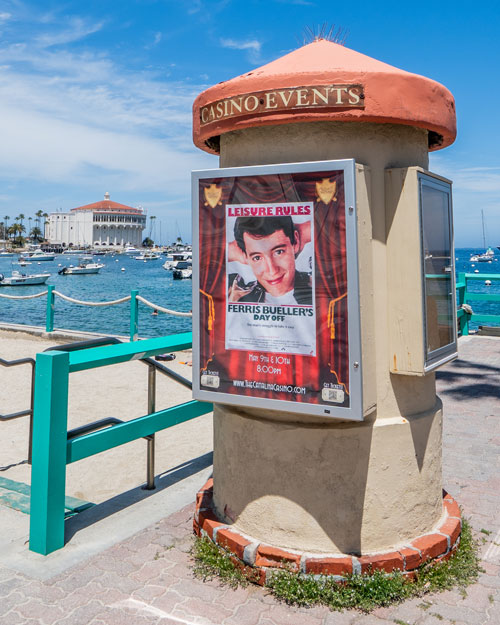
The jewel of the island is the waterfront Casino — never actually a gambling hall, but rather a massive Moorish Alhambra-style entertainment palace Wrigley built in 1929. Players spent their downtime here, catching movies in the massive theater or dancing in the world’s largest circular ballroom. Today, the Casino still honors the Chicago connection, regularly screening films like Ferris Bueller’s Day Off.
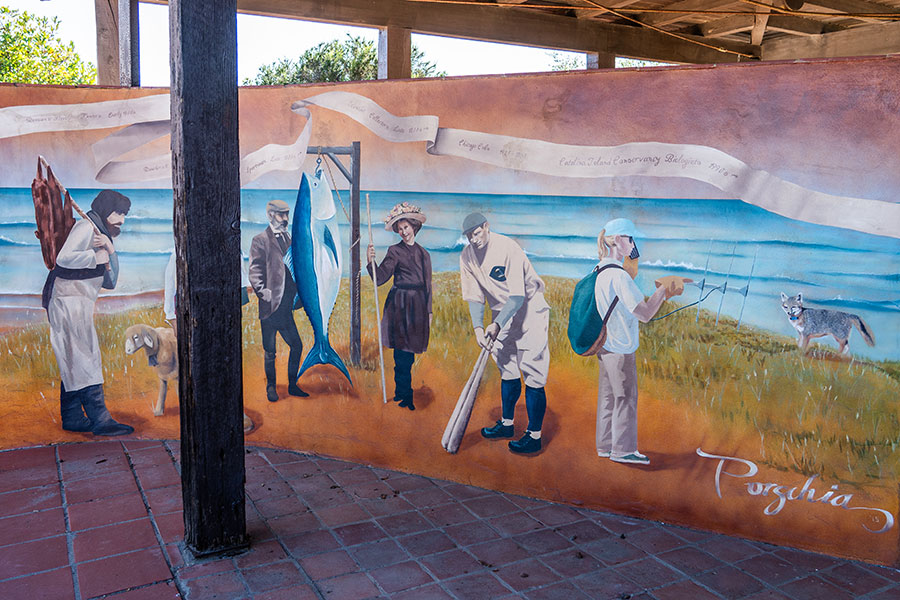
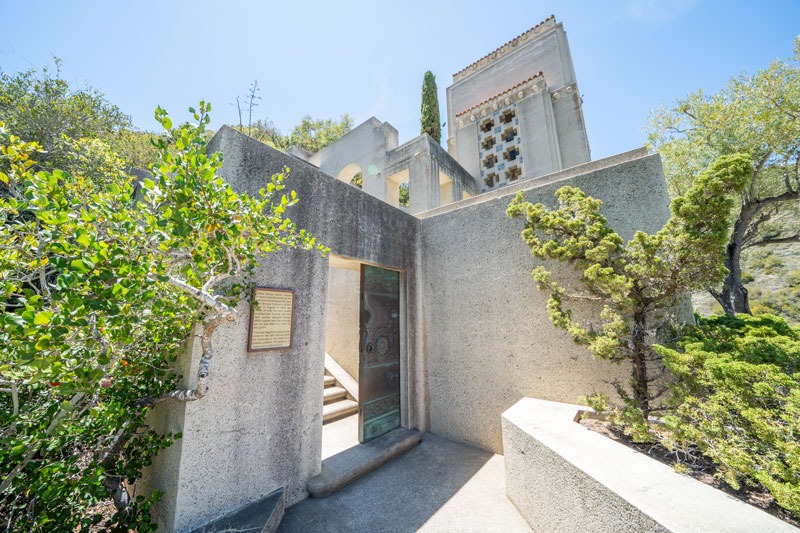
The island might as well be Wrigleyville West. Up Avalon Canyon, you’ll find the stunning Wrigley Memorial, a breathtaking structure of local stone and Catalina tile set inside a 38-acre botanic garden. Way up at the Catalina Airport in the Sky, a ghostly Cubs player is painted into a mural. Stroll through town and you’ll stumble into gift shops hawking Cubs-themed island wear, Hawaiian shirts, and even a makeshift Wrigley marquee. When you think about how WGN beamed Cubs games into California homes for so many decades, it makes sense that the island’s Chicago pride remained while surrounded by Dodger blue.
But the most lasting piece of the Catalina Cubs legacy is something you see flying over the Friendly Confines after every win: The iconic W flag didn’t start in Chicago — it was born in California. Originally the inverted blue and white flag of Wrigley’s Wilmington Transportation Company, the ferry line that brought everyone to the island, it eventually made its way to the Wrigley Field scoreboard to let the folks riding the L train know the day’s game result.
Catalina is a core stop for any Cubs purist or completist on a West Coast swing. So grab a glass of wine, catch the Catalina Express, wave that W flag from the ferry deck, and remember the Catalina Cubs and their island field of dreams.