

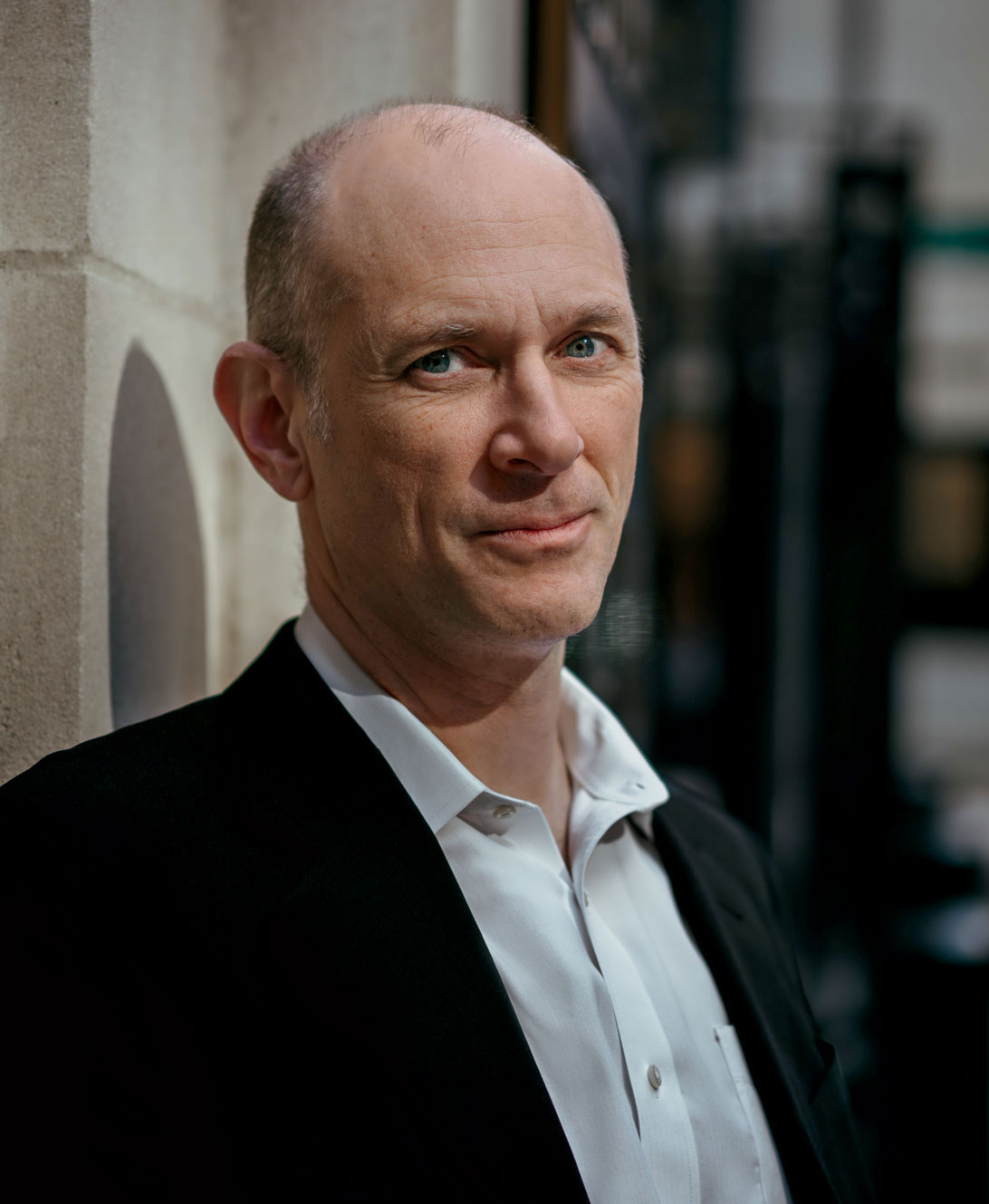
Back in 2009, when Austan Goolsbee was an economic adviser to the Obama White House, he won a Funniest Celebrity in Washington contest at a D.C. comedy club. “I always say that the central question of economics is, Compared to what?” Goolsbee says. “Nowhere was that more true. The runner-up was Grover Norquist.” It’s unlikely that Goolsbee will be doing any standup in the near future. These days, he serves as president and CEO of the Federal Reserve Bank of Chicago, charged with such serious matters as helping to formulate monetary policy and regulate banks. His role includes being a part of the Federal Open Market Committee, or FOMC, which sets interest rates. The longtime Hyde Park resident spoke with Chicago about the importance of Fed independence, the possibility of more rate cuts, and the effects of tariffs and AI on the economy.
Is the Fed’s independence under real threat from Donald Trump?
The independence of the Fed has been publicly challenged in a way that is borderline unprecedented. The Federal Reserve Act specifies that the FOMC is supposed to think about two things and two things only: stabilizing prices and maximizing employment. There’s nothing in it that says: Make sure the stock market stays happy. There’s nothing in it that says the sitting administration gets what they want. The body setting the interest rates should be open to criticism, but if we’re moving to an environment in which an administration can order the central bank to cut rates, regardless of what the economic conditions are, regardless of what the inflation rate is, that ends in tears.
What goes on behind the scenes in deciding whether to adjust interest rates?
I say unapologetically — and not trying to offend the U.S. Senate — that I believe the FOMC is the world’s greatest deliberative body. Every Federal Reserve bank president or governor comes with a worldview and a background that varies quite a lot but also a lot of research to back up their opinion. As I say, it’s like you join the Night’s Watch. When they were asking me initially, “Are you a hawk or a dove?” — I never aspired to be a bird. I just wanted to be one of the data dogs, of which there are many, and keep sniffing. Sniff everything that hits the floor. We are doing an extremely serious and important job. Yes, there are challenges to Fed independence, but at the end of the day, if people take the job as seriously as the people I’ve seen so far, it’s going to be fine.
Inflation has gone down but is still high. Does that indicate that interest rates won’t be lowered again anytime soon?
We’re not allowed to speak for the committee, just ourselves. But I remain optimistic. We’ve set as a goal that inflation should be 2 percent. We’ve been above that for coming on five years in a row now, so this is not something to trifle with. Everywhere I go, every survey I read, every group of business people or consumers I talk to, they’re talking about costs, they’re talking about affordability. So the short answer is, yes, that does weigh on decisions about interest rates. I remain pretty optimistic that by the end of this year, rates could keep going down, but I’ve been uncomfortable with front-loading too many cuts and counting on inflation going back to 2 percent on its own.
Are tariffs inherently either bad or good for the economy?
As I’ve traveled around Illinois as well as Wisconsin, Michigan, Indiana, Iowa — the heart of the Midwest that comprises the Chicago Fed district — I might be more attuned to this topic because, of the seven states most exposed to tariffs, four are in this district. The thing that I’ve heard as we talk to manufacturers is a desire to highlight tariffs on intermediate goods, which are particularly problematic because they transform tariffs into a tax on domestic production. And you hear a lot about uncertainty on tariffs. A lot of businesses simply don’t want to make decisions until they know what the rules of the road are going to be.
“I believe the [Federal Open Market Committee] is the world’s greatest deliberative body. It’s like you join the Night’s Watch.”
As an academic, you researched the early economic impact of the internet. Is what you’re seeing now with AI similar?
It certainly feels at least like a cousin to the discussions and debates in the late ’90s. If the valuations of AI companies are premised on future productivity growth, you’ve got to be careful. You can easily overheat the economy in the short run as everybody starts spending out of wealth that’s based on what’s going to come. If everybody tries to invest in data centers right now, you can strain the capacities of the economy in the here and now. We went to Cedar Rapids, Iowa, which you think, Hey, this is an agricultural economy orientation. But they’re all talking about, “Ah, the data centers have absorbed everybody. Nobody can get an HVAC person. Nobody can get electrical equipment. Nobody can get computer chips because the data centers are buying everything up.” Over the long run, if something [like AI] dramatically increases the productivity growth rate in the United States, especially in service sectors, that is going to make us rich. Incomes are going to go up. That’s how we got to be the richest major economy in the world. We are going to have to think about, What are the job displacement implications if that happens quickly? But historically, most big technology changes — the adoption of electricity, the adoption of telephones, the adoption of computers — take a lot longer than you would think.
Are we prepared for change at this speed?
There are two parts to that. Are we prepared, and what is the speed? There are some measures by which this is extremely rapid. But by other measures, AI adoption is far from universal. Will there be diminishing returns to building data centers? And is the progress in AI accelerating, or is it going to slow down as we start running into these constraints? All of that is super important if you’re going to decide what’s going to be the labor market impact. Over the long run, economists are usually of the form that new technologies tend to create more job opportunities than they destroy. You don’t have to rely on a government agency to try to match people to new jobs. It’s in everyone’s interests. So over the long run, I’m optimistic.
It seems like every successive job you take gives you less of an opportunity to be funny.
And raises the chance that I’ll be fired making a joke. At the D.C. contest, I did a version of Mr. Subliminal — remember Kevin Nealon [on Saturday Night Live]? — and a bunch of it was insulting Rahm [Emanuel], who was chief of staff. I had a friend at the White House who was like, “You better win, because if you do, there’s nothing Rahm can do. If you don’t, he’s going to fire your ass by Monday.”
What can you tell us about Kevin Warsh, Trump’s nominee for Fed chair when Jerome Powell’s term is up in May?
I worked with Kevin Warsh when he was a governor and I was at the Council of Economic Advisers. I got to know him, and we shared some foxholes together through the financial crisis. I don’t have any insight into what his views are going to be, but I have a lot of respect for him. He’s a person who knows the importance of Fed independence.
When the president talks about things that are mathematically impossible — like lowering prescription drug prices by 1,500 percent — what are you, as an economist, thinking?
I’m thinking, Thank God I’m out of the elections business. Everything in that category is fiscal policy. What I look at is, Does that affect inflation? Does that affect maximum employment? If not, that’s for somebody else to think about.