Six years after representing the family of George Floyd, Antonio Romanucci is back in Minneapolis, this time for Renee Good — and for a larger fight over accountability.
The cold punches the early-morning air as Antonio Romanucci steps out of his Gold Coast mansion. With the sun beginning to crest over Lake Michigan, honey-colored light spills onto Astor Street. Romanucci presses his shoes into the pavement in a series of quick hops to wake up his calf muscles, stretch his tendons.
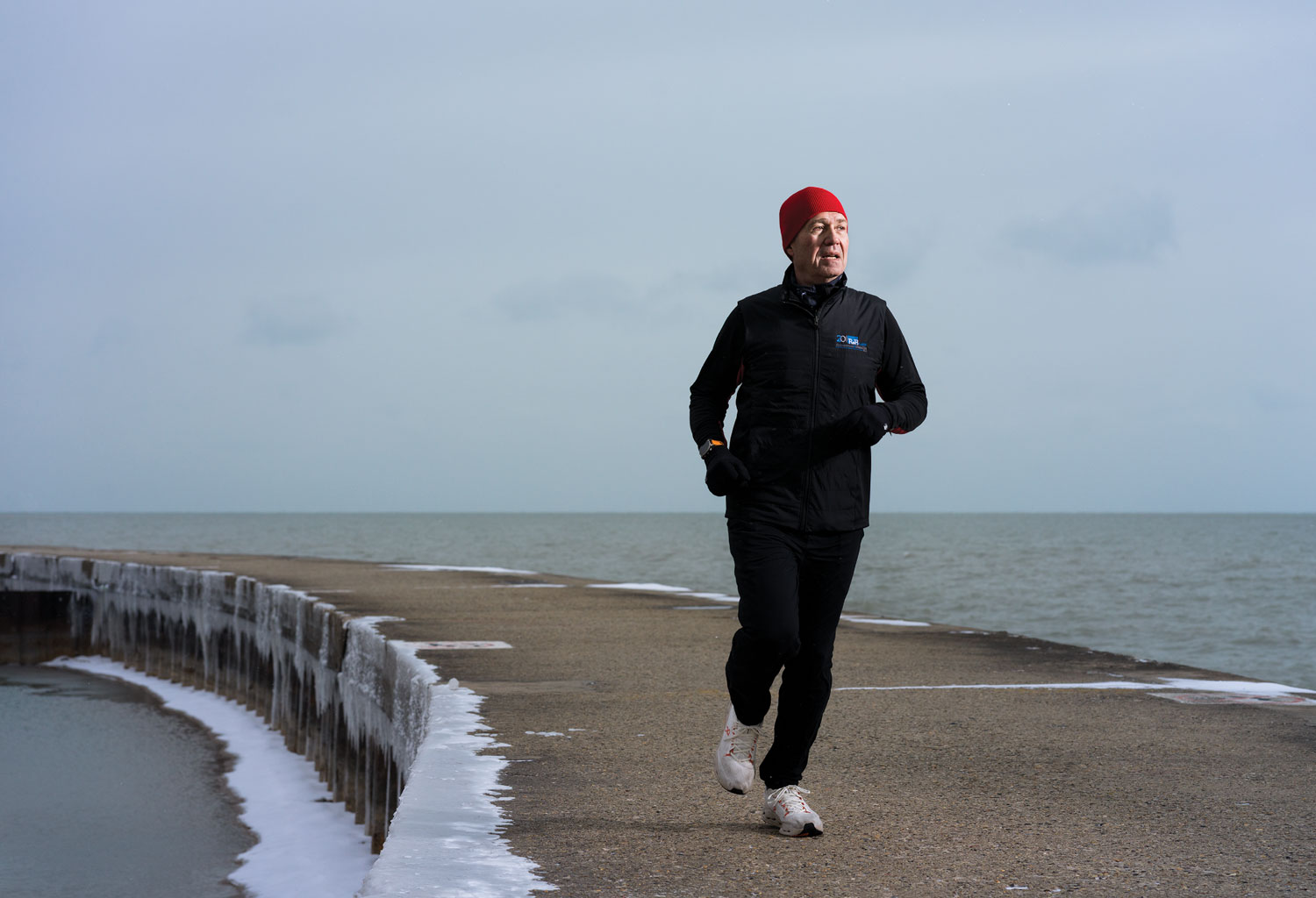
This is how he begins his days: with a run. It’s not an unusual way to begin the morning, but it’s perhaps an unexpected way to begin this story — a story of a man with a chip on his shoulder taking on no less than the United States government. As a trial lawyer, Romanucci has learned that the way you begin a story is how you control the story — where it goes, how it unfolds and presents itself to its audience. And once you control the story, you might even be able to control its outcome. In the case of this story, how it begins is a way to invite the reader into the tale of a young kid from the West Side who became one of the city’s best-known lawyers. So let’s start here, with a man on a city sidewalk stretching his legs for his morning run.
It’s early February, a month since a woman named Renee Good rolled down the window of her Honda Pilot and told an ICE officer that she wasn’t mad at him. A month since she maneuvered her SUV to try to leave the scene. A month since the cold Minnesota air that morning was punctuated by three quick shots, 400 miles from where Romanucci now begins his run.
Romanucci’s breath bursts into the air as he lunges down the street, pumping his legs as fast as they’ll go. It’s interval day. Once his legs start to give out, he slows to a stop. Catches his breath. Then begins again. When he’s done, he’ll meticulously record the morning’s work, in minutes and seconds, in a runner’s log that confirms what he already knows: At 65, Romanucci is getting faster.
The television was on purely for background noise. Romanucci sat at his father’s bedside. Weeks earlier, the family — Romanucci’s partner of 13 years, his son and daughter from a previous marriage, his mother, his daughter-in-law, his grandchild, his brother, his nieces and nephews — had gathered to say goodbye to his 93-year-old “Babbo”: Dino Romanucci. To everyone’s surprise, Dino held on a bit longer than expected, and now his son was keeping vigil beside him, only half paying attention to what was on TV.
In the quiet of his father’s bedroom, Romanucci looked up long enough to see the news: A 37-year-old woman named Renee Good had been fatally shot in Minneapolis by an Immigration and Customs Enforcement agent on her way home from dropping her 6-year-old son off at school. As the violence of the scene pierced the morning’s serenity, Romanucci’s reaction was instant: consternation and dismay, mixed with frustrated fury at the inevitability of this after last fall’s Operation Midway Blitz crackdown in Chicago. How could this not happen? he asked himself. (“I am beyond clearly aware of what that type of law enforcement aggression, day in and day out, will eventually erupt into,” he’d later tell me.) But even though Romanucci had anticipated an incident like this, that it would happen in Minneapolis felt particularly cruel.
Just a few years ago, Romanucci served as co-counsel, alongside the prominent civil rights attorney Ben Crump, for George Floyd’s family in their civil actions against that city and the four police officers involved in Floyd’s 2020 death. As Romanucci watched the Good coverage, he recognized the location of the shooting, less than a mile from where Floyd was killed. And he soon recognized a familiar narrative pattern. In 2020, Minneapolis police had issued a press release that read: “Man Dies After Medical Incident During Police Interaction.” Within hours of Good’s death, Kristi Noem, who was secretary of the Department of Homeland Security at the time, labeled the incident “an act of domestic terrorism,” saying that Good used her vehicle “as a weapon” and tried to run over the agent.
Almost immediately, shaky cellphone videos began to cast doubt on the narrative that the ICE officer had acted purely in self-defense: the maroon Pilot turning away from the agent, the rapid pop of gunfire, the SUV crashing into a parked car, someone screaming “Shame!” in a voice stretched hoarse.
Two days later, Romanucci’s father died. If Romanucci’s morning run is our overture, our first act begins with shared loss: a man losing his father to an illness in old age; a family — Good’s partner, three children, parents, four siblings — losing their loved one in an unexpected tragedy. Romanucci doesn’t equate the two, but when Good’s family called him to feel him out about representing them, grief became the unifier. Romanucci, though still mourning his father, promised them that if they hired him, they could expect nothing less than “110 percent commitment to perfection.” Good’s family, understanding Romanucci’s pain, comforted him in that moment. And then they hired him.
Videos taken of Good’s encounter with the ICE agent who fatally shot her cast doubt on the government’s narrative.
The family gave Romanucci their directive: to focus on “Renee’s message of nonviolence and peace,” to refrain from politicizing her death, and to remind the world of Good’s goodness. On January 14, the day after his father’s funeral, Romanucci flew to Minneapolis to meet with members of the family in person.
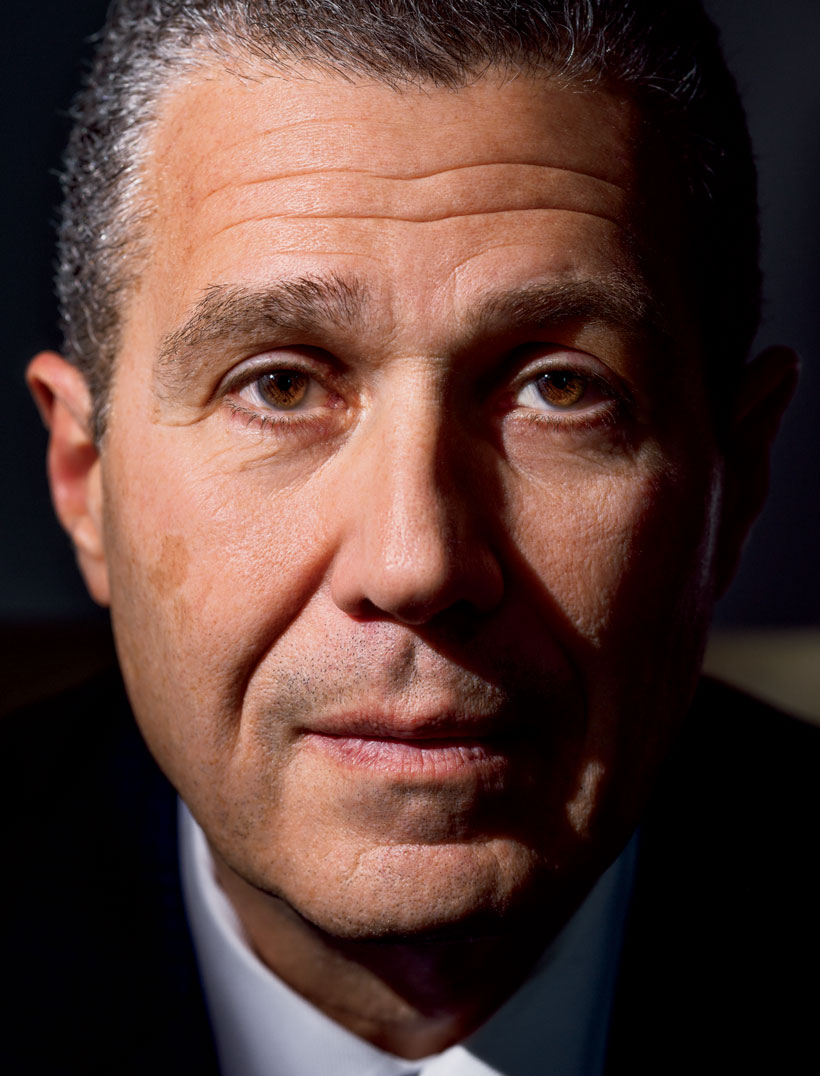
A month after that, I’m at the offices of Romanucci & Blandin, in a steel and glass high-rise next to the Marina City towers. Romanucci, a founding partner of the firm, is wearing a well-tailored navy suit. He has a runner’s build — trim, efficient — and a way of speaking that makes you feel like he’s leaning toward you, even when he’s sitting back in his chair.
He reveals that he is quasi-spiritual. He tells me that he believes his father led him to the Good case. “If you chase a sign, I think that’s a good thing,” he says. When I ask him what that sign was, he shakes his head. “I can’t share that.” But what Romanucci can share, what he will share, is that however he got the case, he has a plan. And it involves tossing out his usual playbook. The day after meeting with Good’s family, Romanucci sent a letter to the federal government requesting that it preserve evidence related to the shooting. He made that letter public.
It was an unusual step for him, just as it’s unusual for him to talk this much about a pending case. “We’re usually so secretive about our process,” he says. “We don’t want to give the other side any ammunition.” But if the federal government was trying to influence public opinion, he would do the same.
Instead of a blanket press conference, he decided to participate in upward of 60 media interviews, each with a specific purpose. He started with a spot on Anderson Cooper 360. Then the NBC affiliates in Chicago and Minnesota. The Fox affiliates. Other local and national news programs, podcasts, YouTube legal channels, all in quick succession over the course of two weeks. “We wanted to go individually and talk about who Renee was,” Romanucci says.
In some interviews, he emphasized Good’s character: that she was a mother, a sister, a loving companion. “That she loved her dog,” Romanucci tells me. In others, he highlighted the minimal training ICE officers receive or educated viewers about the process through which you can sue the federal government for negligence. In one interview, he told the Minneapolis NBC affiliate, KARE 11, “There are tears in this city.” Romanucci was laying it on thick, but he wasn’t wrong, either — and that quote became the headline for the clip that circulates on the internet.
On January 21, Romanucci publicly released the results from an independent autopsy. “There were three clear gunshot wound paths to Renee’s body,” the report concluded. It’s a lawyer’s gambit, Romanucci tells me: “You never tell a jury what to do, so they make up their own mind, right?” Show the bullet holes, let people decide for themselves: in this case, that Good was moving past the agent while he kept shooting.
“I think we turned the tide on who people thought Renee was, being a DT,” Romanucci says, his voice sliding into a lower register. “I won’t even say the word.” Refusing to say “domestic terrorist” feels a bit dramatic, but it aligns with another tactic his team employed. In addition to the letter about preserving evidence, Romanucci made clear to the federal government that any false statements about Good or her family would be considered defamation. There isn’t a jury yet, but there is a country trying to make up its mind.
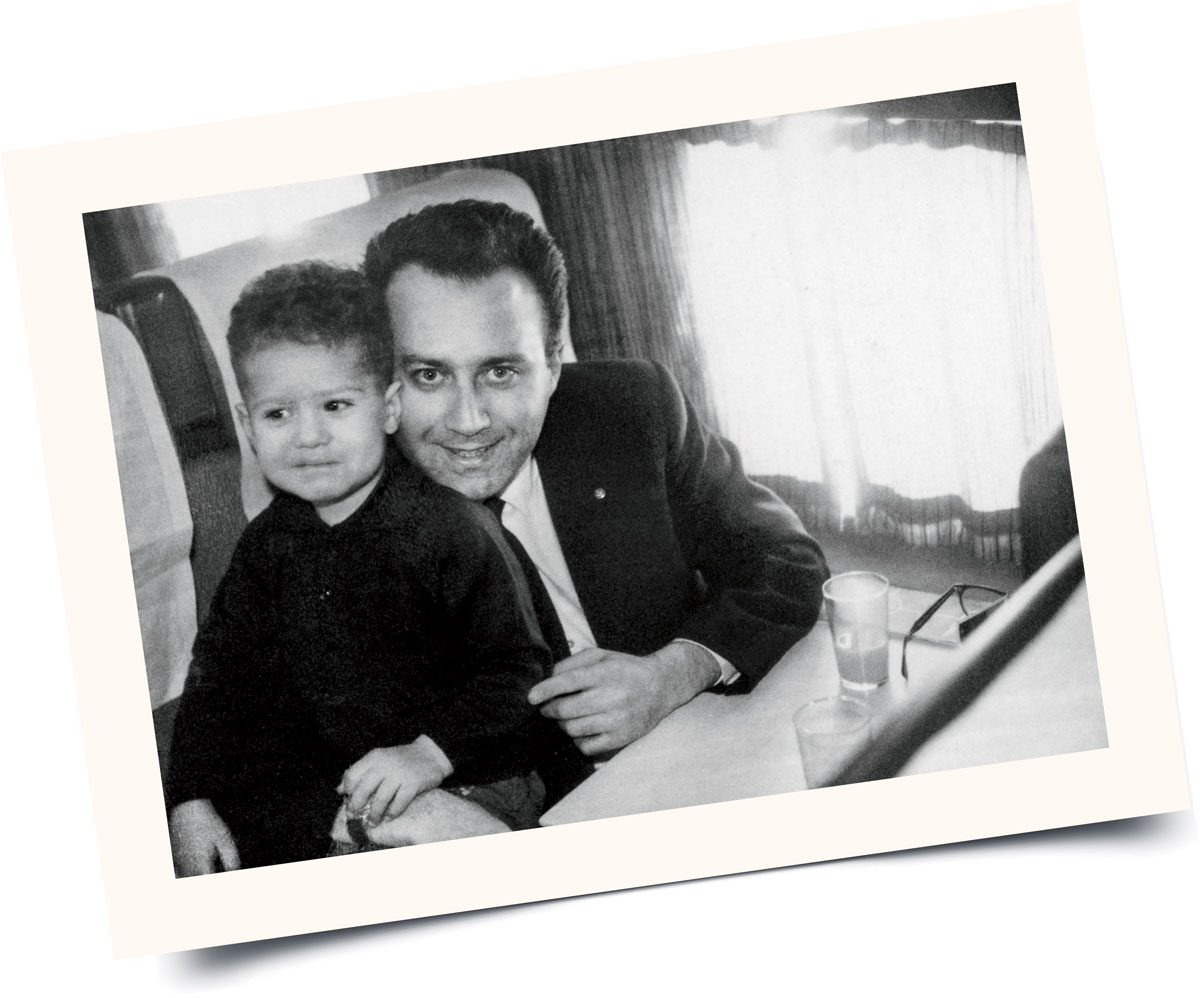
A young Romanucci with his father, Dino Photograph: Courtesy of Antonio Romanucci
Romanucci has a question he likes to ask his civil rights team, particularly new hires: “When did you became radicalized?” But first he’ll volunteer his own radicalization story, the moment when the seeds were planted that led him to this kind of work. It was when he was a sophomore at the University of Wisconsin in 1979. There was a rally against big business, oil, and nuclear energy. Jane Fonda was there. And before he knew it, Romanucci was marching down the streets of Madison. “I didn’t get it all then because I was still too young,” he tells me. “But I got it when I was a public defender.”
Romanucci had known he wanted to be a lawyer — his father had encouraged it — but had figured he’d merge that path with his interest in business and become a securities attorney. After graduating from Wisconsin in 1982, he immediately enrolled in John Marshall Law School (now University of Illinois Chicago School of Law). His parents owned Benvenuti’s Restaurant in Villa Park, and during his breaks from law school, Romanucci would pick up shifts. The summer before his third year, his dad called him over. “Antonio, this is somebody that you need to meet,” he said, showing his son to a table where a well-dressed man sat. Harry Comerford, chief judge of the Circuit Court of Cook County at the time, gave Romanucci a once-over and said, “Well, why don’t you come down and see me if you’re interested in working for the Cook County public defender?”
Romanucci considers it the defining moment of his life: “Sometimes you don’t know what you’re good at or what you like until you see it.” When he walked into a courtroom at 11th and State, he knew that was where he needed to be. His notion of becoming a securities lawyer evaporated.
As a young Cook County public defender assigned to gun court in the mid-’80s, Romanucci saw how the police narrative shaped the way a case would proceed. “That’s when I understood this disparity that exists between economic societies, poor people and rich people, people of color and white people.” He would pull up an arrest report, scan down to the middle of the page to read the description: Arresting officer sees suspect walking down the street with the butt of a gun sticking out from his waistband. Or: R/O sees suspect walking down the street with suspicious bulge in his pants pocket.
“I always have a little chip on my shoulder,” Romanucci says. “I feel like I’ve always had to prove myself.”
Romanucci was looking at 20 to 50 arrest reports a day, and he’d immediately sniff out the bad police stops. “I challenge people to tell me: When do you see people walking around with guns in their waistbands sticking out?” he says. This was an era, he notes, when Chicago police officers had extra guns at their disposal that they could claim to have taken off gang members. Against orders from the higher-ups in the public defender’s office, Romanucci would file motion after motion to suppress this evidence. “I had a judge who would go along with it, would call the balls and strikes,” he recalls. One by one, Romanucci would get cases thrown out: “I became this Fourth Amendment guru.”
Over time, he grew increasingly skeptical of law enforcement. He started to feel that in every case he worked, the narrative the police department put out was slanted. And it would be his job to change what people heard.
It’s something he’d had to do for himself as well. As a boy growing up in the Austin neighborhood, he had trouble expressing himself. His dad, born in Pennsylvania, had been raised in Italy. His mother, Anna, was an Italian immigrant. At home, the family spoke Italian. When Romanucci spoke English, grownups often told him, “I can’t understand you.” His preschool classmates couldn’t either. It was only after his father found a school where a nun also spoke Italian that Romanucci began the slow, often painful, journey of catching up with the other students.
“I always have a little chip on my shoulder,” he tells me. “I feel like I’ve always had to prove myself. That has nothing to do with my desire to improve either humanity or our legal profession.”
As Romanucci got older, he’d get into fights. He couldn’t stand seeing people bullied. “My temper would get to me,” he recalls. “I would fight people who I thought were being aggressive toward others unnecessarily.”
At Fenwick High School, Romanucci kept getting into trouble. For what? He won’t say, leaving it at “things that I don’t talk about anymore.” He adds that the Dominican priests who ran the private Catholic school in Oak Park didn’t take kindly to anything “outside of the box.” I flip through old Blackfriars yearbooks from the ’70s, looking for Romanucci, but he’s barely there. No clubs, few extracurriculars. The only evidence of his enrollment is thumb-size school portraits, his dark hair fluffed up. In some years, there’s a sheepish smile. It stands in stark contrast to his lawyer’s bio today, which is stacked with boards and organizations, many founded by Romanucci.
His freshman year at Wisconsin, his brother, Gabriele, six years younger than him, came to visit. The way Gabriele tells it, while everyone else was drinking and splashing around in Lake Mendota, his big brother took him to meet up with a local man who had schizophrenia. Romanucci was helping him get acclimated to independent living after he was released from a state facility. The three of them spent the weekend together. Romanucci took them out to lunch.
Gabriele remembers another story: a robbery in Lincoln Park that his brother thwarted. It was in the late ’80s, in the early years of Romanucci’s career as an attorney. “Tony and two other people chased down the robber and tackled him,” Gabriele tells me. “They held him down until the police came.” I ask him what gives his brother this urge to look out for the little guy. “I can’t tell you a specific reason why.” He pauses. “But he’s always been like this.”
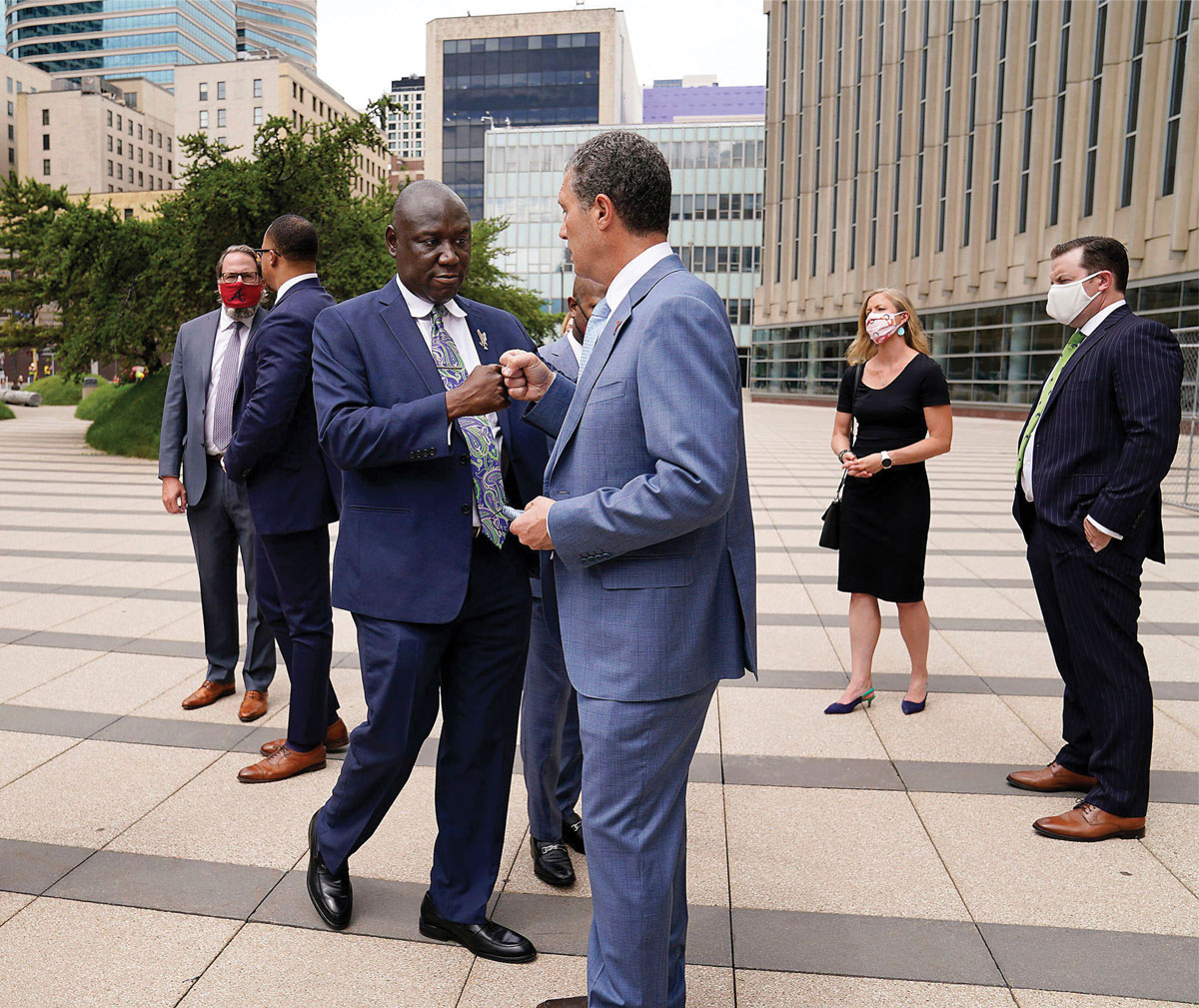
Romanucci and civil rights attorney Ben Crump secured a $27 million settlement for George Floyd’s family in 2021. Photograph: Alamy/David Joles/Minneapolis Star Tribune/TNS/Abacapress.com
Here’s the thing about having a chip on your shoulder: It pushes you, taunts you, to keep fighting. When Romanucci and Stephan Blandin decided to open a plaintiffs’ law firm together in 1998, they knew they had to get scrappy. After his stint as a public defender, Romanucci had moved into private practice, crossing paths with Blandin when they both worked for personal injury attorney Donald J. Nolan. They had only a few clients to bring with them, so they decided to make their name by taking on cases no one else would.
In 2002, they represented Jake Tinman’s family in a medical malpractice lawsuit after his mother had been told by 14 lawyers that she had no case. Her 3-year-old son had been born with a congenital heart defect, and the hospital’s negligence had resulted in severe developmental delays and the amputation of his left leg as an infant. “There’s no way we can’t give him a chance,” Romanucci recalls thinking when he visited the Tinmans and saw Jake. “And so we said, ‘We’re going to try. We’re going to do what we can.’ ” The case took seven years to get to trial, but only 45 minutes for the jury to side with the plaintiff. The family was awarded $22.3 million.
Since then, Romanucci has taken on civil cases so big that they’re known simply by a name: Sonya Massey, Krystal Rivera, George Floyd. He helped secure a settlement of up to $800 million for victims of the mass shooting at a Las Vegas music festival in 2017 and is representing survivors and families of the victims of the 2022 Highland Park shooting in their ongoing case against a gunmaker and gun retailers.
“He’s a true believer,” says attorney Ben Crump. “Tony believes the Constitution is for everyday citizens as much as it is for the rich and powerful.”
When I reach Crump by phone, he tells me about Romanucci’s almost brazen tenacity in working cases involving high-speed police chases: “People don’t usually take those cases. But Tony never blinks.” In 2019, Romanucci’s firm landed a $19.25 million settlement with the City of Chicago after Maria Carreon was killed when a stolen vehicle being pursued by the police hit her van.
“I wear an eagle on my lapel. Tony wears a seven,” Crump continues, noting that Romanucci is known for his pins in the shape of the numeral. His favorite one looks like a question mark, a little dot at the end. People ask about the pins, and Romanucci relishes in explaining that they represent the Seventh Amendment, which gives Americans a right to a jury trial in a civil case. “Seven really translates into democracy and due process,” Romanucci says. “It speaks to who we are as a society. The only society in the world that grants a jury trial for civil proceedings.”
“He’s a true believer,” Crump says. They met after Romanucci won a case in Florida, where Crump is based. Crump tells me they formed a fast friendship built on mutual admiration and a proclivity to get into what John Lewis, the late civil rights leader and congressman, called “good trouble.” And that’s why Crump asked Romanucci to join his team representing Floyd’s family: “I had to make sure I had people who were very competent.” When I ask what makes Romanucci a “true believer,” Crump doesn’t miss a beat: “Tony believes the Constitution is for everyday citizens as much as it is for the rich and powerful.”
For Romanucci and Crump, the successful resolution of a civil lawsuit is what Crump calls “partial justice.” Full justice, in their view, comes only with criminal culpability and legislative change. In 2021, the City of Minneapolis settled the wrongful death lawsuit with George Floyd’s family for $27 million. The same year, Derek Chauvin, the police officer who placed his knee on Floyd’s neck, was convicted on two counts of murder and one count of manslaughter. But that still wasn’t enough for Romanucci and Crump. They made the rounds in Washington, D.C., talking with legislators to drum up support for the George Floyd Justice in Policing Act. The proposed legislation sought to prohibit chokeholds, end no-knock warrants, and require law enforcement agencies to adopt antidiscrimination policies and training programs. It twice passed in the House but failed to make it through the Senate.
Romanucci clenches his jaw when he talks about those many meetings he and Crump had with senators. “I will tell you that by round 2 of six, I knew that they were not telling me the truth,” he says. “I sat across the table from very, very powerful senators, influential senators, and they reached across the table and shook my hand and said, ‘Tony, we’re going to get this done.’ ” Romanucci shakes his head. “If you look me in the eye and tell me you’re going to do something, you better do it.”
Part of what gave that legislation a fighting chance — and why the Floyd civil case was successful — was that Romanucci and Crump were able to show there had been a pattern of police misconduct in Minneapolis. Ten years before Floyd’s death, David Smith, a 28-year-old Black man from Minneapolis, was wrestled to the ground, and a police officer pressed his knee into his back. Like Floyd’s, Smith’s death was ruled a homicide as a result of asphyxia. “Once you have another act, we knew we were validated,” says Romanucci. “It was indeed the Minneapolis police knee on George Floyd’s neck.”
When the Reverend Al Sharpton, in his eulogy at Floyd’s memorial, declared, “Get your knee off our necks,” the narrative of their case took hold: “It was about the white person getting the knee off the neck of the Black man,” says Romanucci.
In Good’s case, Romanucci knows he again has to find a pattern. Patterns are critical. If something happens once, it’s tragic — but lasting change, the kind of change Romanucci heralds as a hallmark of success, is predicated on showing something happening again and again and again. And Romanucci wants to prove that the stories this administration tells are false.
Romanucci in his Chicago office
On the morning of January 24, two and a half weeks after Good’s death, as Romanucci sat in his kitchen, head in hands, watching news of the death of Alex Pretti, he saw it: a pattern. When Pretti was shot and killed by U.S. Customs and Border Protection agents in Minneapolis, a narrative was quickly spun by the federal government, just as it had been with Good. Pretti had brought a weapon and multiple rounds of ammunition to an ICE protest, “wishing to inflict harm on these officers,” Noem told reporters. Pretti, she claimed, brandished his gun.
“Show me where that happened,” Romanucci told anyone who’d listen. Soon video evidence came out contradicting the government’s assertion.
For Romanucci, who is not representing Pretti’s family, the question became how to turn these tragedies into full justice. For Good’s family, it starts with the Federal Tort Claims Act, which allows individuals to sue the federal government for monetary damages. (Good’s family is claiming that her death was a result of negligence.) It’s a cumbersome and opaque process that requires paperwork akin to an insurance claim. The government has six months to respond. If the claim is accepted, settlement talks can begin. But Romanucci believes the odds of that happening in this case are low: “A month ago, I would have said there’s zero percent chance,” he tells me. “But now there’s a 10 percent chance. Which is magnanimous.” What changed? Because of the public outcry, he thinks, the administration is now acutely aware of the optics, which might work in his favor as the pressure mounts for accountability.
If the claim is denied, as Romanucci feels is likely, or if the family is unsatisfied with the settlement offer, they can file a federal lawsuit. But even then, there’s no jury, just a bench trial overseen by a district court judge.
It’s hardly an ideal process. Still, Romanucci believes the calls for justice in Good’s and Pretti’s cases might actually go somewhere, potentially even cracking open a door to legislation — and he’s seizing what he sees as a second chance to make lasting change. “Our client has given us the go-ahead to try to make some change because they were so pissed and angry when Alex was killed,” Romanucci says of Good’s family. “They thought that if their sister, their partner, their daughter — if she was the breach in the dam, that there was going to be no waterfall. Alex was then” — Romanucci repeats Pretti’s name, this time like an exclamation point — “Alex was then the waterfall after the breach.”
Three days after we talk, Romanucci is in D.C. to advocate for an amendment to the Federal Civil Rights Act of 1871. As it’s written now, individuals can sue state or local government officials who have violated their constitutional rights. What Romanucci wants — what he’s using the fatal shootings of Good and Pretti to make a case for — is extending the act’s reach to the U.S. government. In other words, while the Federal Tort Claims Act allows a claimant to receive monetary damages, Romanucci wants the 1871 law to provide real accountability for federal officers who violate someone’s civil rights.
This lobbying also gives Romanucci another vehicle to pressure the federal government while Good’s family waits for a response to its lawsuit. He considers full justice in this case to be not only a monetary settlement and the passage of new legislation but also the pressing of criminal charges against the man who killed Good, ICE agent Jonathan Ross. Romanucci admits the latter may not be attainable. “We will accept that very begrudgingly,” he tells me. “But we will not accept that there won’t be any sort of federal legislative change that prevents this horror from happening again.”
On February 3, Romanucci sat at a long table at a congressional forum on violence by DHS agents. There were no Republicans present, and Romanucci will later acknowledge that he is not optimistic about getting legislation passed without bipartisan support. In the coming weeks, the Republicans whose support he needs will speak out against Kristi Noem, which will feel like a buoy, and she will get reassigned.
But on that day in D.C., if Romanucci is disappointed by their absence, he doesn’t let it show as he addresses the legislators. “My colleagues and I are deeply distressed at these invasions onto a fellow American’s civil rights by our own government that have gone well beyond the initial scope of removing criminals,” he began. He spoke at a clipped pace, volume getting louder as he started to punch his words. He had to make this statement count. Watching video of it, I notice immediately that he wasn’t wearing a “7” pin. Instead, affixed to the lapel of his gray suit was a large white button. On it, two words in black in a no-nonsense font: “Be Good.”
“We will not accept that there won’t be any sort of federal legislative change that prevents this horror from happening again,” says Romanucci, an avid runner who meticulously tracks his daily morning jogs.
It’s early March, and Romanucci is preparing for a different sort of case: a mock trial at the National Hellenic Museum, where he will unsuccessfully prosecute Odysseus for murder. (“It’s very difficult trying to convict a war hero and a model for Greek society,” he tells me.)
“You know, people say I talk too much,” Romanucci says, taking a break from his prep. “And that’s sometimes true. I think there’s a lot to be told. There’s a lot of context we’ve all lived through, and I want people to understand that.”
It reminds me of our earlier conversation in his office when he explained how he prepares for a case: “I always tell my clients, ‘I’m going to spend a lot of time with you, because at trial, I have to be you.’ ”
Romanucci is meticulous when it comes to his own life as well. Every morning, before or after his run, he sits down and assesses his five-year plan. He likes to play the long game, looking toward goals with a strategy in place. Sometimes he tweaks the plan. Sometimes the plan dissolves. Romanucci never thought he’d be back in Minneapolis so soon.
He has three drawers filled with photographs from his life, from his parents’ lives, all carefully catalogued and digitized. “If there’s ever a story to be told when we’re together as a family, I can say, ‘Well, I’ve got a record of that.’ ”
Among the photographs are pictures of all the cars Romanucci had as a teenager, including a 1978 Camaro. It was one of his favorites, but after he passed it down to Gabriele, mechanical issues made keeping it untenable. Romanucci convinced their father that the car his little brother needed was a Mustang convertible. “My dad may have been set in his ways,” Gabriele recalls. “But if we put half a good argument together, he was totally on board.”
If a story wins cases, tenacity gets Romanucci in the room. It’s always been like that. “What I lack in smarts, I make up for in my discipline and outworking anybody,” he says. So he logs his runs — tracks the splits, the interval speeds. And he writes the opening statement for what people might say is a pipe dream piece of legislation and goes to Washington over and over again to demand change.
The day after the mock trial, Romanucci calls to tell me he has an update about the Good case: “We have assuredly taken and will take all offensive steps to ensure we will be able to file a complaint in this case and litigate it to its absolute fullest.” He has to be a bit vague, he cautions. Vague, yes, and full of legalese. But it sounds like good news, like maybe Romanucci might be making progress. Maybe the odds are shifting in his favor.
The morning after Pretti was shot, Romanucci got on a plane to Minneapolis. The temperature there had dipped below zero, but he didn’t care. He only knew that he needed to be there. After he landed, he went to Federal Courthouse Plaza and waited. This time, however, he wasn’t there to work. He wasn’t there to weave together a narrative. Instead, Romanucci listened to the chants from protesters to get ICE out of Minnesota: “Whose streets? Our streets!” And then he marched.