

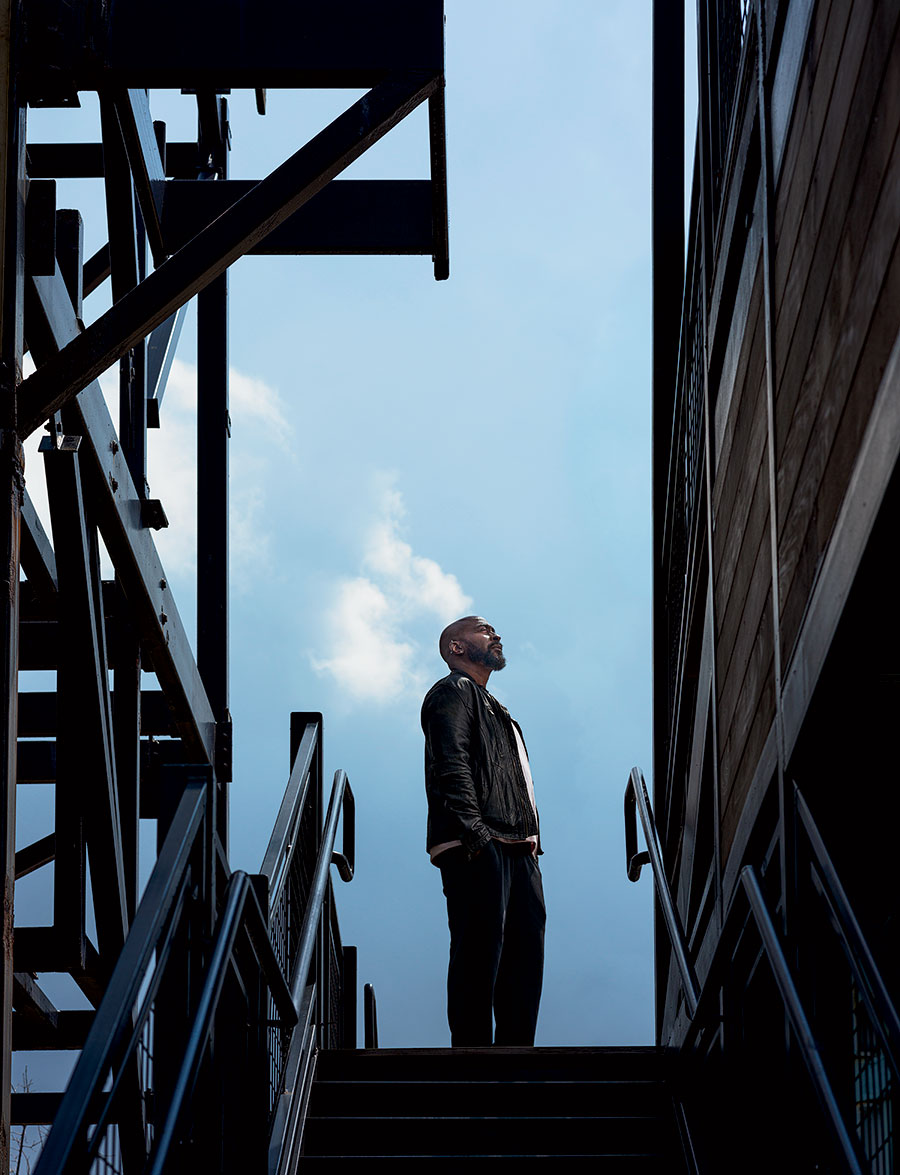
When Eric Williams told me he was going to bring back his legendary block party this summer, his excitement bubbling over as he detailed the plans, I have to be honest, I worried about my friend. For years, Eric’s annual Sound System Block Party, tied to his store, the Silver Room, was a daylong event so dynamic and joyous and diverse that it seemed to encapsulate Chicago at its absolute best. It was our city’s Summer of Soul, the music rapturous, the community expansive. But it was also Fyre Festival, a disaster, at least for Eric financially.
In 2023, when Eric retired the party after an 18-year run, he owed more than three-quarters of a million dollars. He launched a GoFundMe but raised only a tiny fraction of his debt. He held off creditors by promising he would work his way to paying them back. Why at this point would he open himself to any more risk?
Eric assured me that he had a better business plan and funders in place. He was 99 percent confident that the event would make money this time and he’d be able to pay down what he owed. But what really motivated him had little to do with the conversations he was having with his accountant. Eric described the feeling that overcame him during the final hour of each party, when he stood at the edge of the stage: He’d look out at the crowd lost in the spirit of dance, everyone jubilant as the day’s last performance drew to a close. “I created something that people really love,” he told me. Eric got goose bumps just talking about it. He was still chasing that high.
I’ve known Eric since he moved the Silver Room to Hyde Park more than a decade ago. He also co-owns a restaurant not far away, Bronzeville Winery. He’s been in the news lately for opposing a city ordinance that would raise the minimum wage for tipped workers. Whether or not you agree with him that the increase would end up doing more harm than good to those workers, Eric has always been less focused on turning a profit than on bringing people together. He sees his role as a small-business owner, especially in the Black community, as a form of activism — creating jobs and gathering spaces and vitalizing neighborhoods.
The idea for the block party emerged from that same sense of mission. When his retail store was still in Wicker Park, in the early 2000s, he saw that the neighborhood’s street festival, as far as he could tell, had never featured a musical act of color. So Eric suggested Frankie Knuckles, no less than the Godfather of House Music. He says someone on the chamber of commerce, a white guy, rejected the idea, telling Eric, “We don’t want to have any problems.” Eric realized he didn’t need to beg these people to bring culture to the community. He could do it himself.
Eric lived in the apartment above his Wicker Park shop, and for the first block party, in 2003, he simply ran extension cords from his window into the alley next door and plugged in his own sound system. Eric is one of those social connectors who seem to know and get along with everyone. That day a hundred or so people showed up from all over the city. Eric’s musician friends performed for free; others volunteered their various talents. “It was a very utopian idea,” Eric tells me now. Buying the extension cords from Home Depot was his biggest cost.
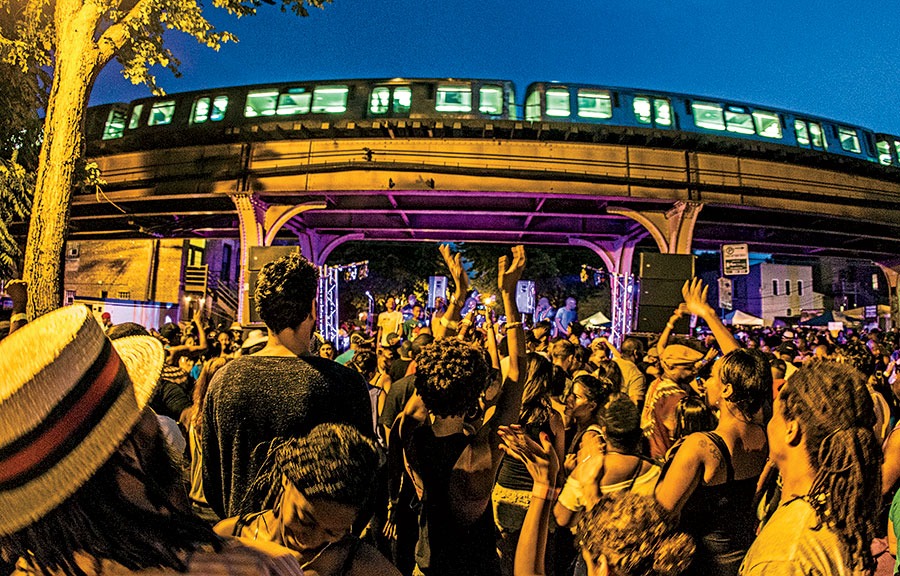
Like some Moore’s law of parties, the number of people attending the event kept doubling each year. After Eric moved his store — and with it, the event — a short walk down Milwaukee Avenue, the turnout started reaching a thousand, and the block party took over the entire stretch of a street that ran beneath the L tracks. Eric had to rent a sound system and a generator; he paid the talent. One year he flew out a hero of his to perform, DJ Kool Herc, whose own block party inside a Bronx apartment building in the 1970s helped give rise to hip-hop. The costs for the day became substantial for a small business — eventually climbing to $25,000 by year 10 — but nothing Eric couldn’t justify. Sales in the store boomed on the day of the party, and the event proved to be great marketing. People were still coming into the Silver Room months later, buying necklaces and sweatshirts, because they knew about the block party.
Eric also thought spending some of his own money might be worth it if it allowed him to curate this version of Chicago. The block party was an expression of Black joy, he says, but also, incredibly, of white and Asian and Hispanic and gay and straight joy. The music was house, reggae, salsa, rock, soul. “There was a feeling of freedom in taking over a public street,” Eric says. Children played. Grown women skipped double dutch. One summer, attendees recreated an Indian wedding. “Maybe this arts, culture, and music thing is what I’m supposed to do,” Eric remembers thinking. The L would rattle overhead, and one operator would bring his train to a stop; leaning out the window, he’d dance and pump his fist to the music.
Eric is from south suburban Robbins, one of the first municipalities in the nation to be fully governed and led by Black people. His goal from an early age was to earn enough money in finance that he could quit after five years and open a nightclub. But he hated finance, leaving it soon after he started. Eric became a street vendor, and was good at it. With his deep, sonorous voice and easy-mannered charm, he could sell almost anything, from bootleg Bart Simpson T-shirts to light-up roses and stuffed animals. Street sales led to opening his own store in 1997. In 2015, when Eric was priced out of gentrified Wicker Park, he relocated the Silver Room to 53rd Street in Hyde Park.
On the South Side, the Sound System Block Party exploded, spreading over numerous blocks. Fifteen thousand people his first summer there. Forty thousand soon after. The biggest increase was among Black Chicagoans. “There was more appreciation doing it down here,” Eric says.
Eric was also thrilled to experiment with the broader canvas. He turned a parking lot into a roller rink. He transformed empty storefronts into art galleries. He made sure local artisans and entrepreneurs had stalls to sell their wares. “The impact, the emotion, the picture I could paint became way more important than how much it would cost,” Eric says. At one block party I attended in Hyde Park, I saw hip-hop icon Bobbito Garcia introduce a documentary about himself, as part of a free film festival; I caught four or five musical acts; and I also ended up hanging out with friends I hadn’t seen since grade school.
Eric says he’s better at the “big vision” than the operational details; he’s a dreamer who knows how to create the vibe, but not necessarily how to monetize it. When he started his block party, he relished that it was free, with no barrier to entry. “That was the idealistic way to do it,” he explains, “because the kids can come, grandmas can come, folks who didn’t have places to stay could come.” But suddenly he was spending $50,000 on generators, porta-johns, and stages. He paid for permits, insurance. South Side politicians demanded that he get armed security, even though he’d never had any sort of problems with rowdiness or crime. The guards set him back $35,000. One summer, because of extreme heat, he had to have ambulances at the ready, three of them, at $5,000 a pop. That year he personally lost $100,000 on the event.
This year, the Silver Room’s Sound System Block Party will be both “a celebration and a form of resistance,” says Williams.
Eric assumed, naively, that people would see the block party’s larger communal value and chip in. He made video PSAs: This is not for me. It’s for us. The city doesn’t allow parties on public streets to charge admission. So in Hyde Park, Eric set up kiosks and hired staffers to ask for donations. “Donate for what? It’s free,” Eric recalls a visitor telling him. They ended up collecting less than the cost of the event’s setup. Eric went to the neighboring businesses, all of which benefited from the boost in sales from the large crowds. One restaurant gave him a $15 gift certificate; it expired in a month.
By the last party he threw in Hyde Park, in 2019, Eric had turned resentful. The organizers of Lollapalooza and Pitchfork weren’t begging people for money. “I felt like Moses when he came down from the hill,” Eric says, “and he had the Ten Commandments and he smashed them.”
But he wasn’t ready to give up. Not yet. In 2022, Eric rented Chicago Park District land at Oakwood Beach on the South Side, paying the city a couple of hundred grand. There he could charge an entrance fee and sell alcohol. But he also needed to build fencing and stages and to truck in all the infrastructure. He sold 14,000 tickets to the two-day festival; he had planned for 20,000. There was bad weather that weekend, and he lost $600,000. The second year on the lakefront, he managed costs better and lost far less. Eric said the event was trending in the right direction; he thought he would soon turn a profit. But he was already $800,000 in debt. He called it quits.
That was three years ago. Eric is relaunching the festival now because he can’t resist doing an event in conjunction with the 250th anniversary of the founding of the country. The 19th edition of the Sound System Block Party will be both “a celebration and a form of resistance,” Eric tells me. “The diversity of our city represents the best of what it means to be an American.”
The affair will span two days, July 17 and 18. The first day will be a symposium on the South Side that looks back on 250 years of the American experiment. But the second day will be all block party. Eric stresses that with everything going on politically and socially these days, the city needs the culture and sense of community more than ever. He also vows that throwing the event won’t sink him deeper financially. “I’m not gonna lose on this one,” he repeats to me like a mantra.
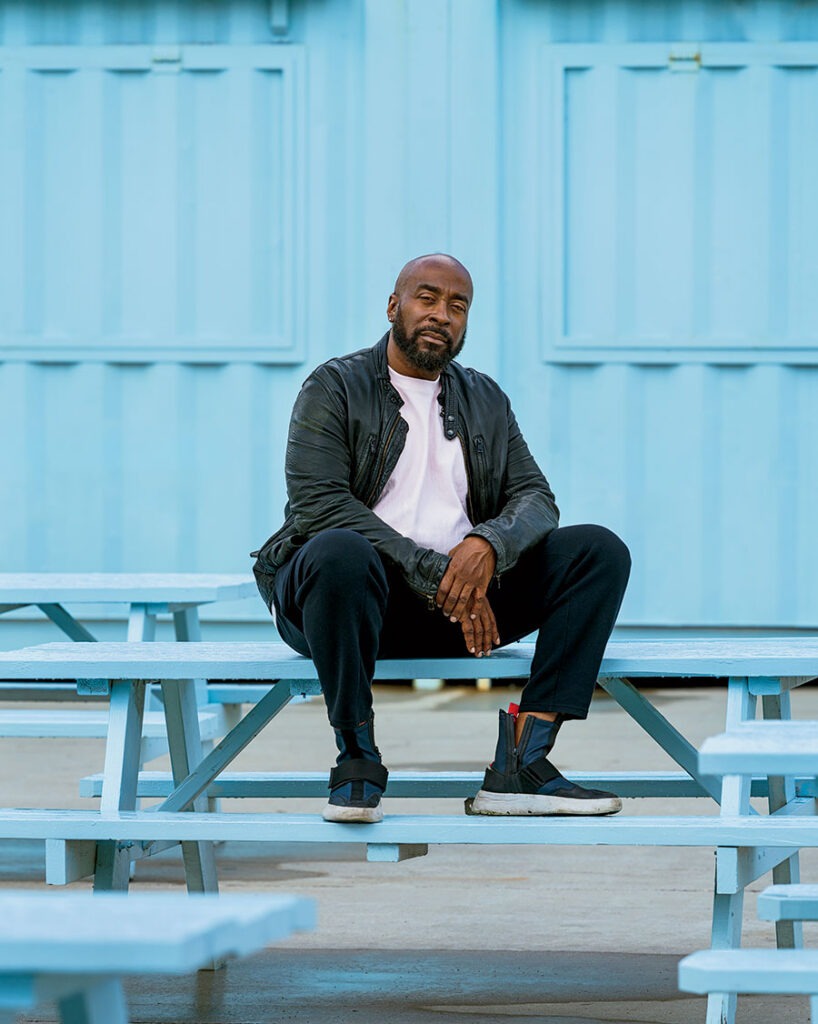
Eric has already lined up grants from half a dozen foundations and corporate sponsors. He’s also relying on projected ticket sales. He rented out the Salt Shed in Goose Island for the party, which means he won’t be responsible for providing toilets or generators or security. He estimates he can cover the significant cost of the venue and the talent if he sells as few as 4,000 tickets, at around $100 apiece. Worst-case scenario, he tells me, is that he gets 500 people to show. But he reminds me that he sold 14,000 tickets on the lakefront. “I don’t have all the numbers,” he says, unfazed by the uncertainty. “But I have a basic outline of the numbers.”
While we talk about all this at a café on 47th Street, we’re interrupted several times by people who recognize Eric and can’t help but regale him with stories of some magical moment they’d had at a previous block party. Eric says he gets this all the time: people shouting from cars, dropping into the store, stopping him on the street, asking when he was going to throw another event.
At the café, Eric tells each of the block party fans about his plans for July. Would they come if it’s on the North Side? How much would they be willing to pay? After every verbal commitment, Eric turns to me, grinning contentedly, tallying the new number: “Counting you, that’s at least four people coming.”
There will be more than that. When tickets went on sale in April, he sold more than a thousand on the first day. For all the trouble it has caused him, the party will go on because the people want it to.