


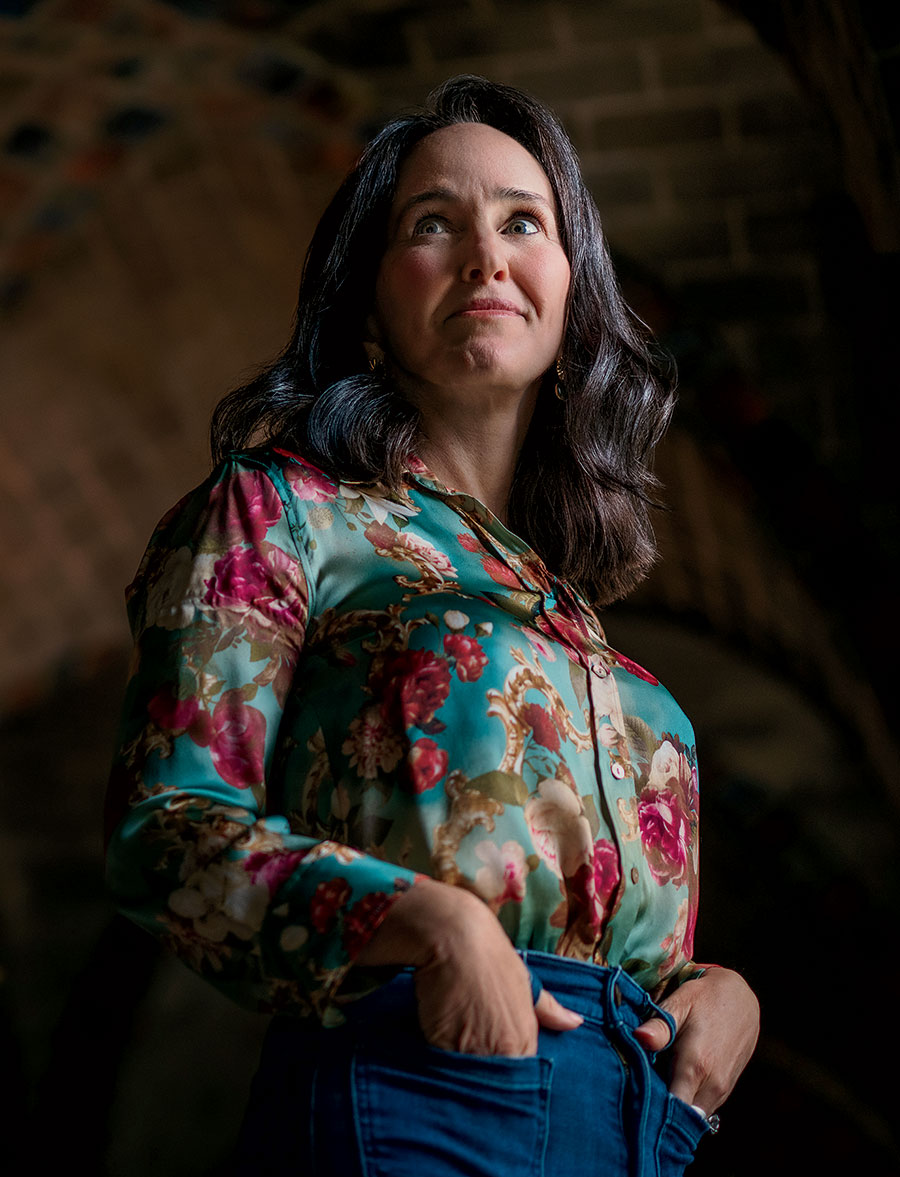
It was the noise —or rather, the lack of it — that first alerted Dana Suskind to the problem. “It used to be that I’d walk into my clinic and there would be a chaotic mess of kids laughing, crying, having meltdowns,” says Suskind, a pediatric otolaryngologist at UChicago Medicine who specializes in hearing loss and cochlear implantation. That commotion has since been replaced with the eerie silence of screen time.
Now Suskind is noticing the similar hold that AI has on kids — and that concerns her: “It’s not just a technology that engages us, it’s a technology that wants to have a relationship with us.”
In her bestselling books Thirty Million Words and Parent Nation, Suskind explores the bonds between children and their caregivers. But she realized that little is known about AI’s impact on the critical early years of development — in particular, how damaging it could be for kids when technology is substituted for human connection. To that end, her latest book, Human Raised, is a guide for parents trying to navigate the age of artificial intelligence.
How does a pediatric surgeon end up writing a book about AI?
My career has always centered around this idea of how talk and interaction builds our children’s brains. Then, suddenly, we’ve got this technology that can literally mimic the same interaction. It was an aha moment. We may be at a turning point of humanity, because in those first years of life, you’re not just building skills, you’re wiring the human brain. You’ve got to be really thoughtful in how you move forward.
Is the insertion of AI into early childhood inevitable at this point?
The genie’s out of the bottle. AI is already part of our children’s lives. Which video is served up next on YouTube is an AI algorithm. The more parents understand both AI and their own children’s development, the less panic there is, because fear and panic are not going to do us any good.
Can AI actually benefit young children?
The story of childhood is as much about the parents and their world as it is about the kids. The proverbial village is no longer, but we can think about how AI actually [alleviates] our burdens, whether they be logistical or language barriers or, someday, physical labors. AI can give more space for the parents, give them more ability to connect with kids by taking off all those invisible labors [domestic chores like generating a meal plan for the week]. AI can also shed so much light both in terms of early diagnosis and early treatment of children with developmental and learning differences. My colleague Sarah Sebo did this cool study showing that kids practicing reading to social robots are less anxious. Awesome. Does that mean we want them to then develop a deep relationship with these robots and never learn how to read to another human? No. That’s the slippery slope part of it. It’s when it slips into the replacement of human relationships that I get really concerned.
“We can’t let human connection become a luxury good where only certain people get human-raised backgrounds.”
Is AI that engages young children directly even necessary?
It’s about making sure that what we do is scientifically driven. Over a hundred years ago, the German chemist Justus von Liebig created one of the earliest baby formulas. He added proteins and carbohydrates, all the things they knew about in that day, and started feeding it to lots of kids. Those children developed rickets, became malnourished, and died. He created what he thought was right, but at the time, vitamins hadn’t yet been discovered. You can create something that on the surface looks like it should help, like, “I’m going to create this robot to help close the language gap.” But maybe the child becomes very connected to it and now has stunted social development. From a scientific standpoint, there’s more that we just don’t know. I give the example of social media. At some level, it should work. It’s connecting us across worlds. So why don’t we feel less lonely? It’s because we don’t understand human connection in a deep way. I talk about the lack of friction [with AI]. There’s power in friction: I mess up, I repair with my child, and that’s a cycle where that child learns about navigating the human world. “Friction” is a catchall for a lot that we don’t know. Let’s slow down, especially with stuff in the early childhood years, when we’re building our humans — unless we want humans to look totally different than they look now.
In your book, you give tangible frameworks for assessing AI technology. You provide questions to ask your child’s school, such as “Which AI tools are approved or prohibited?” and “How do teachers decide when to use AI versus traditional methods?” How else should parents stay vigilant?
It feels like there’s been a groundswell of pushing forward policy guardrails. AI literacy is an important thing. I sense a lot of fear, but fear can be addressed by knowledge. We’re still in charge. There’s hope for the future. And we can impact it, because otherwise we all shrivel up and roll up into a ball. And darn it, that’s the beauty of parents. With their passionate love for their children, parents will ensure that the future is OK for their kids. We also need to double down on human connection. There’s plenty of research showing that humans are talking less to each other. So reach out when it doesn’t always feel comfortable. Find the beauty in hearing the noises of humans. It used to be like, “Oh my gosh, I can’t focus.” But really, it’s a gorgeous thing.
You warn about human connection becoming a status symbol. What could that ultimately look like?
That is my biggest concern. I give the analogy to ultraprocessed food. The industrial food revolution had so much good that came out of it. It fed growing cities. It freed up time so we could innovate and learn, because we didn’t have to can and preserve our own meat. But ultraprocessed foods have also disproportionately impacted underrepresented, marginalized populations on such a deep level. I see the same scary potential happening here. Already tech titans and many high-income families are implementing low-tech childhoods. They send their kids to Waldorf schools. They’re not letting them around tech at all. Then I see families that are under duress — people who are working three jobs — that have always gotten the brunt end of technology. And I see where this could go — where the artificial substitute for human interaction, for teaching, for being present will be provided by something that looks good enough. Doritos still give you calories, but the impacts on the developing brain are significant. We can’t let human connection become a luxury good where only certain people get the organic food and human-raised backgrounds.
What do you say to parents worried that their kids have already been shaped by AI?
The first three to five years of life are incredibly powerful — that’s where we do a lot of brain building — but that’s not the end. So if you feel you’ve been using AI tools in the wrong way or your kid’s first best friend is an AI social robot, it’s OK. You can wind that back to have real human relationships. It is never, ever too late. I’m not anti-tech. I see the promise of it. But how we wind down our dependency on these technologies is an important point. In a grand irony, this technological revolution really shows us that human presence and interaction is the most powerful way to get our children prepared for AI. We can build all these great things, but yet we are literally the most powerful technology to support our little humans’ development. Humans are amazing.