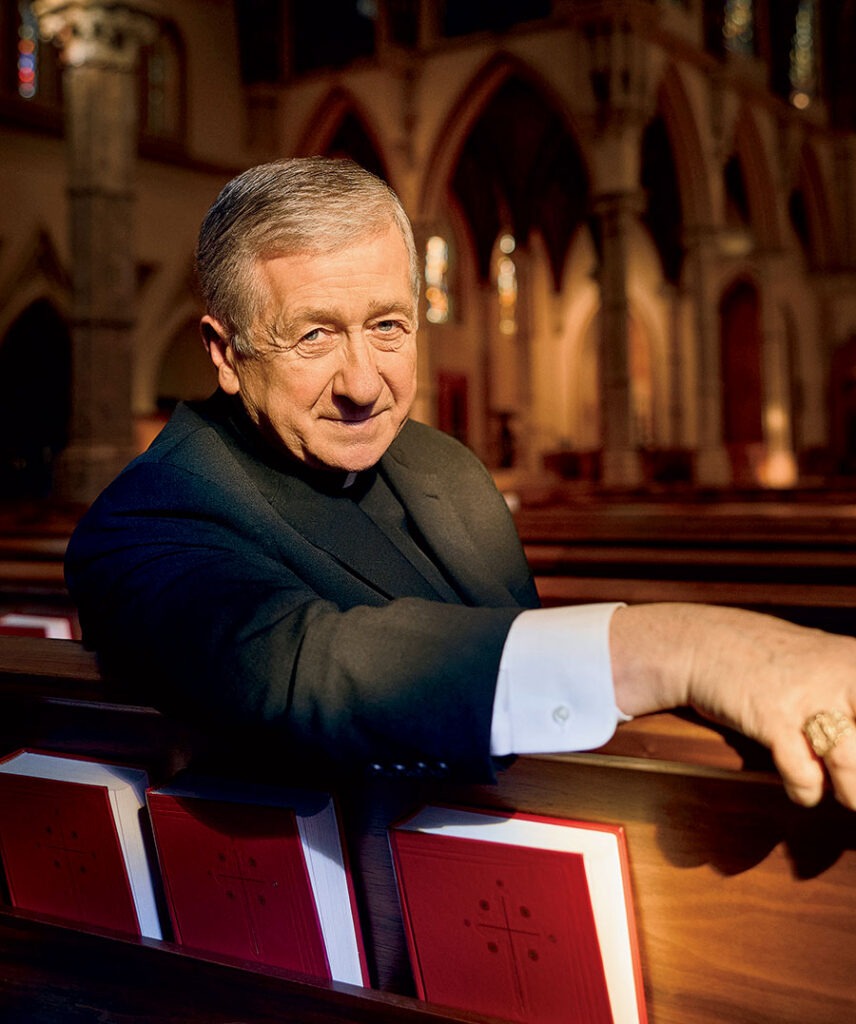


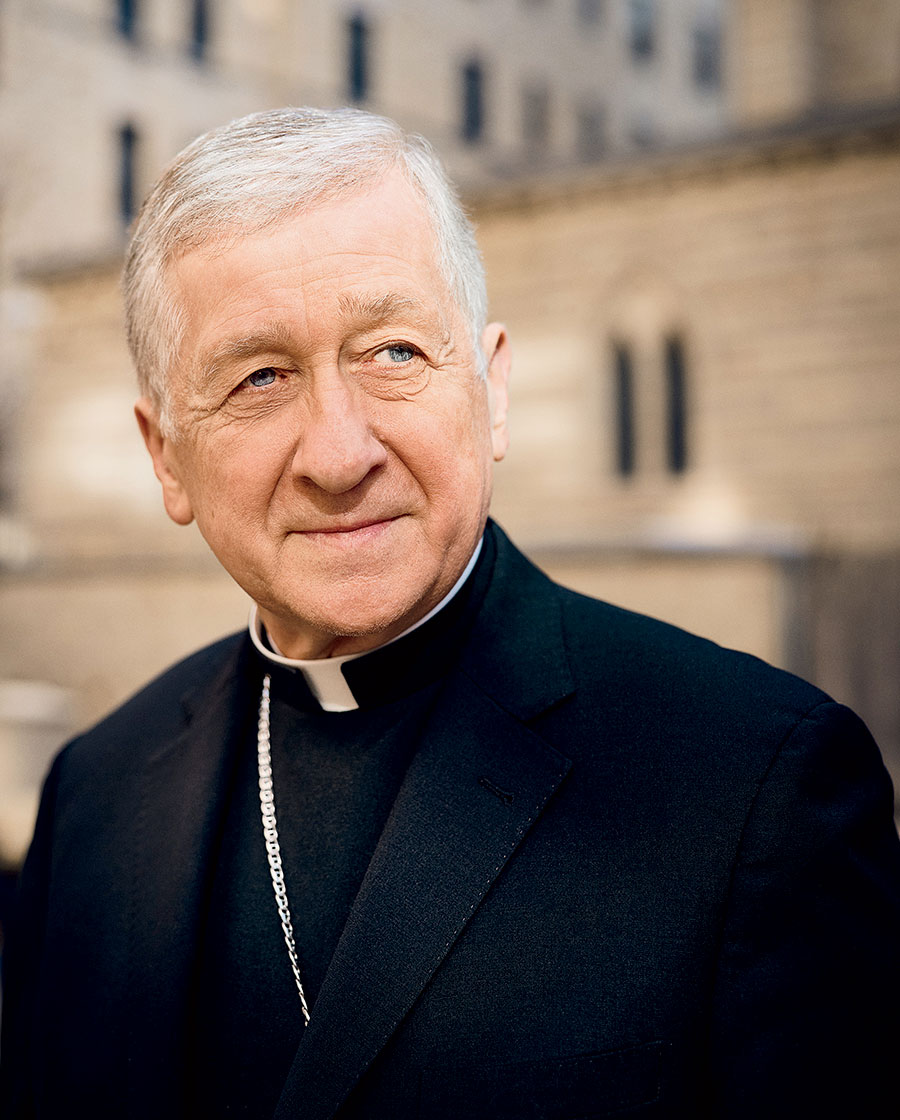
As head of the country’s third-largest Catholic diocese, Cardinal Blase Cupich is one of the church’s most prominent voices. And in taking stands such as against immigration enforcement tactics and in favor of inclusivity for the LGBTQ+ community, the Chicago archbishop has become a symbol of progressive reform. That, of course, also makes him a source of vexation for conservative Catholics. Wearing a priest’s traditional black suit and Roman collar — Cupich, 77, sat in the second-floor library of Holy Name Cathedral’s rectory, where he lives, to talk with Chicago about navigating such hot-button issues, working with the new pope, and skipping the movie Conclave.
After immigration enforcement agents fatally shot two people in Minneapolis, an Episcopal bishop in New Hampshire urged his clergy to “prepare for a new era of martyrdom.” Are we really at that point?
It’s true that the tragedies we saw in Minnesota would bring people to wonder whether or not we are in an era of new martyrdom. But it would be premature to say we’re at that level right now. ICE is leaving Minnesota. The very peaceful protests that took place were impactful in bringing this administration to look at this in a different way. I’m hopeful that we as Americans can appeal to our better angels to move forward as a nation. I don’t give up on people having the ability to change their mind and to look at things in a different way through dialogue. That’s the approach we should take. I would not want to use hot language that in some way could thwart that.
What would martyrdom look like among the Catholic clergy if it gets to that?
Martyrdom also could be not about taking one’s life but, as the word means in Greek, witnessing. We can witness.
Back in 2019, you wrote to Chicago priests, saying that “threats of broad enforcement actions by ICE are meant to terrorize communities.” You urged the clergy not to let them into churches without IDs or a warrant. These days, enforcement tactics are even more aggressive. Have they crossed the line into being inhumane?
We saw some of that right before our eyes [in Chicago] in terms of the way people were stopped and thrown to the ground and parents were taken away from their children without any consideration for how that affects family life. We were told that they were going to round up the worst of the worst, but these are hardworking people. There doesn’t seem to be any discriminating way in which we’re recognizing that a broken immigration system has permitted these people to be here for a long time — people who have contributed a lot to society and don’t have documents simply because legislators haven’t done their job. There is a certain inhumanity in not recognizing that dynamic, as well as in the tactics that are used. No one has any issue with [the feds] protecting us by securing the borders. But how do you deal, in a way that is reasonable, with the 11 million people [many estimates are higher] who are already here?
You never mention politicians, like Donald Trump, by name. Why is that?
I want to speak to the hearts of all people, and if I mention names, then I distract from that task, I deflect attention away from the fact that every citizen needs to examine their hearts about this issue. If I go after particular elected officials, it’s easy to dismiss what I have to say.
“No one has any issue with [the feds] protecting us by securing the borders. But how do you deal, in a way that is reasonable, with the 11 million people who are already here?”
Pope Francis believed you should “encounter,” not confront, those who are doing things you don’t agree with. But is there a point at which confrontation, even physical confrontation, is morally required?
I don’t know if “confront” is the right word. I would say “challenge.” A voice has to be raised to challenge something that’s an injustice. We’ve always been in favor of political demonstrations and protests. If you go back in the ’50s and ’60s, you will see a lot of priests and religious [people] marching with Dr. Martin Luther King Jr.
Some Catholics are not pleased with what they see as your progressive positions, like calling for more women in church leadership and a greater embrace of the LGBTQ+ community. Is your job made harder when stances you take are viewed through a political lens?
I don’t see myself as liberal or conservative. I try to be close to what the social gospel of the church is and represent that. It’s anchored in human dignity. We need to have respect for gay and lesbian people. We need to be with people who are suffering in society — immigrants and others. We need to care for the poor and speak out whenever their rights are being violated. It all is wrapped around the principle of how are we going to preserve human dignity in society today. I do this as well with regard to the questions of abortion and the death penalty and assisted suicide [all of which Cupich opposes].
You’ve now worked under four popes. Do you have a closer level of communication with Pope Leo because he’s from Chicago?
When I was the bishop in Rapid City [South Dakota], which had 28,000 Catholics in an area the size of Ireland, and John Paul II was pope, I didn’t have much contact with him. I wasn’t on the national level or international level. Same with Benedict, although I knew him beforehand when he was the head of [the Congregation of] the Doctrine of the Faith. Francis, in making me a cardinal and archbishop, placed me in various roles of direct consultation with him. Pope Leo has continued that. He’s appointed me as one of the commissioners for Vatican City State. I’m the only one outside of Rome. So there is more direct contact and regular access to him. And it’s a lot easier, too, because he speaks English.
Have you seen the movie Conclave?
No, I didn’t see Conclave. I didn’t see Barbie, either.
Conclave was just like Barbie.
That’s right. Two fictions. The only thing that I know from people who did see it is that they said the costumes were a bit over the top.
So there’s no dark intrigue going on when you’re electing a pope?
I’ll be honest with you: At no time did I have anybody come up to me and say, “You should vote for this person.” There was no politicking. All we did beforehand was talk about the qualities needed for a new pope. That was the focus of our conversation. That’s why we were able to come to a decision very quickly, because it wasn’t about haggling over each person. And once it became clear that Robert Prevost checked all the boxes, it was fairly easy for us to make a decision. I came away from that experience with a great sense of respect for my brother cardinals.
No one tried to promote themselves?
If anybody really promoted themselves, we should accuse them of insanity. Who wants that job? Your life is over as you know it. You’re a total public person. You can’t do anything. You can’t go out for a pizza.
When Pope Leo eventually lets you retire, will you go live in Rome?
No, no. I’ll stay here. Chicago is my home. I’ll do pastoral ministry. I started as a priest by working at a parish and teaching high school kids. I wouldn’t mind going back to one of those. When people stop me on the street and tell me about someone who’s sick in their parish or their family and they want me to say a prayer, I always thank them. I say, “You’re reminding me that I’m still a priest.” And that’s what I like.