


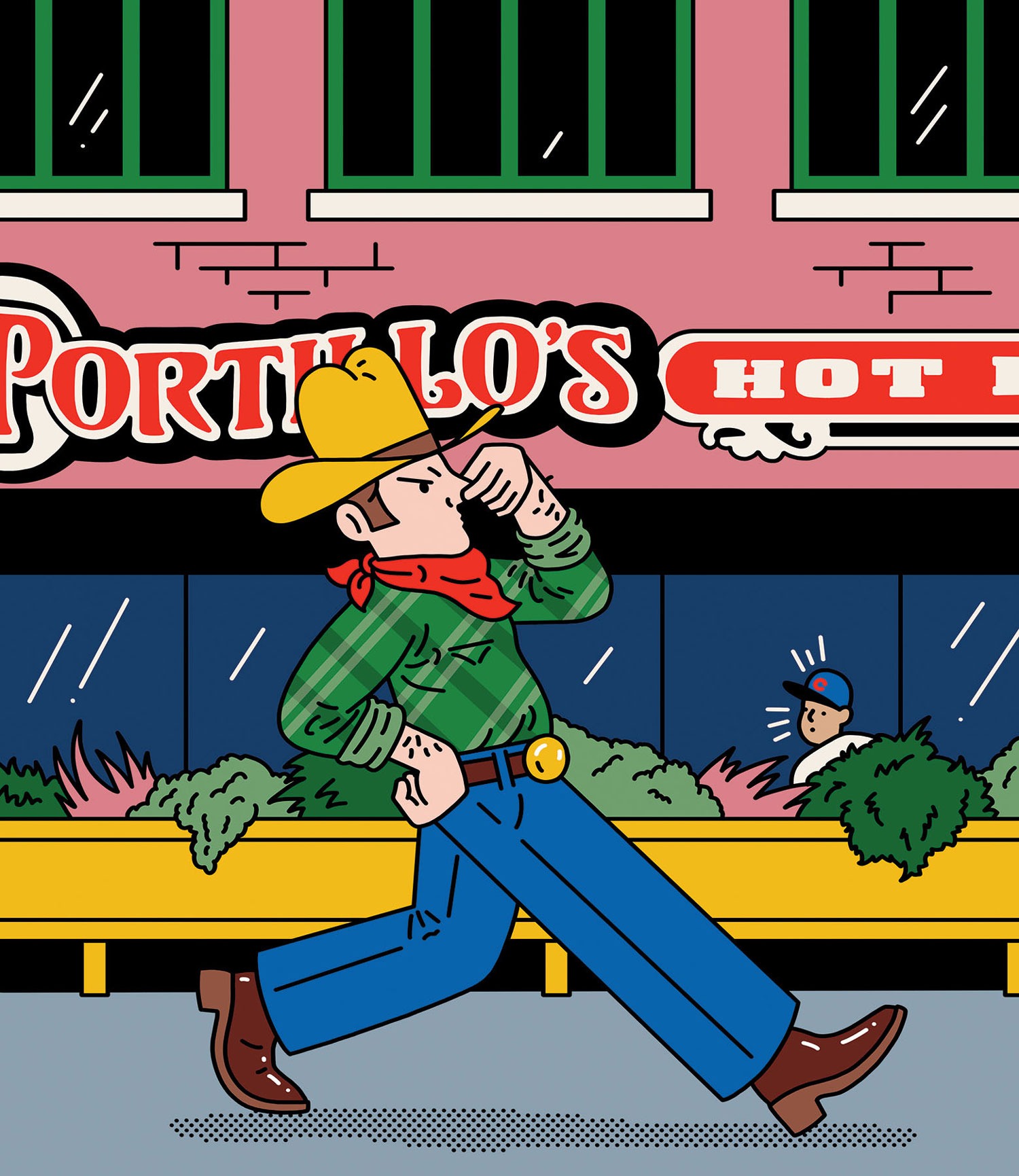
Whether it’s lunch or dinner, the Portillo’s in Skokie is abuzz with activity. Outside, a line of cars inches forward in the drive-through, where employees cheerfully greet motorists. Inside, the kitchen staff labors in the open for all to see, cooking, grilling, chopping, as counter workers call out ticket numbers for completed orders, often in cheeky rhymes (“Number 173, come see me”).
Similar scenes have played out for decades at the fast-casual dining chain’s more than 40 locations in the Chicago area, where it has built a fanatical following for its signature Chicago-style hot dogs, Italian beef sandwiches, and chocolate cake. When it comes to storied local restaurant chains, Portillo’s is mentioned in the same breath as Lou Malnati’s and Harold’s Chicken Shack.
But the 63-year-old company has stumbled in its attempt to expand well beyond its home turf, hitting a rough patch serious enough to raise doubts that it has the business chops to become a successful national brand. Of late, it has had to contend with turnover in the C-suite, flagging sales, anxious investors, and a stock price that’s plummeted to a tenth of what it was at its 2021 peak. “Portillo’s is a hometown hero,” says Sharon Zackfia, an industry analyst at William Blair. “But ‘iconic’ is a dangerous term to use outside of the Chicago area.”
By now you probably know the often-told backstory of Portillo’s. It was the brainchild of Dick Portillo, a former Marine with an entrepreneurial streak, who in 1963 invested $1,100 to start what he then called the Dog House in a Villa Park trailer. Over the years, he expanded the enterprise to 38 locations, including ones in Indiana, California, and Arizona, before selling it to a private equity firm for around $1 billion in 2014.
In 2021, the new owners took the Oak Brook–based chain public, raising $466 million in the IPO. Emboldened by the windfall, Portillo’s embarked on an unprecedented cross-country expansion, planning to grow to 920 eateries over 20 years, primarily in Southern and Western markets, including Dallas, Houston, Atlanta, and Las Vegas.
However, a rocky foray into Texas, where it has opened 16 locations since the start of 2023, has forced management to rethink its game plan. Sales in the Lone Star State started strong, bolstered by the eager reception of those already familiar with Portillo’s, but the company’s marketing failed to raise brand awareness enough to attract new diners.
“Portillo’s is a hometown hero. But ‘iconic’ is a dangerous term to use outside of the Chicago area.”
— Sharon Zackfia, an industry analyst at William Blair
A flash point came last November when Portillo’s reported its third-quarter financials. Revenues were up a mere 1.8 percent from the same period the previous year, much less than expected, and net income had dropped from $8.8 million to less than $1 million, primarily because of expansion overruns and snafus. “Too many locations, too quickly and too close together over the past 24 months, particularly in Texas,” Michael Miles Jr., Portillo’s chair and interim CEO, explained to stock analysts.
The company had found someone to blame: Its longtime CEO, Michael Osanloo, had resigned under pressure two months earlier, amid the flagging performance. This February, after a five-month search, Portillo’s named a replacement: Brett Patterson, formerly CEO of Miller’s Ale House, a casual dining chain based in Florida that has also been expanding, with 116 locations across 10 states, including five in the Chicago area.
Patterson will have his work cut out for him. One powerful constituency Portillo’s must reckon with is Engaged Capital, an activist hedge fund out of Newport Beach, California. It’s been pressing for changes since 2024, when it scarfed up a nearly 10 percent stake in Portillo’s. At first it threatened a proxy fight for control, but last April it entered into a “cooperation agreement” with management that gave it say over another board appointment — its second one — and a greater voice in running the company. Then in October, it drastically reduced its stake, to about 2 percent, according to its securities filings. Still, insisting the stock is undervalued, it is demanding that Portillo’s improve operations and shareholder value.
That is easier said than done. Sales growth for the fast-casual industry in general has slowed over the past few years, dropping from 10.6 percent in 2023 to 6.5 percent in 2025, says food service analyst Kevin Schimpf of Technomic. For Portillo’s, the growth challenge isn’t just about making tasty food but about rolling out sharp advertising, price promotions, and more innovative menus to attract customers beyond its hometown who don’t care that the brand is a Chicago favorite, says William Blair’s Zackfia.
As part of what management is calling a “strategic reset,” Portillo’s is slowing its expansion. This year, for example, it will roll out eight new locations instead of the 12 it originally planned; a similar pace is set for 2027. It also intends to make more of those sites Portillo’s Pick Up. First introduced in Joliet in 2022, these drive-through- and carry-out-only spots are less than 4,000 square feet — about half the size of a traditional Portillo’s restaurant — and more cost-efficient to operate. In addition, the company hopes to boost sales by pushing the customer loyalty program it launched last spring.
The Chicago area remains an oasis for Portillo’s: Its South Loop spot pulled in about $20 million in sales last year, Miles said. That’s well above the $8.7 million annual average for all its locations, which itself is high for the industry. The chain is not done expanding within the city limits, where it currently has three locations: It is reportedly looking to open restaurants on North Michigan Avenue and in Wrigleyville.
Yet even in its home base, the company has had some missteps. A brief foray into breakfast last year was called off. (Apparently, early risers weren’t crazy for chocolate cake iced coffee or Polish sausage, egg, cheese, and giardiniera on French bread.) Which points to the pickle Portillo’s finds itself in: How do you grow without alienating the patrons who made you popular to begin with? As one Facebook poster groused recently: “Things always decline when restaurant chains get bought by investment firms or go public.”