


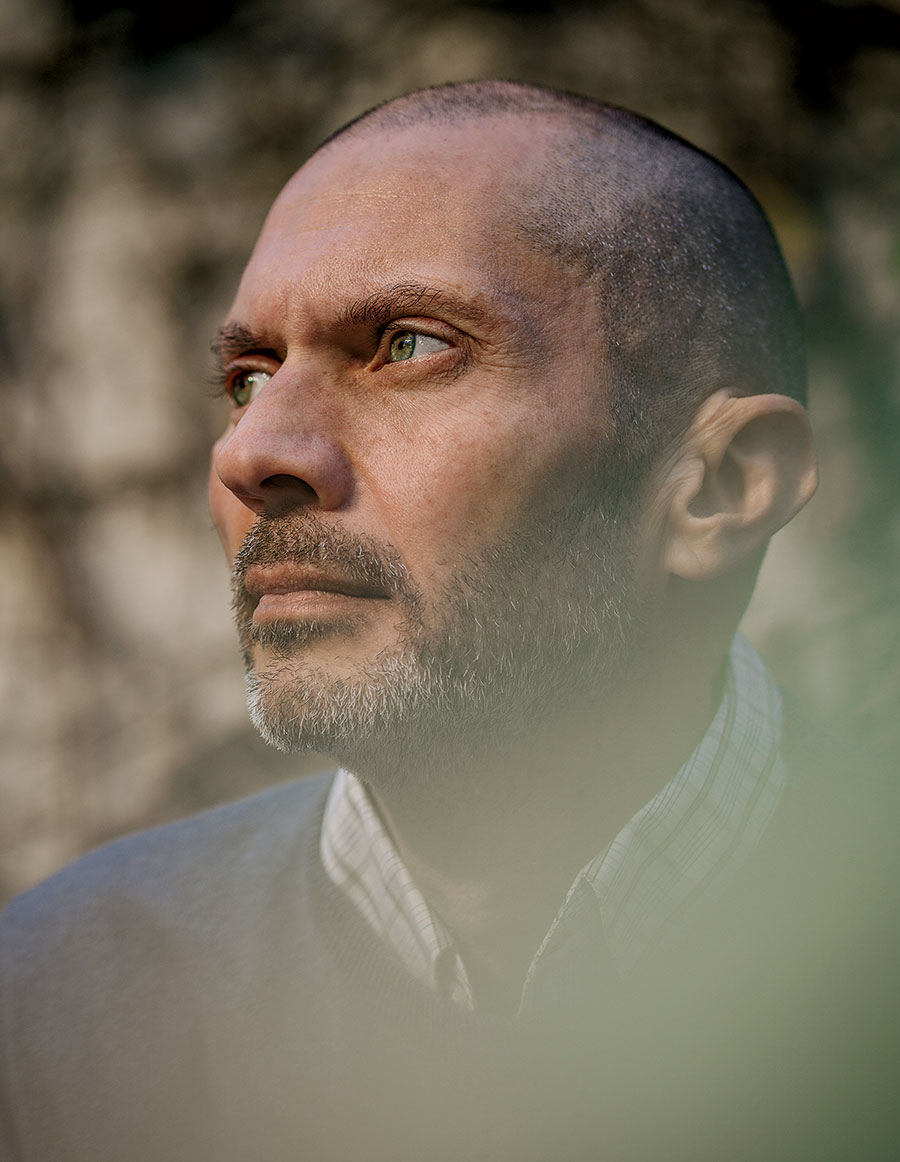
This winter, as the cold winds cut across from Lake Michigan, Doug Schenkelberg wants people to embrace the discomfort of seeing snow-covered tents dotting Chicago’s parks and roadways. More importantly, he wants them to use that discomfort to advocate for better policies to address Chicago’s persistent homelessness problem. The executive director for the Chicago Coalition to End Homelessness since 2016, Schenkelberg has dedicated his career to such advocacy. His connection to homelessness began years ago in Bridgeport, Connecticut, during a postcollege year of volunteering. It was then that he was first exposed to the idea that prospering — in terms of health, education, and steady employment — first requires safe, stable housing.
The City of Chicago, citing safety concerns, regularly removes tent encampments, only for them to return weeks or months later. Advocates like you say that removing these encampments isn’t effective and shouldn’t happen. Are you saying that, as a community, we should be OK with having these tent cities?
At the end of the day, homelessness is a housing problem. That’s not to dismiss all the other conversations that we have about encampments, but the only real way to address those tensions, in a long-term fundamental sense, is by making sure people have access to housing. No one wants encampments. They are a manifestation of big systemic problems. We fix big systemic problems with big systemic solutions: creating more permanent housing and creating the supports that people need so they can be stable and remain housed. What we know is that when folks are offered that type of opportunity, whether they be in an encampment or a shelter system, the vast majority of the time they’re saying yes. Until we have a supply that meets the demand, we can’t focus on just shifting people around, because it makes a hard life even harder.
Some homeless people don’t want to move into shelters, because the current system may not work for them. Sometimes the reasons are geographical — there aren’t many shelter resources on the North Side, for example. The network of shelter organizations is also difficult to navigate if you’re looking for resources. Is there a different approach that could be more effective?
There are a lot of legitimate reasons why someone isn’t going to accept a shelter bed. A lot of times we don’t think about those encampments as communities, but that community provides safety for these folks. They know that someone will watch their stuff when they’re gone. We as humans seek community, and that community can manifest itself in a lot of ways. That’s why someone might feel safer in an encampment, even though they’re exposed to the elements, than going to a shelter on another side of the city, where they know no one. And there’s definitely room for improvement in how our system runs: how people access shelter, how people access housing. One of the drivers of that bureaucracy is that we’re working with scarce resources. If it was a better-funded system, you could open up more options, you could streamline things, you wouldn’t have to say no as often, right?
“A lot of times we don’t think about those encampments as communities, but that community provides safety for these folks. They know that someone will watch their stuff when they’re gone.”
There are concerns about safety on many levels. We know that the data overwhelmingly shows that if you’re homeless, your safety is far more compromised than for someone who’s housed. But there are also community safety issues regarding violence and drug use that are often raised when it comes to these encampments. How should we start to understand that tension?
Oftentimes when people say that they don’t feel safe, what they mean is they don’t feel comfortable. We have to be clear about which it is because there are different answers to those two things. Where there are genuine safety concerns, be it for folks in the encampment or folks in the community, those need to be addressed. There was an encampment in Legion Park where there were real safety concerns: about fires, about the inability for emergency equipment to get to folks in that encampment. Those were very practical things that needed to be addressed. But that’s different from “I don’t like seeing this encampment in my park.” We should think about ways to address that too, but we can’t do it in a way that is at the detriment of those folks living in the encampment.
More supply of affordable housing is an obvious solution to the bigger problem, but that’s difficult in Chicago. The housing we build is expensive. Sometimes a new apartment building will allot 10 percent of units as affordable housing, as part of a city ordinance — but that feels more like lip service than a real remedy. What needs to happen?
We’re in a housing [supply] crisis, and that affects people of all different levels of income. But we need the supply of housing that’s aimed at the folks who are experiencing homelessness to grow. They’re the most expensive people to house because you need the dollars for the rental subsidy, and you need the dollars for the support services to help them stay stable so they can stay in the housing. And then you need the funding to build the affordable housing, which is incredibly expensive: We’ve seen numbers up to three-quarters of a million dollars a unit. It’s insane.
We’re in a political environment where funding is going away quickly and unexpectedly. How is that impacting your work?
For the longest time, regardless of the administration, you could feel comfortable that there was a baseline in terms of funding for these programs. There was never the existential threat that we’re feeling at this moment. The president’s budget changes the criteria of funding that goes to the home services system. In Chicago, for example, we have the Chicago Continuum of Care, which uses a “housing first” model [which doesn’t require prerequisites like sobriety or behavioral health management]. That type of housing would have its funding cut. It’s estimated that 170,000 households will lose housing nationwide. Then there’s a fundamental shift in policy toward punitive measures. This started before Trump came into office, with the Supreme Court’s Grants Pass decision [which ruled that civil and criminal penalties for camping on public land don’t violate the Constitution’s ban on cruel and unusual punishment]. Communities in Illinois have also passed ordinances to criminalize homelessness, and it’s fully endorsed by this administration.
There are certainly systemic problems that need to be addressed, but how should we approach the homeless issue as individual citizens?
I think it’s taking time to understand the whole context of the situation: why people end up being homeless to begin with and why encampments form. There’s a lot of mutual aid groups that do wonderful work engaging with folks living in encampments. Are there opportunities for you to get to know people in the encampment, to provide support to them? The other piece is recognizing that the discomfort is never totally going to go away because we’re looking at an issue that our society should not have. The best version of ourselves doesn’t include tent encampments in our parks. We can come up with good short-term management solutions, but until those long-term systemic solutions are in place, we’re gonna be uncomfortable.