


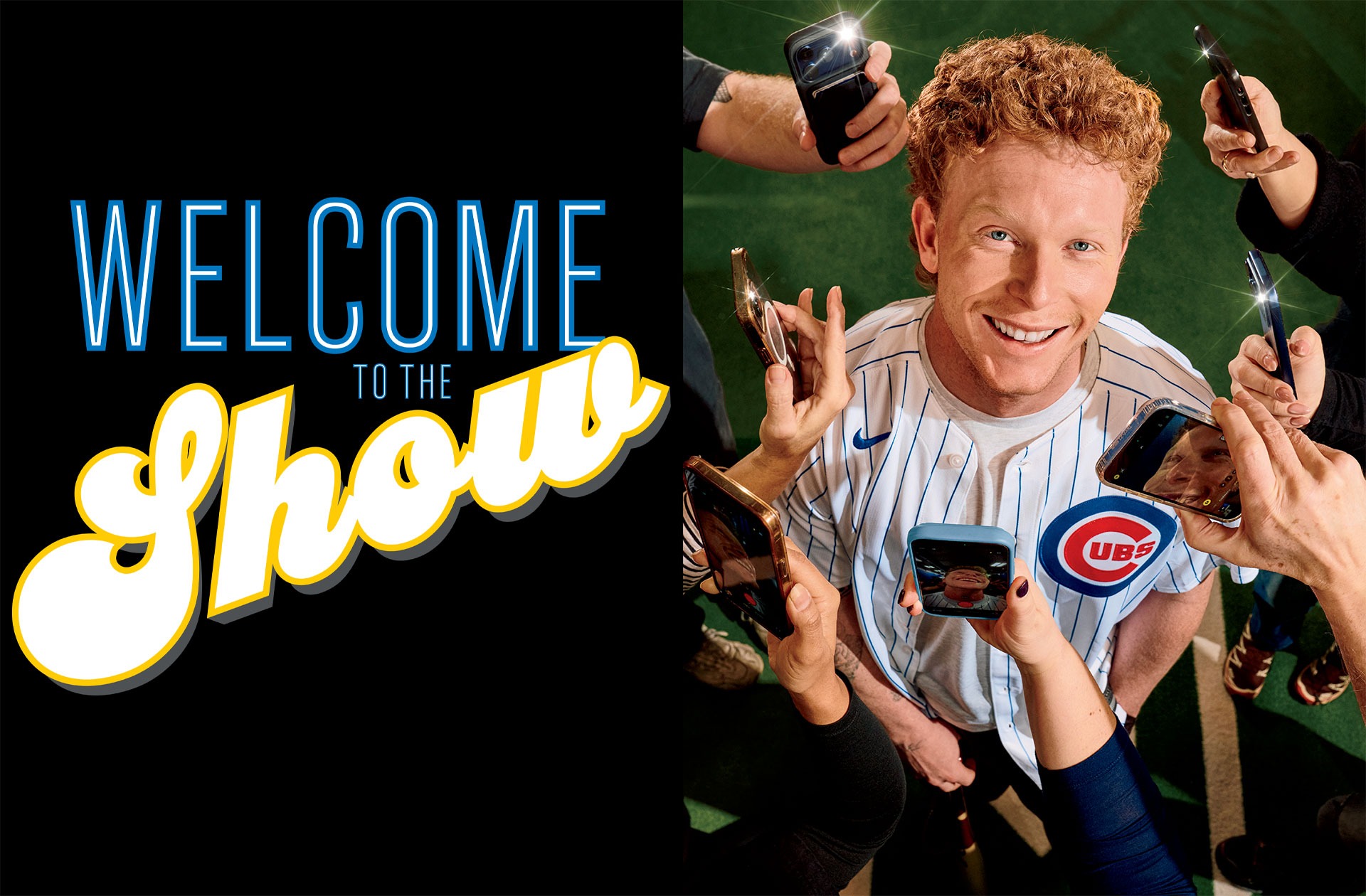
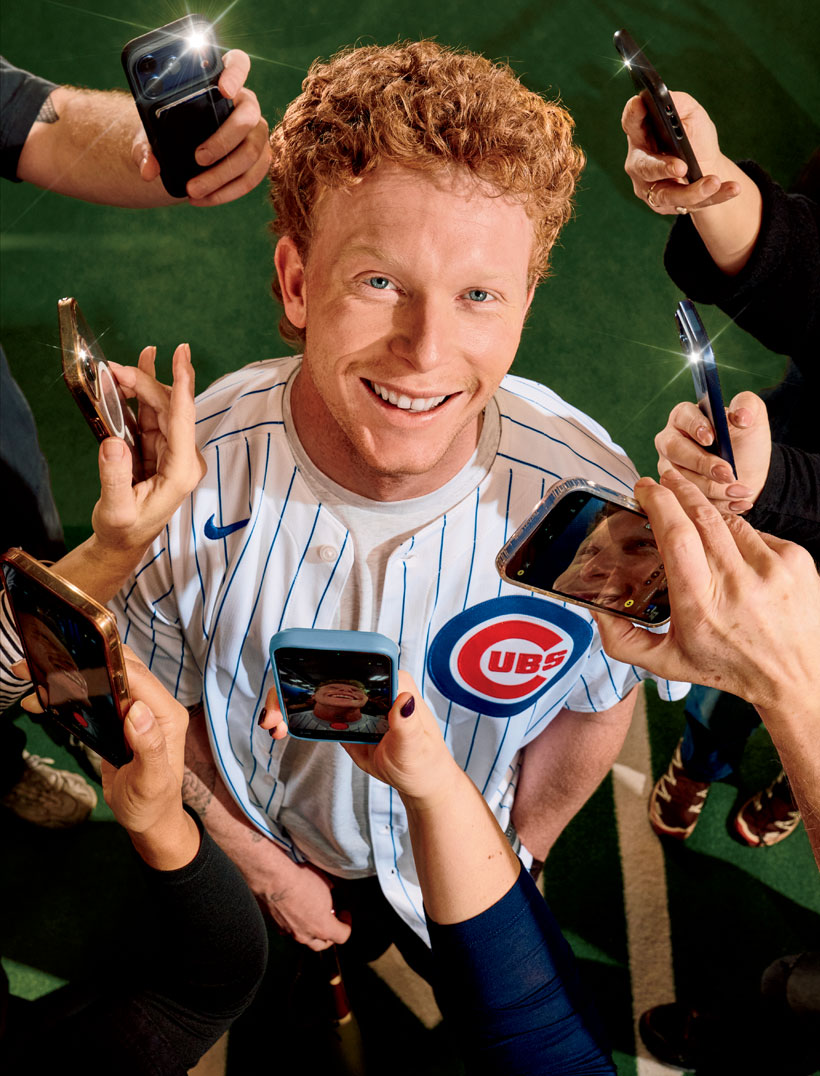
Pete Crow-Armstrong wasn’t trying to be rude. Certainly not to his mother, who had flown into Chicago from California earlier in the day to help her son move into a high-rise in the city. But when the Cubs center fielder has a bat on his left shoulder and a mirror in front of him, he vanishes into his own world. It didn’t matter that it was December, and the 2026 season was still nearly four months away. Or that his mom wanted to catch up. That day, Crow-Armstrong disappeared into his own reflection, staring at his head, neck, and shoulders in pursuit of that impossible-to-define intangible that every great hitter seeks: feel.
“I spend a lot of time in front of the mirror,” Crow-Armstrong says. “Ask my mom. She’s trying to talk to me about what I’ve been up to, and I’m just looking at myself in the mirror holding the bat, trying to figure out what feels good and feels strong. The mirror time is real.”
He’s telling this story as we sit at a Croatian café in the Near North Side. Crow-Armstrong, sipping a cappuccino, is hard to miss in baggy beige trousers and matching jacket under a brown, fur-trimmed vest, a look more Milan than Midwest. A few patrons whisper that the uniquely dressed young man might be the 23-year-old Cubs star. But no one approaches. Sitting back in a wooden chair, Crow-Armstrong seems at ease, exuding confidence and warmth. Though his outfit suggests a man of elite luxury, Crow-Armstrong has the demeanor of a comfortably cool college kid kicking it on a Friday after classes — one who has plenty to say.
Last season, his second full one in the majors, Crow-Armstrong blossomed into a genuine superstar. He became the second-youngest Cub ever to start an All-Star Game. His blink-of-an-eye reaction time prompted countless how-did-he-do-that diving catches to go along with 31 home runs. He also developed into the team’s emotional engine. And yet, deep down, Crow-Armstrong ended the season frustrated. “I hit 25 fucking homers in the first half and six in the second,” he says. “That’s terrible.”
Prior to July’s All-Star Game, Crow-Armstrong was arguably the best player in baseball. No one else in the game’s history had stolen 25 bases, hit 25 home runs, and batted in 70 runs before the break. And that’s on top of Crow-Armstrong’s Gold Glove defense. All of which prompted “MVP” chants from the Wrigley Field faithful. The second half was another story: The elite defense remained, but the offensive firepower vanished. In 203 at-bats in August, September, and October (including the playoffs), Crow-Armstrong hit a woeful .187, with more strikeouts than games played.
He didn’t handle it well. There were helmets thrown. Bats tossed. And TikTok accounts mocking his emotional outbursts. After those games, he would toss and turn in bed at night, stewing about his performance. “He is one of the most competitive players I’ve ever been around,” Cubs assistant hitting coach John Mallee says. “He shows his emotions. He never wants to let his teammates down. So when he fails, he’s such a team guy and wants to win so bad he takes it out on himself.”
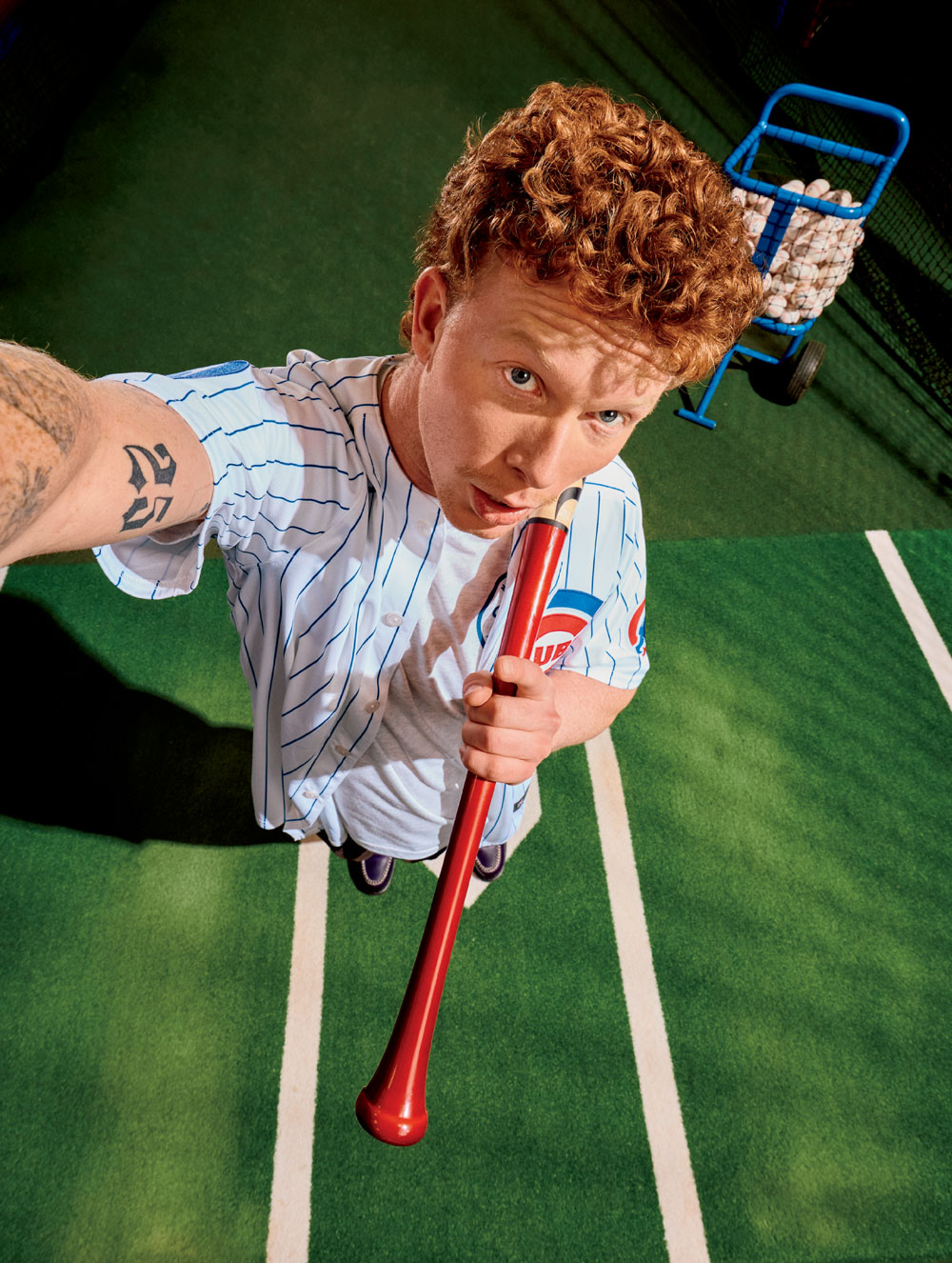
Behind the scenes on our March cover shoot with Pete Crow-Armstrong
Videography: Drew Beeson
How important is PCA, as he’s come to be known, to the Cubs’ success? In the 92 regular season games in which he played and the Cubs won, he hit .294 with 27 home runs and 81 RBIs. In the 65 games in which he played and the Cubs lost, he hit .173 with four home runs and 14 RBIs.
“That’s the stuff that keeps me up. It’s never because I went 0 for 4 that I can’t sleep. It’s always because I’m embarrassed. Pissed and embarrassed,” Crow-Armstrong says. “I don’t throw my stuff all around and spaz out to show people I give a shit. What it shows is that it’s something I still need to work on.”
This is the paradox of Pete Crow-Armstrong. On the field, the world sees PCA. Fire, flash, and unwavering confidence. Endless energy. Ferocious competitiveness. A flame that no one in the Cubs organization wants to put out. But off the field, there is Pete. An intelligent, introspective, hyperaware young man. Someone who loves to read. Who grew up on Paul Simon and Dave Matthews and still adores both today. It’s why Mallee jokingly refers to Crow-Armstrong as “the Hulk.” Not because he possesses otherworldly strength, but because he’s still trying to figure out when to turn green and when to just be Bruce Banner.
Crow-Armstrong understands he’s still a kid in many respects, as much as he hates using his age as an excuse. He entered last season as the 18th-youngest player in the game. There’s maturing to do. Experiences to endure. Perspective to gain. He has struggled to give himself that leeway. He fully expected to be in the majors by 21 — and dominating by now. Yet he realizes the secret to unlocking his full potential, and with it the full potential of the 2026 Chicago Cubs, just might be inside his own mind.
“What’s undeniable is that baseball is too hard to go out there every day and succeed,” he says. “That is for some reason the one thing I can’t yet rewire in myself. It’s harder than any mechanical change or anything that I’ve had to fix.”
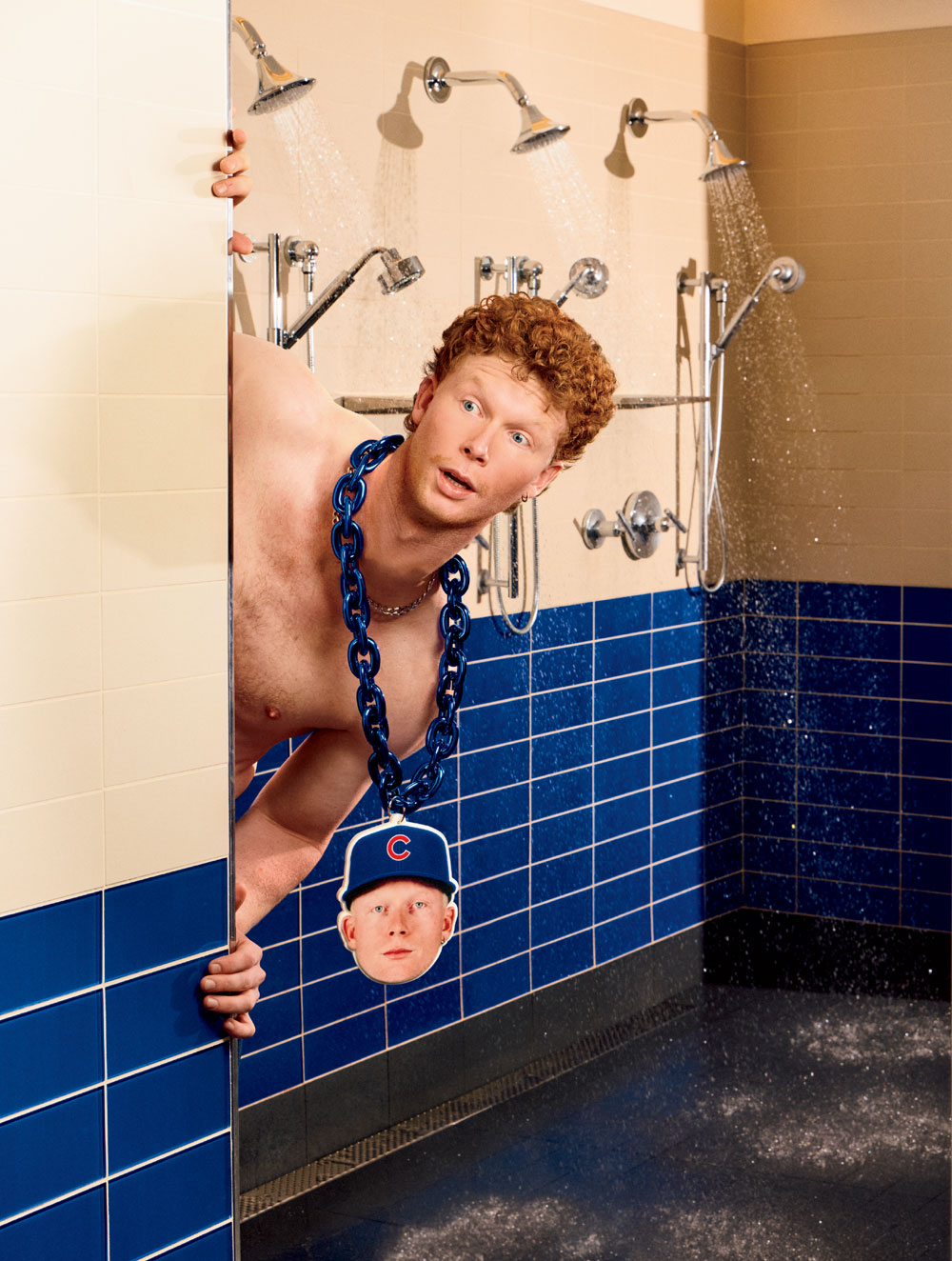
The day after sipping coffee, Crow-Armstrong is sitting in the back of a black SUV as it pulls up to the North Austin Center on the city’s West Side. The 150,000-square-foot community facility is the home of the Jason Heyward Baseball Academy, which the former Cubs outfielder opened in 2023. Crow-Armstrong has never worked a youth baseball clinic before, certainly not one where he’s billed as the headline attraction. When he enters the facility’s turf-covered field house, he is greeted by 442 boys and girls, ages 6 to 13, sitting together in matching white T-shirts, all of them with the No. 4 and “Crow-Armstrong” printed across the back, chanting, “PCA! PCA! PCA!”
Lined up along the mesh fence that surrounds the field and the eight second-floor windows that overlook it are even more people: seemingly every friend and family member these children have ever known. Crow-Armstrong grabs a microphone and attempts to say hello. But the campers won’t stop chanting.
“All right, all right,” Crow-Armstrong finally says, shaking his head in astonishment. “Save your breath.”
A few minutes later, after the kids head to their stations to begin their baseball work, Crow-Armstrong turns to a few of the camp organizers and shakes his head again. “This is fucking nuts,” he says. “I am genuinely just … wow. I was not expecting this.”
On this night, there’s no talk about Crow-Armstrong’s on-field emotions or second-half dip. Instead, kids pepper him with questions about his favorite pizza (thin crust), whether he favors gum or sunflower seeds (gum), Jordan vs. LeBron (Jordan), and whether he prefers a homer or a stolen base (homer). When it’s time for group photos, several kids just stare at him in genuine awe. Crow-Armstrong seems to have a radar for such awkwardness, breaking the ice with those he catches looking his way with a fist bump, high-five, or “What’s up?” “He’s a natural, one of the best we’ve ever had at this,” says an employee of FlexWork Sports, the company hosting the clinic.
Crow-Armstrong was an easy choice to headline the event. Even with his late-season offensive struggles, he was only the second Cub in history to finish a season with 30 home runs and 30 stolen bases. The other? Sammy Sosa. On defense, he became an outfield illusionist, stretching gap to gap to make a record 19 five-star catches, a term given to catches with less than a 25 percent chance of being made, according to MLB’s player metrics. That mark was three more than the second- and third-place fielders managed combined. And seven more than the previous record, which had stood for nine years.
“He has the ability to do things not many people on planet Earth can do,” says Cubs teammate Nico Hoerner.
Picking a favorite Crow-Armstrong catch is like choosing a favorite ice cream flavor. Everyone has their own preference. Statistically, Crow-Armstrong’s top grab was a fully extended dive on a sinking liner against the Cardinals in July, a catch with a 0 percent probability of being made. Translation: In the decade of tracking such metrics, no player had ever before covered that much distance in that little amount of time to make a catch.
Nico Hoerner, the Cubs’ Gold Glove second baseman and a seven-year veteran, says that PCA’s defensive range has forced Hoerner to recalibrate what does and doesn’t look like a hit off the bat. Two weeks before that technically impossible catch against St. Louis, Hoerner watched Crow-Armstrong rob Milwaukee’s Brice Turang on a sinking liner to left in the top of the eighth before belting a 452-foot rocket off the right field scoreboard in the bottom of the inning. “He has the ability to do things not many people on planet Earth can do,” says Hoerner. “The best example was that Brewers game. That puts him into a world all his own.”
So yes, he’s the obvious center of attention at the baseball clinic, with kids, parents, and camp workers all trying to jostle their way around security guards in yellow T-shirts to get closer to him. Crow-Armstrong works an outfield station, teaching kids the art of the drop step. After one teenager makes an acrobatic over-the-shoulder grab, PCA jogs over to give him a high-five.
“Gold Glover, who?” Crow-Armstrong yells.
“I’m never washing this hand,” the camper says to a friend.
Another young boy, no taller than Crow-Armstrong’s waist, lingers after completing the station. As the rest of his group rotates to the next stop, he looks up at Crow-Armstrong before wrapping his arms around the center fielder’s 184-pound frame. “Thanks, buddy,” Crow-Armstrong says, flashing a smile.
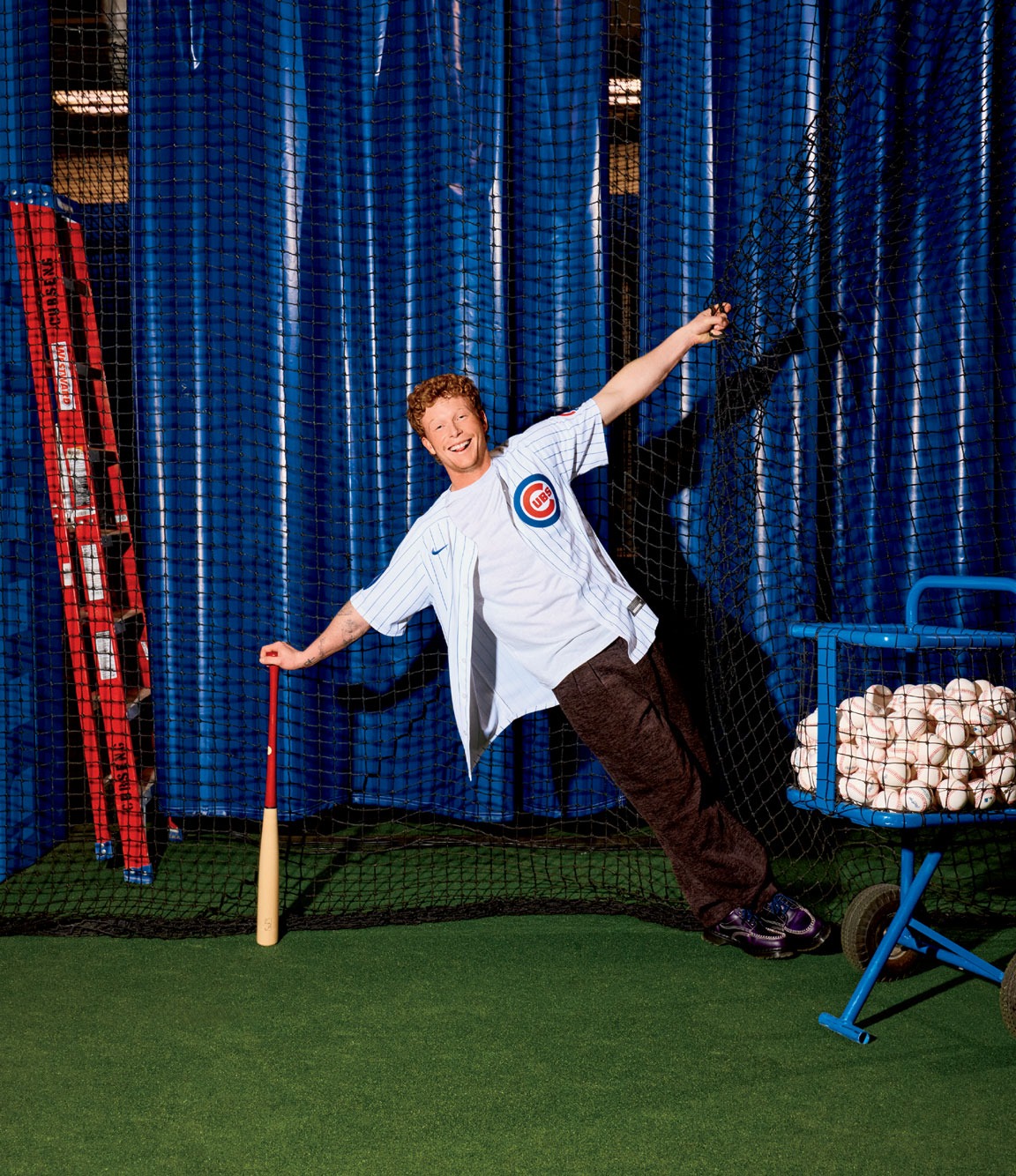
The legend of Pete Crow-Armstrong began in a backyard in Sherman Oaks, California, with a Cubs-loving dad who’d grown up in Naperville and pitched Wiffle balls to his only son while mimicking San Francisco Giants pitcher Tim Lincecum. Like his wife, Ashley Crow, Matt Armstrong was a Hollywood actor. (Crow played the mom in Little Big League, and both of them appeared in the 2000s NBC hits Heroes and American Dreams.) Mom and Dad introduced their son to the music of everyone from Bob Dylan and the Dixie Chicks to the Beastie Boys and Run-DMC. When Pete was a baby struggling to sleep, they would put him in the car and play Dave Matthews and Paul Simon until he passed out. “I had cool friends and cool parents,” Crow-Armstrong says. “And they encouraged me to be myself.”
Since coming up to the big leagues, Crow-Armstrong has strived to stay authentic. Last year, he arrived at spring training with Dennis Rodman–inspired bleached-blond, close-cropped hair covered with blue stars. At the December youth baseball clinic, he showed up in a black Chrome Hearts hoodie and royal blue joggers with white cotton wreaths splashed all over them, topped off with a backward Kith Cubs hat. Asked at last year’s All-Star Game what he’d tell kids who want to be like him, Crow-Armstrong replied, “Everyone is nice and unique in their own way.”
Which is why, during an off-season vacation to Hawaii with his buddies, he was so perplexed by a particular question he kept getting when he told strangers he was from California. “They’d be like, ‘Oh, are you an influencer?’ ” he recalls. “And it’s like, ‘No, I’m not. Why the fuck do you think I’m an influencer?’ Maybe I take that to heart a bit.”
Young Pete, like his parents, had a flair for the dramatic. Wiffle ball time was a chance to pepper pitches off the apartment building beyond the family’s home. Crow-Armstrong would go on to play for Harvard-Westlake, a prestigious private high school whose baseball program has produced multiple major-league players, including former White Sox pitcher Lucas Giolito. He committed to play college baseball at Vanderbilt, but when the New York Mets chose him with the 19th pick in the 2020 MLB draft, plans changed: He went straight to the pros.
A year later, when Cubs management broke up its 2016 World Series nucleus, Crow-Armstrong, acquired in a trade of former All-Star Javier Báez and Trevor Williams, became the minor-league prospect that fans hoped would become a star on the next great Cubs team. Out for that season with a shoulder injury, he would not make his debut with his new organization until the following spring, with its Single-A affiliate in Myrtle Beach, but he quickly built a reputation as a highlight-grabbing, hard-working outfielder with elite speed. Hoerner remembers watching him pinch-run during one spring training early on: “His helmet is falling off and he’s taking every extra base he can. With him, there’s always a certain level of determination with what he’s doing.”
Crow-Armstrong never felt like he fully clicked last season. “I was on the cusp of it for so long, but it never happened. And the emotions and anger tired me out.”
In 2023, the Cubs promoted Crow-Armstrong, then 21, during a late-season push for the playoffs, but the team fell a game short of the postseason. He failed to collect a single hit in 14 at-bats. “I sucked,” he says. “And maybe I’ve carried that with me a little bit, the disappointment in how my career started.”
He began the following season in Triple-A, then played 23 games in the majors before the Cubs sent him back to Des Moines that May. He swiftly delivered a message that he didn’t belong in the minors. In his next three games, he hit .429 with two homers and a double.
He began his fourth game with a double before stepping into the batter’s box against Wily Peralta, who, after playing with the Royals, Brewers, and Tigers, was trying to work his way back up to the big leagues. Peralta’s first pitch sailed behind Crow-Armstrong’s legs. The second flew over his head, missing his helmet only because he ducked. Crow-Armstrong began chirping at the catcher. “I was like, ‘Really, brother? That’s what we’re doing?’ ” he recalls. “He should have just fucking hit me the first time if he’s going to do it. This is a 10-year major-league vet. He didn’t just miss bad twice.”
Iowa manager Marty Pevey sprinted out of the dugout to defend his player, arguing that Peralta should be given a warning for deliberately trying to hit Crow-Armstrong. The umpires ejected Pevey. “I hope Pete hits this next baseball 5,000 feet,” Iowa Cubs announcer Alex Cohen said on the TV broadcast. Right on cue, Crow-Armstrong obliterated the next pitch over the right field wall, followed by an emphatic bat flip and a wag of the tongue as he crossed home plate.
“I was having fun like I normally do,” Crow-Armstrong says, “which can rub people the wrong way. Salty vet in Triple-A. I don’t blame him. I want to be up in the Show, too.”
Crow-Armstrong would hit two more doubles that night, and word quickly spread throughout baseball about his theatrics. Six days later, Crow-Armstrong was back in the big leagues for good.
“We all saw it. We were going crazy,” the Cubs’ Mallee recalls. “That told me everything I needed to know about the kid right there. That’s who he is.”
And who is he exactly? Mallee describes Crow-Armstrong as someone who plays baseball like an NFL linebacker — with the same kind of intensity, passion, and fire. During multiple walk-off wins last season, Crow-Armstrong flew out of the dugout so fast to celebrate with teammates that he nearly beat the winning run to home plate. He knows his exuberance can irritate opponents, but he doesn’t really care.
“I’m sure I come off like a douche sometimes,” he says. “That’s how I present my fun to people, I guess. I’m not loud anywhere else. I’m not riled up anywhere else. That’s where I get to do that stuff. So hell yeah, I rub people the wrong way. That’s what I did in Triple-A that day, that week. Just playing well and beating their ass.”
As Crow-Armstrong is explaining to me that he needs to give himself more grace on the diamond, his phone buzzes.
“I hope this isn’t Couns calling me,” he says. Cubs manager Craig Counsell is supposed to be checking in with his star outfielder on this day. But this call isn’t him.
“Nope,” Crow-Armstrong says. “Just one of my schmuck friends.”
Back to the need for grace. For the first half of last season, Pete Crow-Armstrong was at the top of his game. He paired Gold Glove defense with an unforeseen power display and served notice that he didn’t just belong but could carry a playoff-caliber team. At its peak, PCA fever brought Wrigley to its feet for each at-bat, with 35,000 fans chanting his name.
“It would be a random day in June, not even a big situation that calls for it, and I’m getting ‘PCA! PCA! PCA!’ I’m like, Fuck, I’ve got to do something. And I’m telling you, every time that happened, I probably struck out or something.”
Self-deprecation aside, here’s the astonishing thing about Crow-Armstrong’s hot streak: He never felt like he fully clicked. “I was on the cusp of it for so long and felt like I was really close, but it never happened. And the emotions and anger tired me out. You could see it in the second half. I know that sets me up for failure, but it’s the truth. I was saying that to [Mallee] every day: ‘I feel great. Why can’t I put this shit together?’ ”
Even as Crow-Armstrong climbed his way into the middle of the batting order, routinely batting fifth against right-handers, and into the National League’s Most Valuable Player conversations, his frustration built. And then came the late-summer slide. Mallee doesn’t buy Crow-Armstrong’s narrative that the season was a disappointment: “If he can repeat every year what he did last year, that’s one hell of a career. But there’s more in there.”
He has worked with Crow-Armstrong to adjust his swing mechanics, aiming to help his timing. In practice, Mallee says, the lefty’s swing is “second to none.” But in games, it sometimes erodes. He’ll lose patience, reaching for pitches he shouldn’t. In baseball, problems often can’t be fixed by trying harder. The more you stress, the more you press, the more you struggle. Crow-Armstrong worked this off-season to find greater emotional balance on the field. He has read up on how to control his breathing and master the stress of critical moments, Mallee says.
He will also lean on the team’s veterans, like Hoerner, who pulled PCA aside after the discouraging end to last season, reminding him: That’s baseball. Recalls Crow-Armstrong, “He put it perfectly: Some year you’ll hit seven homers in the first half and 30 in the second. Why does it have to be one way or the other?”
“I love Chicago more and more,” Crow-Armstrong says. “The people are great. They aren’t just baseball fans who go to the game like Dodgers fans to take pictures and whatever. They care.”
Crow-Armstrong, who turns 24 on March 25, the day before the start of the Cubs’ regular season, will miss part of the team’s spring training, as he is one of 30 players selected to represent the United States in the World Baseball Classic. It’s an opportunity for him to spend extended time with veteran superstars like Bryce Harper, Aaron Judge, and new Cubs teammate Alex Bregman, which Mallee thinks will be good for the young player: “I’ve been around a lot of those types of hypercompetitive athletes, and they learn the most from their peers.”
The last thing the Cubs want is for PCA to lose his fire. He says Counsell has never asked him to restrain his emotions. So what has Counsell advised him? Give himself that grace at the plate. Focus on playing elite defense. Take an extra base. Lay down a bunt if the situation calls for it. Be the catalyst for the team. Understand and accept that things won’t always go your way. And when they don’t, learn from it and move on.
“I’m just lacking in that area. I’m a little late to get there,” Crow-Armstrong says. “That’s about growing up and having the self-discipline to be a better teammate. I need to keep it present and forward-thinking instead of dwelling all the time on what I could have done better.”
Crow-Armstrong hopes he will one day look back on his early-20s exuberance and chuckle. Once he’s a veteran, he wants to be respected for his leadership, the way teammates like Hoerner, Ian Happ, and Dansby Swanson are. “I want people to be proud of the person. I want people to be able to talk about me in the same light as those guys. When all is said and done, and I’m older and wiser and whatever, I would like that to be the focus on me: as a person instead of ‘He’s finally hitting for power’ or whatever.”
With one caveat. “I would like to win a World Series. I want a ring.”
The morning after the youth baseball clinic, Crow-Armstrong finds himself on the sideline at Soldier Field, taking in his first-ever Bears game, a late-season overtime victory over the Packers, and leading the stadium in pregame cheers. It is an interesting choice for a kid from California. Single-digit temps. An icy glaze on the ground. With each breath, he emits a tiny white cloud that wind gusts immediately erase.
Three days later, he is watching his first Bulls game at the United Center. A few days after that, he is back in the stadium with Happ, sporting a Blackhawks sweater and cheering on the city’s hockey team. In early January, he returns to Soldier Field for the Bears’ wild-card victory over the Packers. The same weekend, fans take pictures with him at Butch McGuire’s in the Gold Coast, the Cubs star looking like a regular 20-something Chicagoan out on the town. “Accidentally became best friends with PCA while celebrating my Peach Bowl win,” one fan writes on X, posting a photo with Crow-Armstrong, the outfielder playfully putting a fist to the fan’s chin.
“I love Chicago more and more,” Crow-Armstrong says. “It’s just an incredible city. The people are great. They give a shit. They aren’t just baseball fans who go to the game like Dodgers fans to take pictures and whatever. They are paying attention. They care.”
He has built relationships with two of the city’s other young stars, Bulls forward Matas Buzelis and Bears quarterback Caleb Williams. In December, the day after leading fans in cheers at the Bears game, Crow-Armstrong joined Williams and Chicago-area-rooted music video guru Cole Bennett for what they dubbed the Holiday Handoff, giving meals to 3,000 families across the city. (Crow-Armstrong spent Christmas with family in the west suburbs.) In January, the day after the Bears’ season-ending playoff defeat to the Rams, Crow-Armstrong sat with Williams at a Blackhawks game, the pair greeted by loud roars when they were shown on the stadium screen. They were back the very next night for a Bulls game, stirring talk of a bromance.
PCA loves the passion that flows through the city. The authenticity. The edge. He can run down his favorite spots to eat, from Alla Vita to Gibsons. He has his favorite local escapes, be it a stroll on the lakefront or a quick nine holes at the Sydney R. Marovitz Golf Course in Lake View. There, Crow-Armstrong routinely runs into an employee who is a White Sox fan who loves to give him a hard time. And Crow-Armstrong teases him right back: “I think I signed his hat.” When strangers ask Crow-Armstrong where he’s from, he still says California. “But I live in Chicago,” he’s quick to add.
“That’s one thing that is very cool about him that not a lot of younger players get,” Hoerner says. “He couldn’t have more of an appreciation for the history of the game and playing in Wrigley Field. He’s excited to be a part of the city of Chicago in a way a lot of guys don’t really understand.”
The Cubs have Crow-Armstrong under contract through the end of the 2030 season, and there has been talk of an extension. “I’ve made it clear I want to be here for as long as they want me,” Crow-Armstrong says. “I want what’s best for the team. I’m cool with being under team control and being here. League minimum ain’t too fucking bad.”
Crow-Armstrong is set to make around $820,000 in 2026, with performance bonuses that could push that well over a million. That’s remarkably low for a budding superstar. But recent contract extensions signed by young outfield stars Corbin Carroll of Arizona (eight years, $111 million) and Jackson Merrill of San Diego (nine years, $135 million) offer a baseline for what a long-term deal could mean for Crow-Armstrong.
None of that is top of mind, he says. “I play the game because I like beating other people. The money will be life-changing regardless. I would like to get a fair deal so I don’t fuck the market up. I want to look out for the other center fielders who have to go through the same process. Which is why I’m glad [Cubs management] and my agents are figuring out how to do this.”
The 2025 postseason cemented his desire to stay with the Cubs. During a win-or-lose game 4 of the National League Division Series against the Brewers, he experienced a ratcheted-up atmosphere in Wrigley Field. Cubs fans stood nearly the entire game, cheering and chanting on almost every pitch. “The sickest shit I’ve ever been a part of,” Crow-Armstrong says. “Different from any other baseball game I’ve ever played in my life. Like having a 10th player out there.”
The Cubs won that night, and though the Brewers took the decisive game 5 two days later in Milwaukee, the 2025 season was the most fun Crow-Armstrong ever had on a baseball field. Nine years earlier, as a 14-year-old, he watched the Cubs win the 2016 World Series with his dad, a lifelong Cubs fan. Last October gave him an ever so slight taste of what that was like: the buzz around Wrigley, the tension in the stands, a city hanging on every pitch.
“I saw what bringing playoff baseball back to the city meant,” he says. “That’s an easy, immovable goal. The fuck are you playing for if you’re not trying to play in the playoffs and win the World Series? There’s more to life than baseball, but maybe not for me right now. This shit is my life.”
Grooming: Cathleen Healy / Distinct Artists