

Three years after the crash that killed her husband and two friends, Rebecca Crawford was working at a record store in Lake View. She was keeping busy, trying to feel a part of the real world again. "It was time to get my life in order," she says.
Then came a sunny afternoon when the store wasn't busy, and Crawford was alone. A young man who had come in to sell some used CDs handed her his driver's license, following a house rule that helps deter potential sellers of stolen merchandise. At first glance, Crawford thought the man looked familiar. Then she saw the last name on the license: "Sliwinski." It was the same last name as the woman, Jeanette Sliwinski, who had made her a widow.
Crawford thought she might pass out. She flashed back to July 14, 2005, the day her husband, John Glick, age 35, and his friends Michael Dahlquist, 39, and Doug Meis, 29, had been killed in a horrific car crash that was initially deemed a murder. Now everything came rushing back at Crawford, prompted by a casually dressed man looking to sell a few CDs. "I know that he didn't kill my husband and my friends," she says. "But it was the brother of the person who did. It was like having her in front of me."
Crawford looked around, trying to find someone else who could help the man. No one else was near the register. So Crawford gave him several dollars for his old music, avoiding eye contact all the while. Then she turned away, walked into the backroom, and cried. Maybe it wasn't the brother, she told herself. But did it really matter? Jeanette Sliwinski would soon be up for parole. She would be free to walk around Chicago again.

In the days after the crash, many theories surfaced as to why Sliwinski, 23, had floored her accelerator, reached a speed of nearly 90 mph, and rammed full-speed into a car at a red light, killing three strangers inside. She was suicidal. She was insane. She was under the influence of a cocktail of antidepressants and club drugs. Back then, the why almost didn't matter: A crime had been committed, Sliwinski didn't deny causing it, and the victims' families and friends believed they would see justice served. "In the very early stages it just seemed so logical," recalls Scott Meis, Doug Meis's youngest brother. "How could it not work out?"
But then last October the trial began. Inside a small second-floor room in the Skokie Criminal Courthouse, a room with green carpeting and gallery seats like church pews, testimony centered on Sliwinski's state of mind at the time of the crash. Dozens of answers and theories were batted back and forth in front of a judge. Two weeks later, Sliwinski—who faced three counts of murder—was deemed mentally ill and her charges were knocked down to reckless homicide. A potential life imprisonment turned into a sentence of less than four years. If Sliwinski stays out of trouble, she could be home shortly before Thanksgiving.
"Justice is not going to happen. Closure isn't, either," says Rebecca Crawford. "At the very least, you try to figure out a way to let some of the pain go."
Three years after the crash, there's no resolution for Jeanette Sliwinski's family either. Speaking publicly for the first time, her parents admit that they're not sure what happened that day. "We're just taking it day by day," says Ursula Sliwinski, Jeanette's mother. "That is all we can do."
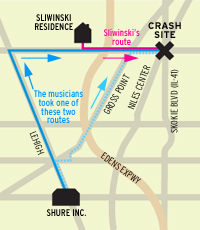
Shure Inc. is headquartered in a massive glass-and-steel building so shiny and modern that it overpowers the everyday suburbia that surrounds it. On the inside, the office is far more casual, more like the people who work there. A Niles-based manufacturer of audio equipment, Shure hires many musicians and practices an informal credo of being flexible, letting employees make time to gig, tour, or count on getting to weekly band practice. The way Dahlquist, Glick, and Meis saw it, the place was a haven for realistic types: people who aspired to play music full-time, but stayed grounded enough not to count on it.
Dahlquist was a technical writer on the sixth floor and Glick worked a few desks away in marketing and communications. Meis worked on the fifth floor in customer service. All three men were close, literally and figuratively. During the week, the guys talked around each other's desks, played pranks, met in the Shure break room for chess, or went to lunch. Outside of work, each was in a band: Dahlquist was the drummer in the intricate rock band Silkworm, Glick played guitar and sang in the garage-rock outfit The Returnables, and Meis had been the drummer in Exo and The Dials, the latter a punk band in which Glick's wife, Rebecca Crawford, played bass and sang. The guys got together to see one another's shows or other bands, sing karaoke, and barbecue.
On this day, the friends spontaneously headed to one of their favorite lunch spots, Pita Inn, about four miles away on Dempster Street. "It was always just, 'Hey, let's go'—we're going to grab lunch and laugh our asses off," explains Jim MacGregor, a friend of the three from work. "It probably happened once a week, at a minimum. Any one of us could have gone."
Sometime after 11:30 a.m., Dahlquist walked over to Glick's desk and said, "Let's go." Glick asked if anyone else wanted to join them. A few desks away, Jon Stookey replied, "No, thanks"; he'd brought his lunch for the first time in months. MacGregor, also within earshot, said he had to work, especially because he had a meeting with Glick at 2:30 p.m. to go over the wording on some technical brochures.
Three years later, MacGregor describes the "what if's" that linger: What if Stookey had gone? What if their morning meetings had run late? What if he had gone—but stopped at a drinking fountain and delayed the trip? "All the things that might have happened differently," he says. "The questions can drive you crazy."
The three friends piled into Dahlquist's black Honda Civic. Maybe they took Lehigh Avenue. Maybe they were on Gross Point Road. Regardless, the last 20 minutes of their lives come down to this: It was a beautiful summer day, and Michael Dahlquist, John Glick, and Doug Meis were on lunch break. "All I know," says Tim Midgett, a friend of the three and a bandmate of Dahlquist's, "is that they couldn't have been having a bad time."
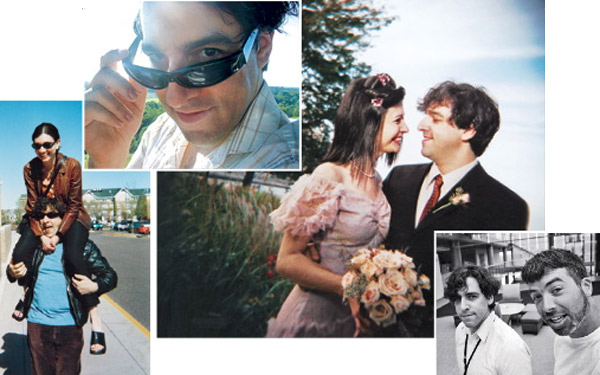
Michael Dahlquist hadn't been playing drums very long when he walked into a Seattle practice space in 1990 and auditioned for the founding members of Silkworm, who, up to that point, had been relying upon a drum machine nicknamed Lurch. Dahlquist had been driving a cab to make a living and, by his own admission, wasn't a very good drummer. But, over time, the vicious way he hit the drums (often wearing nothing but boxer shorts and gardening gloves) evolved into a concise, if aggressive, technique. "Eventually, his drumming style was described as workmanlike; blue collar, lunchpail, hardhat drumming," says Steve Albini, the renowned producer who recorded eight of Silkworm's albums. "But I think that undersells his genius a little bit." Five years after Dahlquist joined the band, Silkworm signed with Matador and then Touch and Go—two of the independent music scene's most respected labels—and toured the world.
Dahlquist's friends describe a similar, far sweeter energy when he was away from the drums. "He could make waiting in line at the post office fun," says a friend, Rene Usdrowski. Over the years, Dahlquist's family and friends grew accustomed to his energetic phone calls, which came whenever he saw something unusual—a sunset, a constellation, fireworks. He didn't meet people so much as he became instant friends with them. "After he died," Midgett says, "I got dozens of emails from people all over the country who said Michael was their best friend."
Doug Meis was also a drummer. As a kid growing up in Oak Harbor, Washington, Meis would practice beating his hands against his skinny chest even as he lay in bed. On weekends, he would don a pair of soundproof headphones, tune a radio to the local alternative rock station 107.7 FM, and from noon to 7 p.m. drum to whatever music he heard on the radio. (Those hours were scheduled out of respect for the neighbors.) As a music business major at Illinois Wesleyan University, he spent his Friday and Saturday nights in the school's practice rooms, not because he was antisocial, but because he knew he'd have the rooms for as long as he wanted. "It didn't matter what he was doing," his brother, Scott, says. "Just as long as he had time to play the drums."
Not long after college, Meis loaded up his car and headed to Chicago on a whim. "Nothing made Doug anxious or worried or depressed," says his girlfriend, Jennifer Philbrook. "If he did get down, he'd say, 'I'm kind of sad'—then, a little while later, it would pass."
John Glick was a guitarist and, most recently, frontman of The Returnables. On stage, he moved with a confidence and exuberance that suggested rock star. Offstage, Glick himself wasn't showy. He once told his bandmates that he'd much rather be known as a "cult star" and would feel validated by a review in the Trouser Press, an off-the-radar New York rock publication. His wish was granted after the 1999 release of the EP So When Can I See You Again? "It was music performed for the love of music and the camaraderie," says a friend, Rhett Miller, lead singer for the band Old 97's. "It was never driven by ambition or need for adulation."
Glick, who was born and raised in Malden, Massachusetts, started reading when he was three and, by five, was writing poems and songs. (His sister, Emily Alston-Follansbee, recalls one called "John Glick's Rock 'n Roll Song.") From the time he was a student at the University of Wisconsin in Madison, Glick formed bands with his friends, even rigging an audition so that one of his best friends, Jonathan Ben-Isvy, might make the group. Ben-Isvy didn't know how to play guitar well, so Glick spent weeks secretly teaching him five Returnables songs. Later, as The Returnables set about making the liner notes for their first album, Glick insisted that all four members take credit. "He wrote the majority of the tunes," recalls Ben-Isvy, who, as one might expect, passed the audition. "But he didn't care." Bandmates weren't the only ones to know this side of Glick. If he had a great sandwich, he had to make you one. If he heard a great record, you had to listen.
"He just wanted to share things with people," says his widow, Rebecca Crawford, "and the same could be said about Doug and Michael, too. They lived every day like that."

The first calls to Skokie 911 came in about 12:15 p.m. on July 14, 2005. Sometime before that, Jeanette Sliwinski's red Mustang was rocketing down Dempster Street. She was heading east, away from her home in Morton Grove, over the Edens Expressway. She was weaving from lane to lane chaotically enough to make other drivers notice and move out of her way.
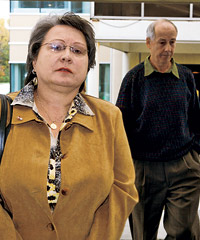
Sliwinski declined to be interviewed for this story. But her parents, in their first formal media interview since the crash, say their daughter grieves for the victims and their families as she serves her sentence in the Dwight Correctional Center, a maximum security women's prison about 80 miles southwest of downtown Chicago. Her mother says that, to this day, Jeanette can't explain what was going through her mind in the minutes before the crash. "She does not remember anything specific," says Ursula Sliwinski, who speaks with her daughter several times a week. The family members say they now live in fear of a potential civil suit and that the media still hound them, intrigued not only by a tragic story line but also by Jeanette's stints as a model and stripper. Recently, a cable network had been calling to interview them for Snapped, a series on female killers. They declined.
Sliwinski's parents, Ursula and Tadeuscz (Ted), were born and raised in Poland. They married in 1978 and came to Chicago because Ursula's mother had herself been born in Chicago and encouraged her daughter to immigrate here. Jeanette was born in 1982. Soon after, the Sliwinskis moved from Norwood Park to Morton Grove. Their second child, Robbie, now a graduate student at the University of Wisconsin, Madison, was born in 1986. "We are immigrant people who come to this country with practically nothing," says Ursula, who works as a cleaning service supervisor in a building downtown. Her husband is an electrician. "We do everything for our kids."
Jeanette Sliwinski's parents and brother are sitting in the back corner of a Bakers Square restaurant in Niles. With them is a friend and family spokesperson named Toni Randle. Ursula Sliwinski describes the daughter she once knew: the girl who adored animals and swimming; who took ballet classes; who worked as a lifeguard at Oakton Pool and who got a worker's permit at age 15 so she could work at Vitello's Bakery in Skokie. The mother talks about a teen who earned mostly Bs at Niles West High School, joined the swim team, played volleyball, and was active in the Polish club. Ursula Sliwinski tells how her daughter went to Oakton Community College but ultimately graduated from Columbia College. She bought a suburban condo and was looking into graduate school for teaching. "She loved kids," her mother says.
But there are also parts of Jeanette Sliwinski's life that her parents can't explain. Possibly as early as high school, Sliwinski was working at Heavenly Bodies Gentleman's Club, a topless bar in Elk Grove Village. (Family members say they didn't learn this until after the crash, when it came up in the Chicago Sun-Times. "We didn't know," says her brother, Robbie.)

In an interview, her attorneys, Tom Breen and Todd Pugh, fresh from defending the owner of the E2 nightclub after the deadly stampede, confirmed that Sliwinski worked as a stripper—but they put the date later, in 2003, when she was around 21. "Her recollection was that she worked there for a couple of weeks," says Pugh. "She started running with a racy club crowd and it was quick easy money." Sliwinski, a five-foot nine-inch bleach blonde with hazel eyes, also picked up the occasional modeling job; her family says her career consisted mostly of a few trade shows, but, after the crash, risqué photos, allegedly from her portfolio, surfaced on the Internet.
In court, prosecutors described Sliwinski as a party girl who stayed out with friends until 4 a.m. and used cocaine, Ecstasy, and other drugs. They suggested that she had been partying in the days before the crash, a sign that she was not insane, as her defense team claimed. In response, Sliwinski's attorneys said her party-girl persona was overblown, created to prejudice the court and public opinion. "If she were a homely shut-in, she would not have been charged with first-degree murder," says Breen.
Voice cracking, Mrs. Sliwinski tells how, three months before the crash, her daughter began to show signs of mental illness. Ursula describes the helplessness she felt as Jeanette looked for medical care and visited three different therapists between April and July 2005. She talks about the pills the therapists prescribed, and how her daughter mixed them with herbal cures she found on the Internet. Nothing seemed to work. "I always believed in the doctors," the mother says, in her heavily accented English. "Jeanette says to me she doesn't feel good, she feel 'like a zombie,' and I say, 'Just listen to what doctor says' because, 100 percent, I believe in doctor."
Ursula Sliwinski uses that same word—"zombie"—to describe her daughter on the morning of the crash. As a distraction, Mrs. Sliwinski suggested that they cut the grass outside their Morton Grove home. She was just biding time until they would leave for a 3 p.m. appointment to see a psychiatrist. "I was trying to keep eyes on her," the mother says. Outside, Jeanette stood still, hardly moving and not talking, so her mother suggested another distraction—iced coffee at a nearby Dunkin' Donuts. There, forgetting to pick up her drink, Jeanette walked out. Next, they went to an eyeglass store where Jeanette refused to approach the counter and retreated to the car. On the way home, her mother remembers passing a two-car accident near their home and seeing her daughter cry. "We were just waiting for the appointment to come," Ursula says. "My daughter would never, ever, ever, want to hurt nobody or kill herself, I can swear to my God."
Sometime before noon, Ursula Sliwinski says, she got a call from a friend. With her mother occupied, Jeanette Sliwinski slipped out the door, got into her red Ford Mustang, and drove down the street—past her father, who was coming home for lunch. When her husband walked in the door and said he had seen their daughter leaving, Ursula grabbed her car keys and took off after her. "I thought she left to see the doctor," she says.
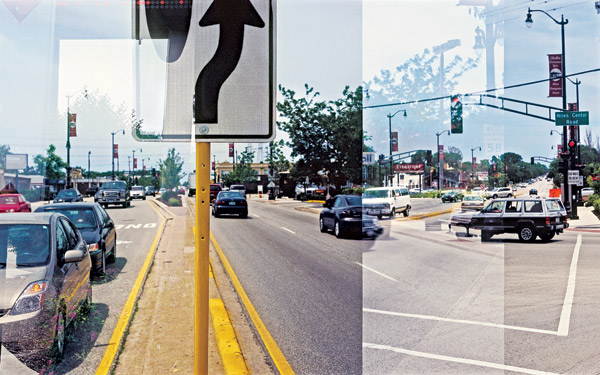
Somewhere near the Skokie Swift commuter station, Sliwinski ran three red lights and accelerated. Her speed was nearly 90 miles per hour when, before the intersection of Dempster and Niles Center Road, she veered into the left lane, directly behind Dahlquist's black Honda. Dahlquist was driving; Meis was beside him, and Glick was in the back seat. In those moments, Sliwinski never touched her brakes. Days later, detectives cited her car's concave gas pedal as evidence that she had floored the accelerator at the time of impact. "I'd never seen anything like that in my 31 years of police work," said Brent Fowler, a former commander of the Skokie Police Department. "It was, literally, bent around her foot."
At full speed, Sliwinski's car blasted through the back of the Honda so forcefully that its trunk crumpled and folded into the back seat. The Honda shot into the car ahead—a green Ford Crown Victoria, which slid 100 feet into the intersection. The force drove both Sliwinski's Mustang and Dahlquist's Honda ten feet into the air.
Broken glass and car parts flew like shrapnel and blew out the window of a truck in the right-hand lane. The Honda rolled 47 feet from the initial impact and landed on its roof. Glick was thrown from the back seat, through the front windshield, and into the intersection. All three men were killed instantly.
Sliwinski's Mustang rolled in the air, landed on its roof, and slid 20 feet down the street. Witnesses could hear her screaming inside. Drivers jumped from their cars and customers ran out of the nearby stores to see if they could help. One man, who worked at the mattress store on the corner, brought a pillow. Witnesses reported a warlike scene, telling police that when they saw the men, they knew immediately that there was nothing they could do. They hovered around the Mustang to comfort Sliwinski, telling her that help was on the way. "Oh, my God," Sliwinski yelled, over and over. "Get me out of here!"
One witness, Jeanne Gourguechon, saw John Glick go through the windshield of the Honda. He landed in front of her car, his face staring toward the blue sky. In the minutes before the ambulances arrived, Gourguechon knelt beside him and held Glick's hand. She noticed his torn red polo shirt, the fact that he didn't have a pulse. He looked to be about the age of Gourguechon's own son. "I just thought I ought to be there," Gourguechon recalls. "These were his last moments and, if it was my son, I would have wanted somebody to be there, too." Gourguechon stayed with Glick until paramedics took his body away.
Several minutes after the crash, Brent Fowler received a call from the department's watch commander. As the head of the detective section, Fowler had to assess the situation, identify witnesses, and make sure the officers on the scene gathered details. Fowler rushed to the scene, where the men's bodies were being loaded into ambulances and where emergency crews were working to extract Sliwinski from her car. "At that time, all I saw was an accident," Fowler says. It wasn't until he reached St. Francis Hospital, in Evanston, where Sliwinski was being treated for a broken ankle, that his view of the crash began to change dramatically.
Fowler's conversation with Sliwinski would become a crucial part of the case against the young woman. He recognized her from his job as a part-time security guard at Niles West High School (he is now retired from the force and works there as director of security). First, he reminded Sliwinski of where she used to sit in the school cafeteria. He purposely got it wrong to see if Sliwinski was lucid enough to correct him. He says she did.
When Fowler asked the young woman why she had been driving so fast, Sliwinski told him that she had argued with her family. He recalls that she said she wanted to get away, find some railroad tracks, and kill herself. "Ms. Sliwinski went on to say that she was looking for the tracks, but she couldn't find them," Fowler wrote in his July 19, 2005, police report. "I asked Ms. Sliwinski at this point how was she feeling, [to] which she responded by saying that she was angry and frustrated and all she wanted to do today was to end it. Ms. Sliwinski went on to say that she saw the cars stopped in front of her and she decided to kill herself so she put her 'foot to the floor' and ran into the back end of a car that was stopped at the stoplight. Ms. Sliwinski further stated that she 'didn't want to hurt anybody else, just hurt myself.'"
In their interview with Chicago magazine, the Sliwinski family said that they decided to break their long silence because they wanted to publicly challenge what their daughter allegedly said to Fowler and other authorities. They also wanted to share their belief that Jeanette's actions were the result of a drug-induced fog caused by the prescription pills her doctors told her to take, and they challenge the idea that she was suicidal. "Jeanette is very sorry, obviously, for what happened," says Randle, the family spokesperson. "She has taken responsibility for her actions; her family is sorry—all of us are sorry. We don't have any reason to lie to you because this case is over."
Throughout the 80-minute interview at Bakers Square, their daughter's conversation with Detective Fowler came up often. The family members say that after the crash, they waited outside Jeanette's hospital room for several hours but were told they would not be allowed to see her; all they knew was that Jeanette had been in an accident. That night, the family returned home and turned on the TV looking for some sort of late evening news. What they heard, of course, was roughly the same as what Fowler wrote in his police report: that their daughter had fought with her parents and wanted to kill herself. Ursula Sliwinski says she fainted. "We have no fight," she said, tears welling in her eyes. "This is honestly truth."
Ted Sliwinski believes that his daughter spoke to Fowler when she was in a haze brought on by her multiple prescriptions, the trauma of the accident, and the fact that she had been given morphine for her pain. Most of all, her parents ask, why would a woman who had been trying for months to get help suddenly decide to stop trying and end her life? Instead, they believe she had left home intending to keep a 3 p.m. appointment with a therapist at Turning Point, an outpatient mental health center about three miles from their home. "All of this sensationalism came from that little time frame" in the hospital, says her brother, Robbie Sliwinski. "That's why it was framed as a suicide."
Ultimately, the State of Illinois v. Jeanette Sliwinski came down to the question of why she floored the accelerator of her car and what she said in the moments after the crash. If, as the prosecution contended, she was a narcissist in a suicidal rage who fully understood her actions, she could be convicted of murder and face the death penalty. But if she was insane and delusional because of powerful narcotics, as her defense team argued, her crime and punishment would be less severe. On the first day of the trial, Sliwinski's attorneys asked that a judge decide her fate instead of a jury—a move intended to spare the young woman from what they imagined would be the emotional reaction of jurors.
Brent Fowler's account became a foundation of the prosecution's case before Cook County Circuit Court judge Garritt E. Howard. In the two-week trial, prosecutors claimed Sliwinski simply wanted to die and understood the consequences of her actions. They also submitted a conversation that Sliwinski had with a paramedic, Dan Collins: "It didn't work. I want to die. No, you don't understand—I want to be dead." And, while in the ambulance, she told another paramedic, Stan Goulish, "You don't know what I did. You don't know what I caused. Let me die." Sliwinski herself did not testify.
Hovering over the trial was the fact that, since the crash, the public portrait of Sliwinski had grown more complex as reporters uncovered the revealing modeling photos and strip club stint. National and international news outlets picked up the story in sensational and peculiar ways: "The trial of the former 23-year-old lingerie model has captivated America," reported the Daily Mail of London. "She became known as the 'suicide blonde' in reference to the INXS song of the same title." Michele Gemskie, the lead prosecutor, said the crime resonated also because it was a reminder of the unthinkable ways we come so close to death. "I think a lot of people could relate to the victims in this case, just being so purely innocent, and being in the wrong place at the wrong time," she said. "That could have been anybody sitting there."
Dozens of the victims' friends and relatives packed six full rows of courtroom 206 nearly every day. After each session, they peppered the prosecutors with questions about what came next, and how the case was going. Jim MacGregor, the Shure employee who had nearly joined the musicians for lunch, took notes during hearings and posted them on a private Web site so that others could follow the trial, too. Only a handful of details are missing from his record: MacGregor stopped after the Cook County Medical Examiner's testimony on how each man died. "I heard it once," he says. "I couldn't go through my notes and experience it again."
During the trial, prosecutors argued that, while Sliwinski was undoubtedly troubled, she made her personal problems worse by abusing drugs and alcohol while she took prescription pills. "Many of the problems that she was experiencing were not related to her mental illness, but, in fact, to her drug abuse," Gemskie said in an interview.
Meanwhile, Sliwinski's attorney Tom Breen argued that, in the three months prior to the crash, Sliwinski had been in a downward spiral of psychosis. Her manic state was exacerbated by the combination of drugs she was taking—antidepressants, psycho-stimulants, and mood stabilizers—as well as by her own attempts to self-medicate with herbal remedies, alcohol, and cocaine.
Breen's partner, Pugh, emphasized that, at the height of her problems, Sliwinski was discharged from a mental hospital because she lacked insurance. In the ensuing weeks, Sliwinski should have been under 24-hour care, but instead she bounced among therapists at Turning Point. Two weeks before the crash, the psychiatrist she had most recently been seeing went to Poland on vacation. Breen and Pugh also attempted to poke holes in the testimony of Detective Fowler and the Skokie paramedics, as well as the statements Sliwinski allegedly gave them. "I'm going to be very blunt and say that those statements did not occur," Breen said in an interview.
Should she be held fully responsible for her actions? Or had she gone temporarily insane, a victim of a flawed health system that failed her? "The basic difference between reckless homicide and first-degree murder is the mental state that accompanies the conduct resulting in the deaths of the victims," explained Judge Howard on October 26, 2007, before he ruled. "I believe the defendant was being truthful when she said shortly after the crash that she only intended to hurt herself and not anyone else. During the weeks leading up to the crash, the defendant was in a downward spiral and, at the time of the crash, was in a very fragile mental state."
The victims' families and friends held hands as the judge announced his verdict: He found Sliwinski guilty of reckless homicide, on account of her mental illness. One month later, he sentenced her to eight years in prison. But once sentencing laws and Sliwinski's time served were factored in, her term would be dramatically reduced. "You walked out of there feeling like you got kicked in the face," says Scott Meis.
Five months after the trial, Rebecca Crawford is sitting at a corner bar with two of her husband's old bandmates, Art Kubin and Jonathan Ben-Isvy. The music in the bar blares as she tells them about running into Jeanette Sliwinski's brother at the record store. She recounts how she realized at that moment that she could run into Jeanette herself in Chicago someday. "I can't walk around the street corner and see her," she says. The men nod. "But I don't want to let this woman dictate my life any more than she already has."
Crawford mentions that she has been reading the paper more closely and how she pays special attention to any report of a tragedy. It reminds her that horrible things can sometimes just happen—without notice, reason, or explanation. "It makes me feel more normal," she said.
The conversation stays on Sliwinski for a while; they talk about how old she'll be—26—when she's out of prison and what she might be able to do with her life. But then the thoughts trail off. No one wants to think about Jeanette Sliwinski, inmate no. R82264, who, around Thanksgiving this year, will be asked to gather her things and prepare for her release from Dwight Correctional Center. The announcement will probably come on the day before her sentence officially ends: Jail officials say they time it that way so nothing holds up the inmate's last obligation—a meeting with a prison counselor. In this meeting, Sliwinski will receive a check from her "trust fund," the bank account that holds the prison wages she has earned since her first day in jail. The counselor will then describe the conditions of Sliwinski's parole, likely mentioning whom she'll report to and how she will be expected to conduct herself. Before she's set free, Sliwinski will likely learn that, in two years' time, she can petition for the return of her driver's license.