


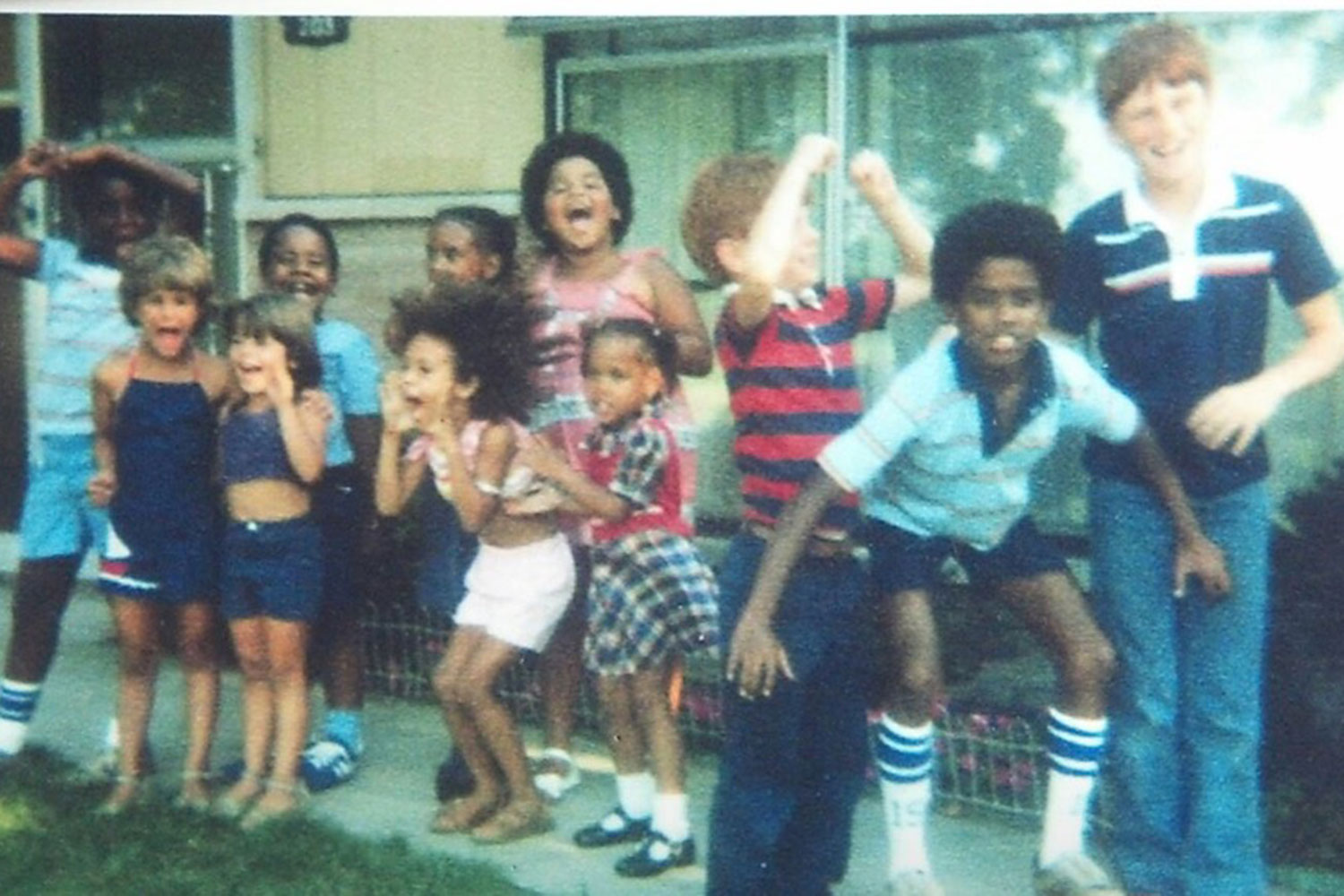
Chicago journalist Phil Rockrohr, 62, knew that his time growing up with relative racial harmony in Park Forest was special. But while researching a documentary on the history of the suburb’s race relations, he realized his Gen X cohort had been the unwitting inheritors of a meticulously planned and radical social experiment from the 1960s.

Rockrohr shares these findings in Revisiting Utopia, a documentary that makes its Chicago debut on April 25 at Logan Square Theatre, followed by a screening on May 16 at Chicago State University. Chicago spoke with the filmmaker about the social media posts that sparked the film, his discovery of a list of residents’ races used to manage integration, and the lasting effects on those growing up in Park Forest.
It’s my understanding that the film was inspired by Facebook posts from some of your former Rich East High School classmates, is that correct?
A (white) woman posted, saying “I don’t understand all this racial animosity in the country today.” This was in 2014 (in response to the Trayvon Martin case), and she said, “Was the racial harmony we experienced real growing up, or was it different for the Black kids?” So that’s what we set out to answer.
And then a second post came from a guy that said, “I’m willing to forgive the racism my family faced while I was growing up in Park Forest, but let’s not pretend that we all got along.” And it had over 300 comments. It was all over the place.
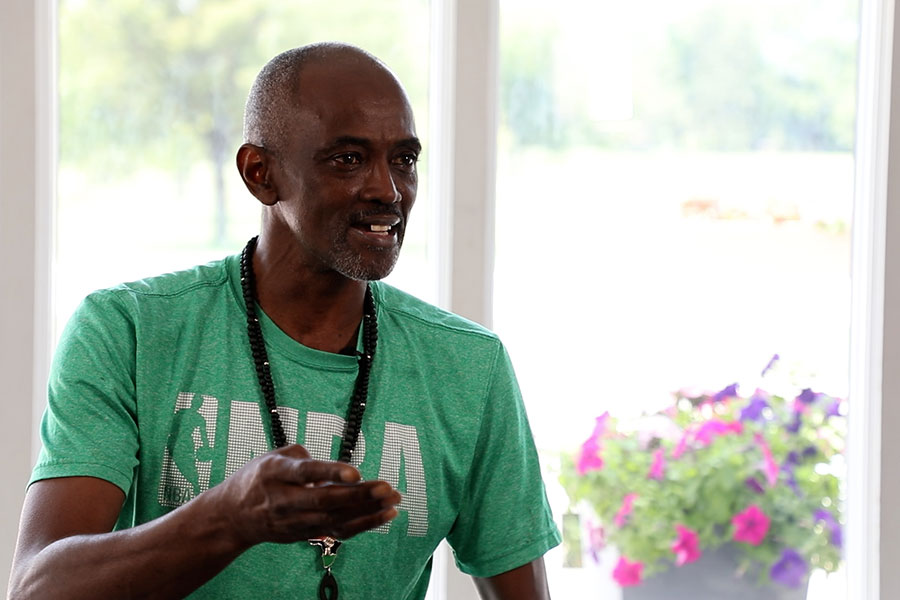
The guy who made that post was Greg Davis. He had been the youngest among a family of boys that most of us who grew up in the ’70s and ’80s knew very well. I met with him for lunch, and I told him our idea (for a film), and he told me what he had witnessed. And I said, “Just stop talking. Now we’re going to get you on camera.”
At that point, my (original) partner had quit the film because he was having trouble reconciling the racism that people described with their love of the town. And Greg became the person to articulate that better than anyone else that, yeah, the two things could be true at the same time.
Until the 1950s, like other middle-class suburbs, Park Forest was virtually all white, and there was real opposition to integration, as you report. How did Park Forest manage to distinguish itself by integrating peacefully, at a time when race riots in other white suburbs were in the news, such as in Cicero?
We went to the Park Forest Historical Society, which had a treasure-trove of information and photographs and video. We discovered through a bunch of articles and reports that the village had been arguing about trying to integrate in the 1950s. The Quakers were the original folks who were trying to get Park Forest integrated.
Finally, in 1959, the village board approved a plan to make sure to facilitate the arrival of African Americans in Park Forest. And they did that by actually consulting some folks in Levittown, where there had been violent protests when a Black family had moved there a few years earlier in Pennsylvania.
The next thing we found out was the village planners also kept a list of every Black family and their addresses. They took that list to real estate agents and asked them to steer buyers to neighborhoods of other races. So if a Black family was going to buy a house, they asked the real estate agents to steer them to all-white neighborhoods instead. Their fear was that the town would become segregated and that there would be all-Black neighborhoods and all-white neighborhoods or all Latino or whatever.
So they actually anticipated white flight and then took proactive steps. Was this list an original discovery?
The list was known to longtime residents of the village, including a few older folks we interviewed, but not to 61 of the 65 “kids” (subjects who grew up in the ’70s and ’80s) we interviewed. The other four kids knew because they had worked with or engaged with the Historical Society, which has copies of the list. In general, the vast majority of former and current residents were or are unaware of it. As far as I know, no other media have reported on it.
And so that particular piece of information, my former partner on the film said made him sick to his stomach. He was, in my opinion, looking at it through a 2020 lens, which, if somebody did that (made a list) today, there would probably be a lot of uproar and for some very good reasons.
Can you tell me about the Wilsons, the first Black family to move in?
They moved in and around Christmas 1959. I figured because he (Charles Wilson) was a DePaul professor, he’s got to be able to be found. I had started to give up, and then I tried Googling “Charles Z. Wilson,” and he came up. So we went out to Pacific Palisades and interviewed him at his home in California. I thought it was so lucky, because he died a year later.
The village successfully prevented any violence or anything like harassment. But Wilson described that there was hostility from some of their neighbors, that one of their neighbors built a fence. It’s in the film. A son (of a white neighbor) couldn’t play with the Wilson son unless he would climb over the fence to play. And the Wilsons said he did climb over the fence and came and played with them.
Interesting that the Wilsons’ move made headlines for being peaceful, including a report that developer Philip Klutznick’s wife greeted them with a cake.
Time had an article about it, yeah. And it’s funny because it had a headline I considered for the film. The article was titled “Planned Brotherhood,” which is a fairly accurate description of Park Forest.
At your screening in Park Forest in January, I saw a friend there, whose family was from India, and they had settled in Park Forest. I noticed a lot of Asian people there and in the film.
It wasn’t just about Blacks and whites. The Asian folks actually arrived first. We didn’t know this until we went through all the yearbooks from the ’60s. There was a guy named Harry Teshima. He tried to buy a house in Park Forest, and the American Community Builders (the developer of Park Forest) wouldn’t sell him one. But they said, “We will sell you a lot and you can build your own.” I think it lit a fire under his ass because after that, he became kind of committed to integrating the town.
This was a Japanese-American guy whose family had been interned during World War II. He worked closely with the Unitarian Church there. After Harry moved in, there was an influx of Asians.
Why were there so many rock stars in this documentary about race?
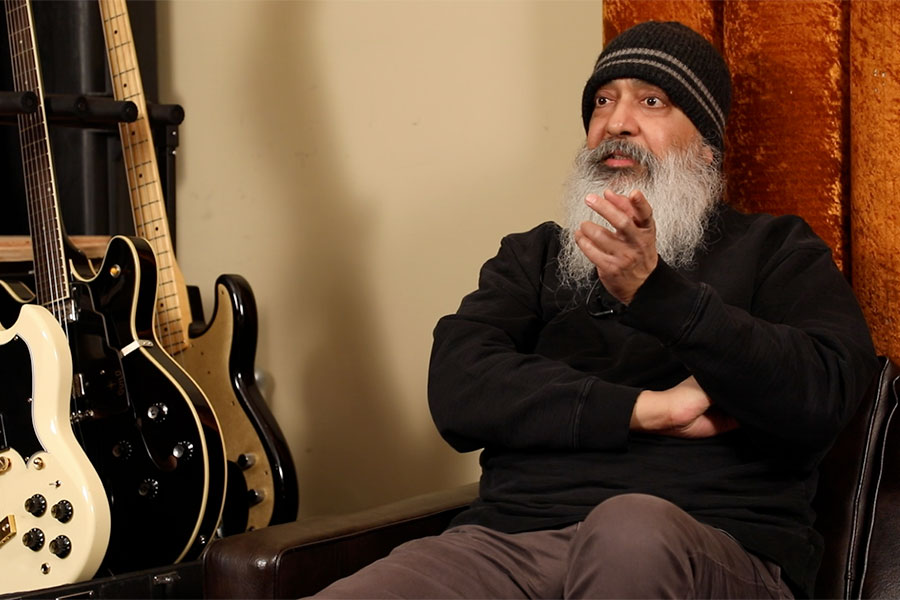
Park Forest, because of this sort of very progressive culture, had a lot of artists and musicians who went on to become successful. Everybody who played guitar had a band. I think the culture encouraged people to express themselves freely. The founding members of Soundgarden, (including lead guitarist Kim Thayil and bassist Hiro Yamamoto, who appear in the film) were from Park Forest.
Interesting that your subjects in the film singled out the 1980s in particular as the golden era. In the film, you feature a lot of pictures of integrated sports teams and even of interracial couples as representing the norm from that period.
Those were the kumbaya years. It all seemed perfectly normal. (Former resident) Matthew Klutznick (the nephew of developer Phil Klutznick) says something in the film that’s interesting. He says, “What I remember (is racial integration) not being anything to remember; it was just the status quo.”
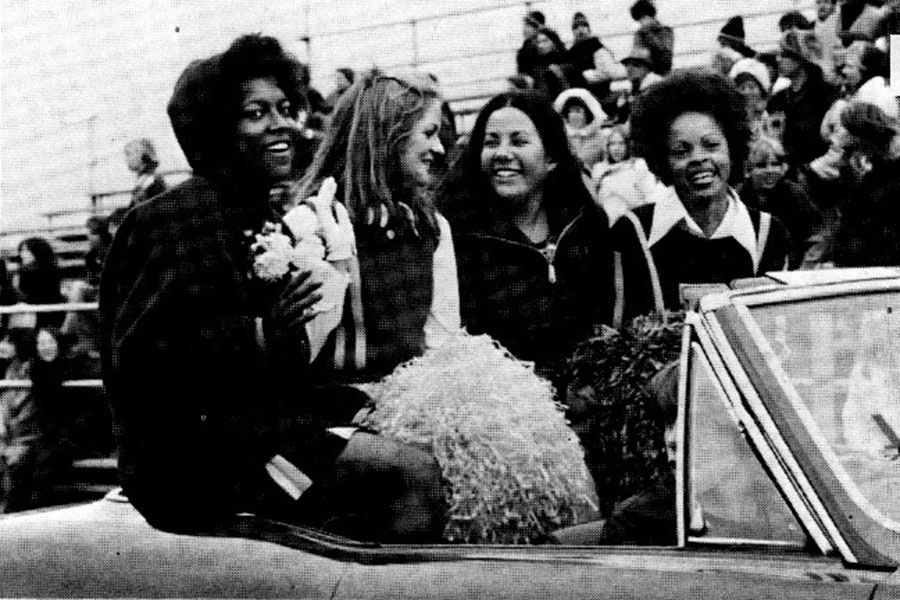
There is the story of a Black woman, Antonese Rucker Robertson, who left in 1980 because her family moved somewhere in the south, and her (new) school was 90 percent Black and she was totally bewildered. She did not understand. She was lost, because she had been the prom queen at a school that was 85 percent white, and suddenly she’s at a Black school and they didn’t accept her, and she couldn’t relate to them.
Why did that era end? You describe it as a very complicated story.
It was kumbaya in the ’80s for the kids, but by the end of the ’80s, Park Forest had cut all funding for affirmative marketing, according to (former Park Forest village planner Don) DeMarco, and was no longer tracking homeowners by race. As DeMarco put it, then it was segregation as usual. By the 2010s, it shifted to a majority Black. It was a long white flight. Park Forest Plaza finally collapsed, and that was a huge thing, and they lost a lot of their tax revenue.
What is a lesson people today can learn from the film?
I think the message of the film is that if people live next door to each other, it changes how they feel about them; it challenges the stereotypes they might hear elsewhere. So you don’t even think about a person’s race much if you live next door to them, and you go to school with them, and you play on baseball teams with them. Now, someone could build a community from the bottom up and do this, and it could create integration. I’ll just tell from our experience in Park Forest, it works.
When we left Park Forest, we all were so bewildered. I remember pulling up at a stoplight in South Chicago Heights, and I saw these two guys. One of them was Greg Davis’s older brother, Leroy Davis. The light was about to change and I said, “Wow, I haven’t spoken to you guys since Park Forest.” And Leroy said back to me, “The real world is not like Park Forest, Phil.”