


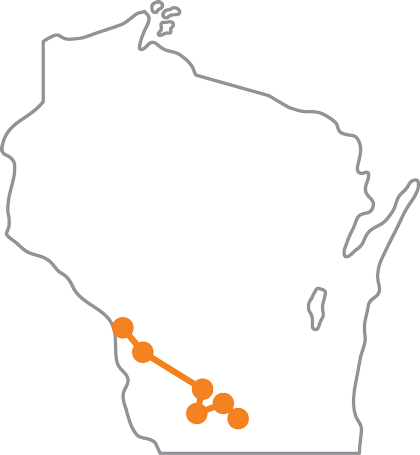
 View this trip in Google Maps
 Day 1
Paoli and New Glarus
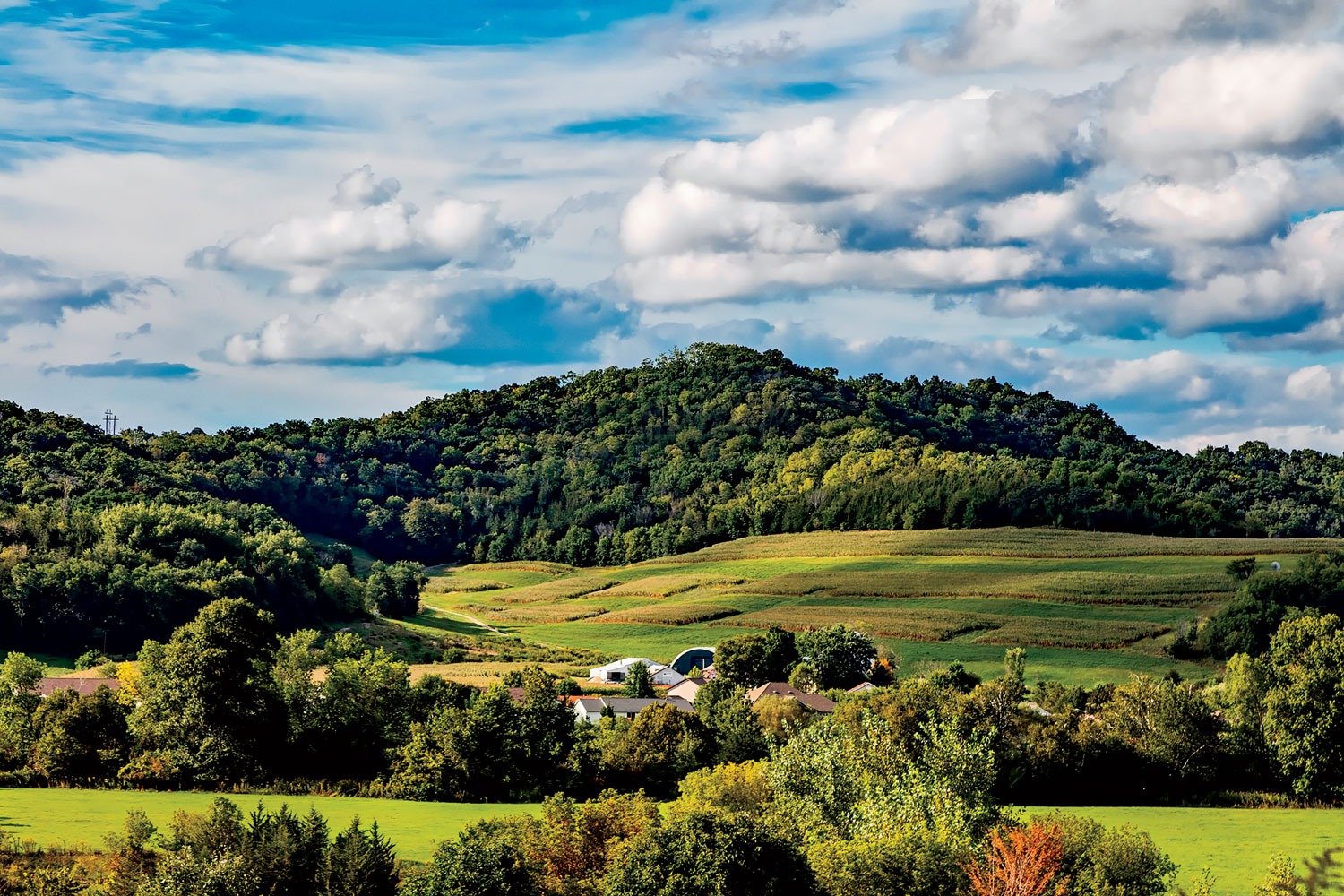
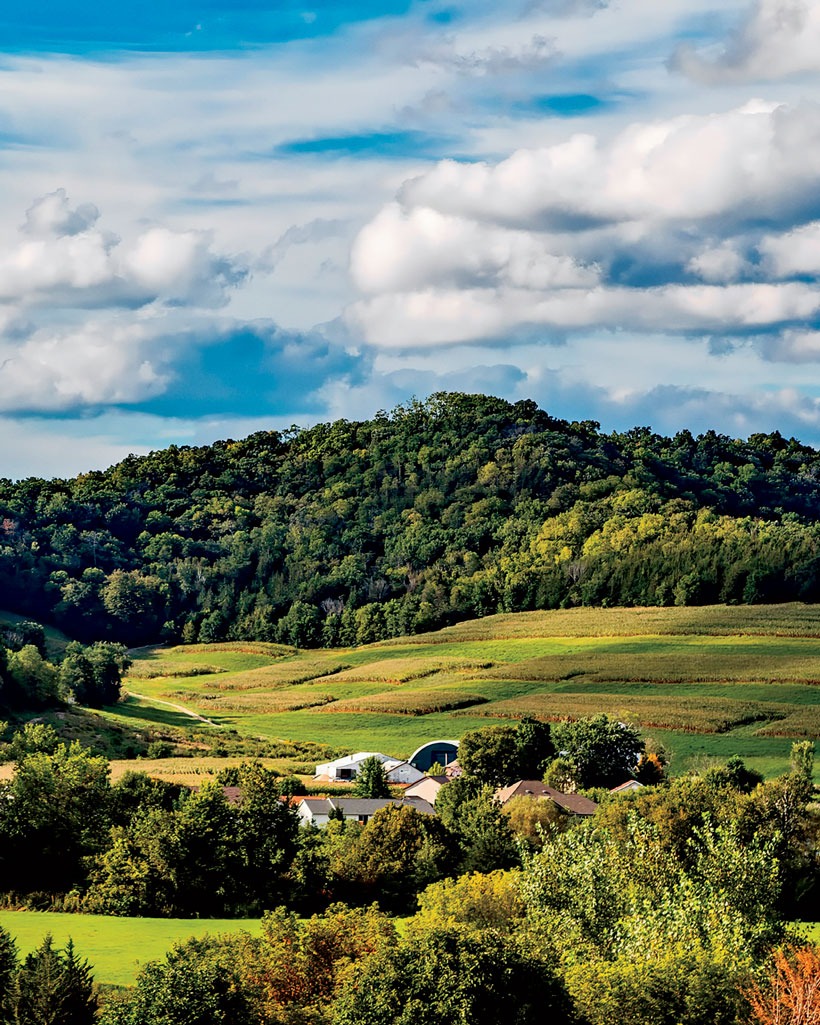
Most of Wisconsin was bulldozed smooth by glaciers during the last Ice Age. But because of topographic high points in the northern part of the state, the Driftless Area in the southwest was spared. That geologic miss left this patch with steep ridges, limestone outcroppings, and bending back roads. Small towns sit in valleys rather than sprawl along interstates, and agriculture still shapes daily life. It’s a region that rewards paying attention to what’s growing, who’s growing it, and which road looks worth taking simply because it curves.
Some two and a half hours from Chicago, as the landscape starts to fold, you’ll encounter the blink-and-you’ll-miss-it town of Paoli, a low-slung stretch of historic buildings facing the Sugar River. Seven Acre Dairy Company is the anchor. The 1888 cheese factory has been restored into a boutique inn, restaurant, and working microdairy, with Landmark Creamery onsite. It’s a perfect spot for lunch on the patio (seasonal salads, sandwiches built around house cheeses). Then walk the river path with a cone. There’s even a wood-fired sauna overlooking pastureland.
From Paoli, it’s 20 minutes southwest to New Glarus, where the chalet façades, flags, and alphorns in souvenir shop windows speak to the town’s Swiss immigrant history. Check into the Blanc Chalet, a 1950s roadside motor lodge renovated in mid-century modern fashion. Grab a king room for the best light and design-forward furniture. New Glarus Brewing Company, perched above the valley, makes for a splendid afternoon, though you will have to wait until 2027, since it’s closed for an extensive renovation. Once it reopens, the beer garden terrace is the move, with wide river views and fresh pours.
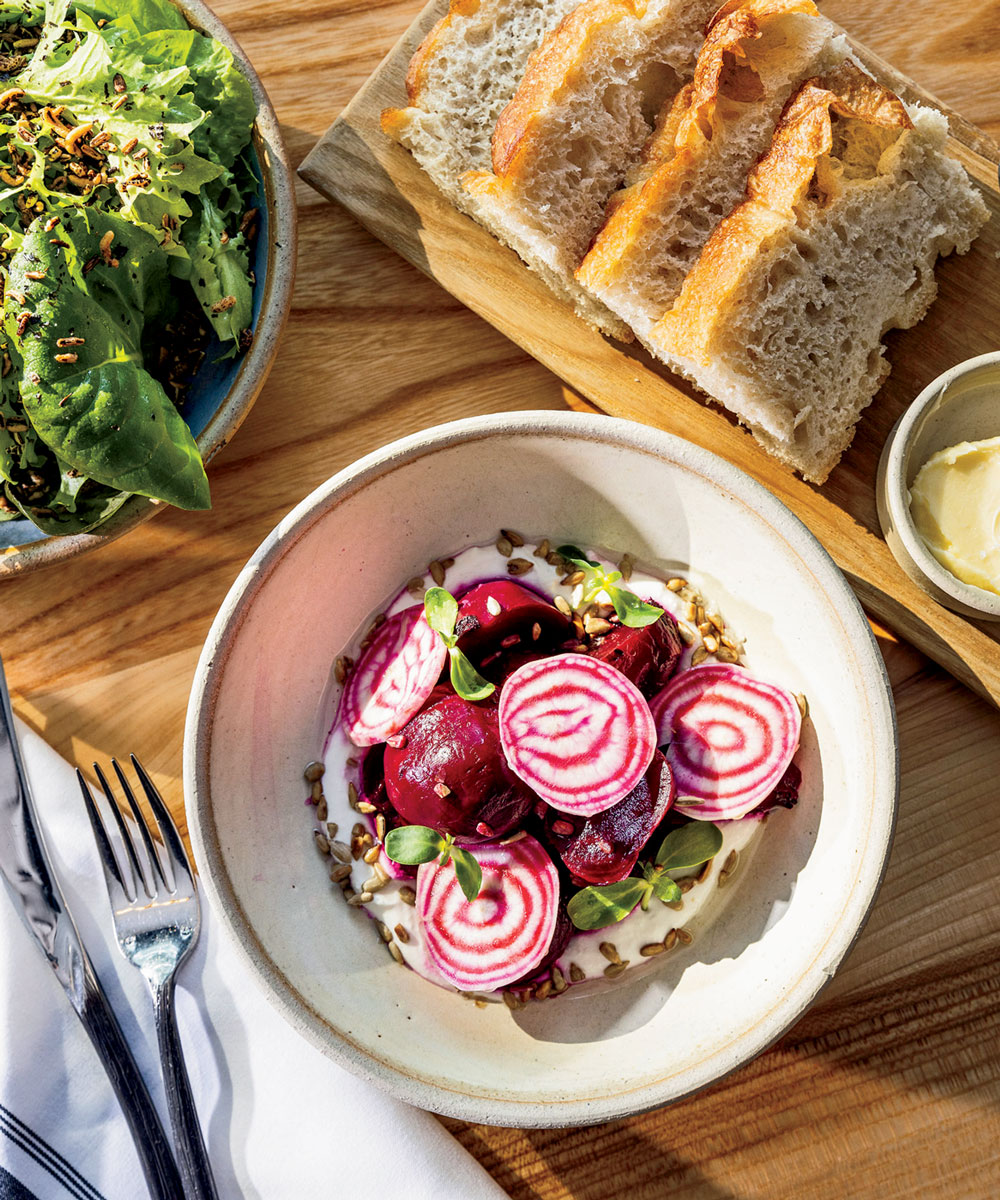
Before supper, walk downtown to Chalet Cheese Haus, known for its aged cheddar and selection from Wisconsin producers. Dip into the modern mom-and-pop shop Hutch + Hide for beautiful custom cabinetry made with reclaimed wood from local barns. A few doors down at A Well Worn Story, a husband-and-wife team handcraft leather and canvas goods in their onsite studio. For dinner, New Glarus gives you two distinct lanes. Glarner Stube leans fully into its Swiss comfort roots: crisp, golden rösti, schnitzel that hits the plate with a sizzle, and fragrant fondue pots. Canter Inn offers a farm-driven counterpoint with a menu pulling from nearby producers.
Day 2
Mount Horeb
Here the vibe shifts from Swiss set- piece to Norwegian wink. The town’s carved wooden trolls — more than 40 of them — began popping up in the ’80s as a public art effort by a local woodworker and have been multiplying ever since. Stop in at Makers Market Square, housed in a historic former bank. It packs dozens of artisans, as well as a cozy coffee shop, under one roof. Mount Horeb is also home to Duluth Trading Company, and it’s worth stopping at the flagship store even if you don’t need Fire Hose work pants. Inside, the Wally Keller Tool Museum displays hundreds of antique hand tools arranged like functional sculpture.
Eat (and drink) according to mood. Sunn Cafe serves scratch-made plates with global touches. For something more rural, book ahead at Campo di Bella, an organic farm just outside town that hosts long communal dinners showcasing homegrown ingredients grown. For booze, Driftless Social does craft cocktails in a room that’s surprisingly polished for a town this size, while Brix Cider pours dry, complex housemade ciders with small plates.
If you plan your trip to avoid a Friday or Saturday (and thus the two-night minimum), there is, nestled into the hills outside town, a loft-style art studio and guesthouse that makes a delightful place to stay (airbnb.com/rooms/7661185). Yes, you’ll have to use the nearby main house for bathroom access, but the tradeoff is quiet pastoral views, total darkness at night, and the kind of unplugged stillness that fits the Driftless.
Day 3
Mineral Point
Founded in the 1820s after lead was discovered in the surrounding hills, Mineral Point was one of Wisconsin’s earliest cities. Cornish miners arrived in waves, and today their cottages and storefronts house a large cluster of working artists. Shake Rag Alley is the heart of that ecosystem. Spread across a cluster of 19th-century cottages and gardens, it functions as a year-round arts campus, with metalsmithing in one studio, printmaking in another, writing workshops upstairs, and ceramics firing in the yard.
On High Street, make it a two-step: The independent bookstore Republic of Letters boasts a strong Midwest shelf, and Mayday Press, a few doors down, is a love letter to analog design, with letterpress prints, stationery, ink, and paper goods. After that, head to the Globe Clay Center, where twin sisters Katie and Joelle White produce wood-fired ceramics rooted in tradition. Then shift gears at American Wine Project, a small but ambitious operation focused on cold-hardy Midwestern grapes. The tasting room spotlights low-intervention wines poured alongside thoughtful small plates.
Spend the night at the Lion and Porcupine, an 1853 limestone inn at the tip of the downtown strip. Exposed stone walls, heavy timber beams, clawfoot tubs, and creaky floors set the scholarly but relaxed mood, as does the fact that its proprietor, Julian Kerbis, was a longtime zoologist at Chicago’s Field Museum before retiring; he’s planning to open a British pub downstairs by summer.
Day 4
Spring Green
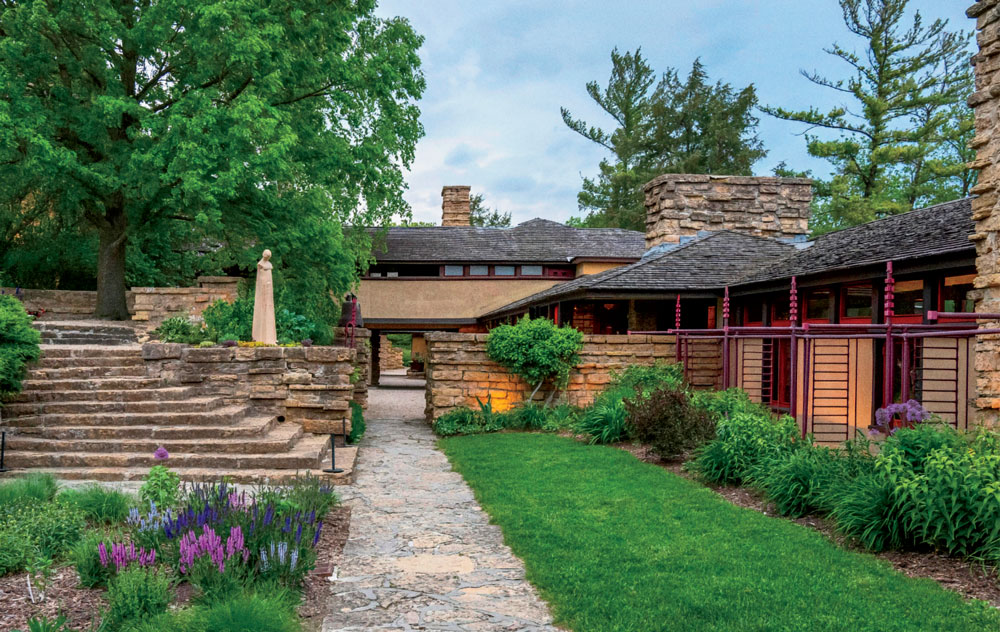
Sitting along the Wisconsin River, this town has become synonymous with Frank Lloyd Wright, who built Taliesin here in 1911 as his home and architectural laboratory. Time permitting, book the four-hour estate tour; it’s the only way to see all the major buildings onsite, including the main house, studio, school, and theater.
Then pivot to the House on the Rock, the creation of eccentric collector Alex Jordan Jr. Beginning in the 1940s, Jordan built a sprawling, surreal complex that defies easy description. The Infinity Room cantilevers 140 feet over a valley, with no visible supports. Inside, you’ll find a 269-creature (no two alike) carousel, enormous maritime models, dollhouses, armor, and self-playing automated orchestras that roar to life when coins drop.
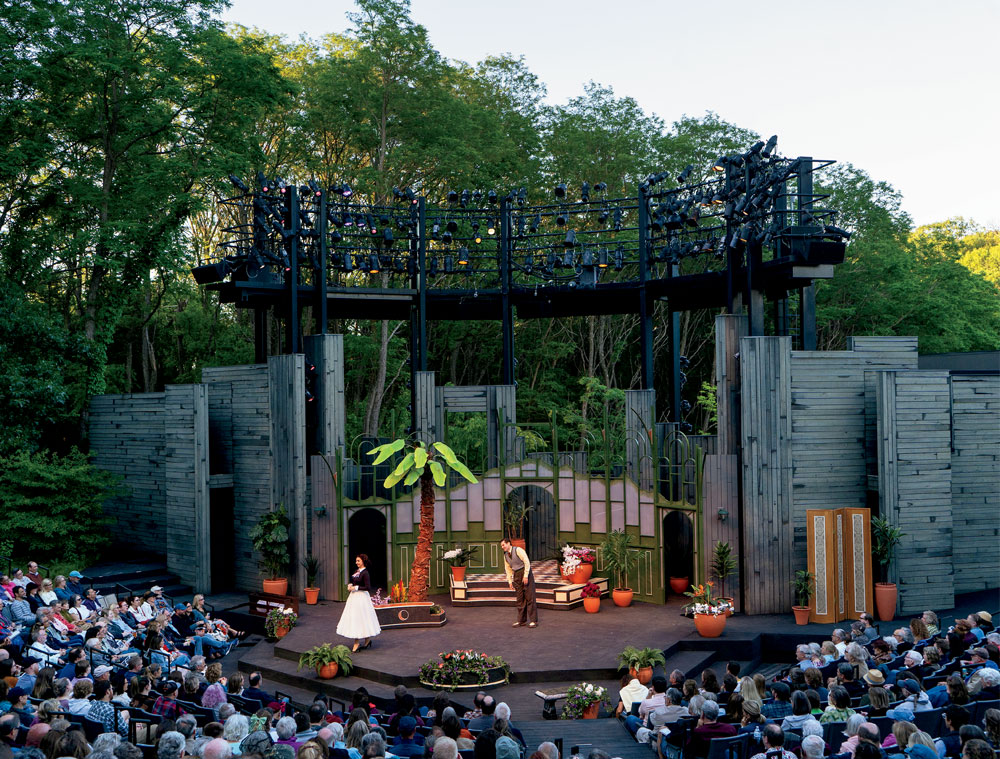
In summer, American Players Theatre stages Shakespeare and other classics in a 1,100-seat outdoor amphitheater carved into the woods just outside town. Bring a picnic, layer up after sunset, and enjoy national-caliber actors in a setting that feels improbably serene.
Stay at Steampunk Manor Bed & Breakfast, a Victorian house reimagined with exposed gears, metal fixtures, and the ambience of a Beetlejuice set. It’s walkable to downtown and has the right level of idiosyncrasy for a town where Taliesin and the House on the Rock coexist.
Days 5 and 6
Viroqua
On your way here, you’ll skirt the Wisconsin River and ridgelines and drop into valleys where the barns look older than the roads. This is Vernon County, one of the highest concentrations of organic farms in the state. That shows up everywhere: on menus, in market coolers, in casual conversation.
Check into Hotel Fortney, a restored 1890s Queen Anne reimagined as a 14-room boutique property. The bones remain intact — tall sash windows, original millwork, high ceilings — but the interiors feel newly built. On the first floor, there’s a cocktail lounge with a grapefruit-rosemary spritz that tastes heaven sent.
Morning belongs to Wonderstate Coffee, which is headquartered in Viroqua. The flagship café is bright and busy. For brunch, Maybe Lately’s takes the crown for best egg sandwich, possibly ever. Enjoy it on the back porch while mapping out your day. Once fueled, head to Driftless Books & Music, where the towering shelves of the former tobacco warehouse reward digging. Viroqua Public Market, set inside the historic Main Street Station, is designed like a streetscape and features more than 100 microvendors hawking everything from clothing and candy to books and art.
Dinner at Driftless Café is nonnegotiable. Chef and co-owner Luke Zahm built the restaurant’s reputation on relationships with local farmers, and he offers a rotating menu of pasture-raised meats, just-harvested vegetables, and housemade pastas. The second night, take a 10-minute drive north to Old Town Inn Supper Club in Westby. Order a grasshopper — still under $10, still massive — before catching a live performance back in Viroqua at the Historic Temple Theatre, a restored 1920s movie house.
Day 7
La Crosse
La Crosse sprang up in the 19th century as a river port and lumber town, and you can still feel that layered history in the brick warehouses and the bluff-top overlooks. Check into the Charmant, a candy factory turned boutique hotel. Exposed brick, high ceilings, and river-facing rooms give it industrial polish. The rooftop bar is the place to go at sunset, with bluff silhouettes of the bluffs framing your evening.
Start your day at Grandad Bluff, a 600-foot-tall limestone promontory. Either hike the steep switchbacks or drive to the top for a view that stretches across the Mississippi River well into Minnesota. For a scenic view at ground level, stroll the paths at Riverside Park while watching boats glide by. The Riverside International Friendship Gardens here honor La Crosse’s sister cities in China, Germany, France, Russia, Norway, Ireland, and Cameroon. Haven’t gotten your fill of nature? Across town, Myrick Park offers boardwalk trails through wetlands, where herons and egrets often outnumber people.
Be sure to carve out time for Driftless oddities. Norskedalen Nature & Heritage Center, some 30 minutes southeast in Coon Valley, preserves Norwegian homesteads and log buildings — a reminder of the region’s immigrant backbone. And near Fountain City, about 40 minutes northwest, Kinstone is a megalithic sculpture garden with modern stone circles aligned with solstices and equinoxes.
For dinner, Lovechild is the refined choice: locally sourced, seasonal dishes served in a brick-walled room.