


Last fall, my wife and I traveled with our daughter and her Indian inamorato to Mumbai, where he introduced us to some of his favorite restaurants. Among them was a famous Parsi spot called Britannia & Co., which prepared a great keema. I’ve had this stew of ground mutton, tomato, and onion before, but Britannia’s version was special. It had a sweet-sour edge, an almost operatic spice level, and fistfuls of crunchy fried potato straws called sali piled on top. Spooned over soft pav rolls, it was like the Sloppy Joe with potato chips I loved as a kid, but glorified for my adult palate.
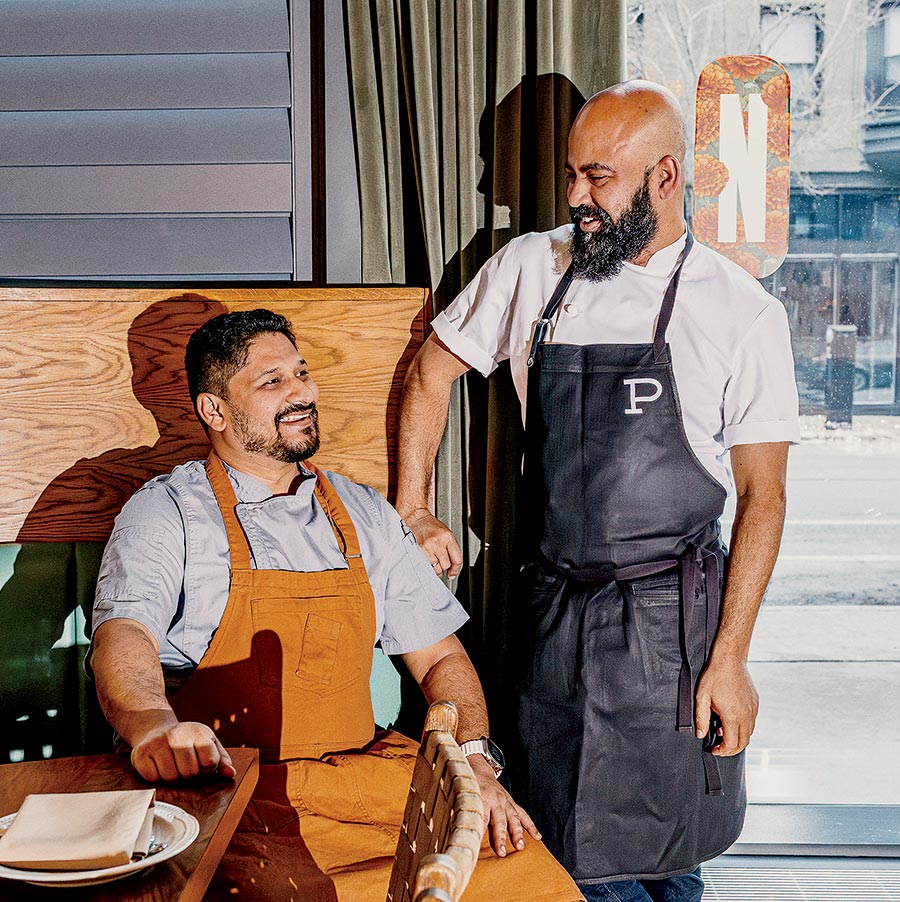
I never thought I’d try anything like this keema again, but then I found its doppelgänger at Lincoln Park’s Nadu, which opened last April. Chef Sanchit Sahu confirmed my observation with a startled laugh. “Yes, I did base our recipe on Britannia’s. It’s the best!” he said. “That’s what we do here. Maybe not every dish is for every single taste, but it’s how we eat back home.”
The menu at Nadu, which Sahu developed with chef-owner Sujan Sarkar, pulls a 180 from the modern tasting-menu stylings at Sarkar’s Michelin-starred Indienne. Here, Sahu, who traveled broadly as a chef for the hotel chain Taj, replicates regional recipes from throughout the subcontinent. From the omnivorous, coconut-heavy fare of southern Kerala to the stir-fries of Kolkata’s Chinatown, the menu reads like an Indian culinary survey course. Some dishes are mild and creamy, others ferocious with chile; all are meant for sharing and quintessentially Indian.
As a diner, you will assuredly discover some new favorites even as you recognize a few preparations and mentally compare them with other versions you’ve had. You may even appreciate as much as I do Sahu’s lack of ego as he keeps true to the integrity of each regional dish without embellishment. He’s a fabulous emissary for his country’s food. The restaurant itself, always packed, showcases his talents well if not perfectly. Many of the cocktails strike me as good ideas rather than good drinks, and the service staff succumbs easily to frenzy.
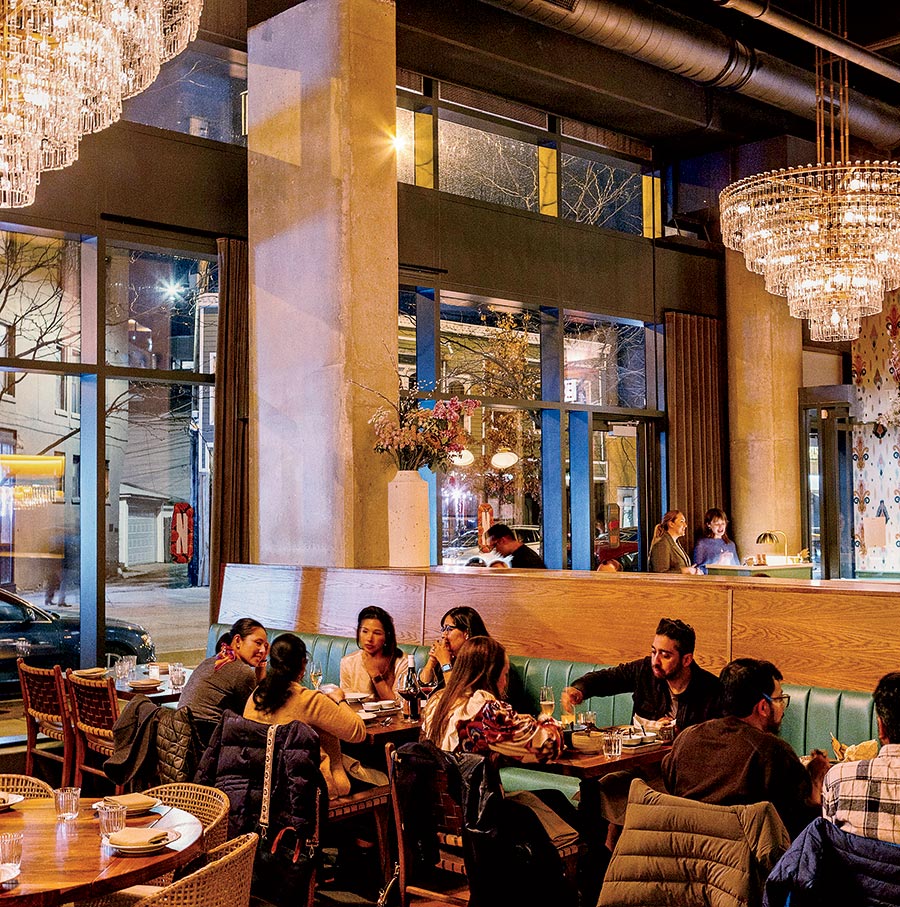
Occupying a large, boxy storefront, Nadu enlivens its space with plenty of colorful art, notably a massive surrealist painting by Abhay Sehgal. Titled Chicago Durbar, it depicts the city’s landmarks and culture in an Indian royal court with maharajas, the Chicago Theatre, and Air Jordans.
The menu, though, lives firmly in India, each dish identified by its place of origin. Dahi bhalla — soft lentil dumplings soaked in yogurt and layered with chutneys, pomegranate arils, and potato sticks — are a street snack from Delhi’s Chandni Chowk market. Tangra chile fish, an Indo-Chinese dish from Kolkata, is a sweet and spicy stir-fry of barramundi, onions, and peppers. Both are transportive.
Sahu’s benne masala dosa, a dish from Bangalore, is the must-order. You may know the thin, crisp Chennai style of dosa; this one is cracker-crisp on the surface but fluffy-soft on the inside thanks to the addition of poha rice flakes to the batter. Filled with soft potato mash, topped with butter, and sided by two chutneys, it’s a marvel of texture.
What do we drink with all these competing dishes? The sweet cocktails certainly add their pop sitar twang to the cacophony. Haldi, a tall and fizzy concoction of gin, turmeric, and passionfruit, goes down easily, while the mezcal-apricot-ginger Khubani evokes a Naked and Famous, though it may leave you hankering for the OG. My pick would be a glass of Domaine du Salvard Cheverny Blanc, a high-acid white wine that weaves through the big flavors with ease.
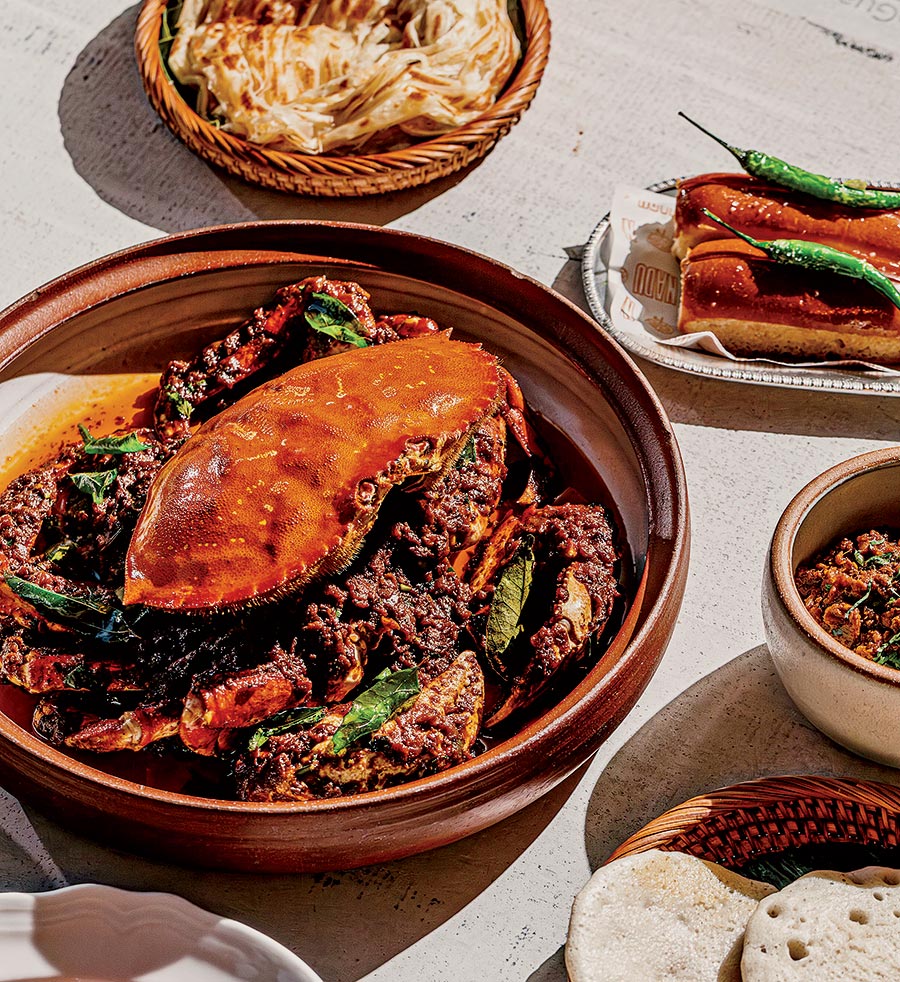
The full-throttle South Indian dishes are the stars on this menu. Kerala beef roast belies the tender, fall-apart texture of long-cooked short ribs with a depth-charged base of black pepper and red chile. Also from Kerala comes crab milagu fry. This dish costs $135 and must be ordered 48 hours in advance, but it’s 100 percent worth it. The crab arrives hacked into pieces and dripping in a ruddy gravy layered with garlic, peppercorn, and fragrant spices. You don latex gloves, rip and crack away, and swipe springy kallappam flatbreads through the sauce.
Maybe it’s the contrast, but the milder dishes here can be downright dull. The mixed vegetables simmered in coconut milk (pachakari ishtew) has no dimension, just creaminess. Dal makhani has a pasty texture and no acid for the cream and butter to play off. The Delhi-style curry murgh makhani (also known as butter chicken) fares better, with sharpness from tomato and an herbal top note from fenugreek leaf.
Nadu also offers a four-course prix fixe — a good option if you’re dining alone. Mine was marred by a half-raw piece of banana-leaf-wrapped grilled fish (meen pollichathu), but such errors are rare. The menu includes dessert, not this restaurant’s strong suit. Tutti-frutti cassata, a layered sponge cake, tastes like something from a hotel banquet. Payasam (a kind of South Indian pudding) is rendered here as a springy, flavorless flan. Maybe revisit the cocktails instead for the end of the meal.
After talking through the menu with Sahu, I had a better sense of how much effort and research went into its development, and the conversation deepened my appreciation of the three meals I had. If the servers spoke half as eloquently about the food, it would add so much to the experience. But they’ve got a lot of tables to attend to and a lot of folks waiting in the vestibule to be seated. I look forward to the day when the hot-new-restaurant vibe wears off, and Nadu settles into being the great Indian restaurant this city deserves.