


You might think the entire course of human history, beginning in 1 million BC and extending into the future, would be much too big a story to tell in a 10-course tasting menu. Yet here we are.
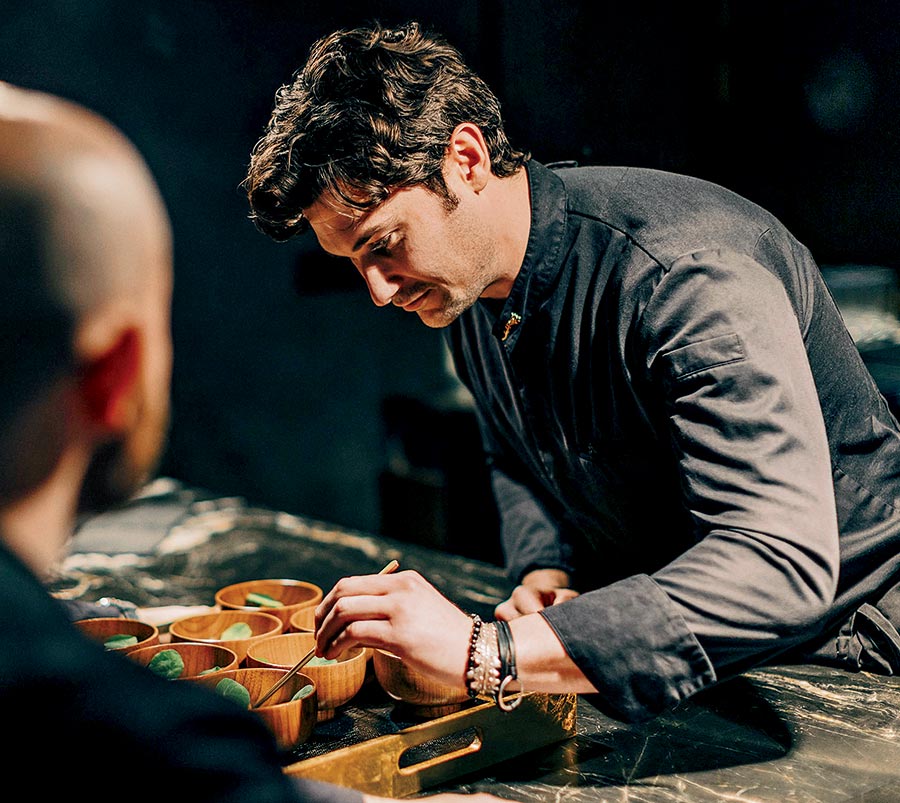
The 30-year-old chef Nicolai Mlodinow has set sail on this quest with “Evolution,” the sophomore menu for his seven-month-old Bucktown restaurant Class Act. (The first, “Growing Up,” was inspired by his L.A. childhood.) Small groups gather to listen to speeches about the ascent of humans from our earliest days as hunter-gatherers through the discovery of fire, the rise of agriculture, and beyond. Each era comes with a dish — a bowl of lentils, say, or a mushroom sandwich — to be consumed before hurtling forward in the time machine once again. Suffice it to say, there’s nothing else like this in Chicago.
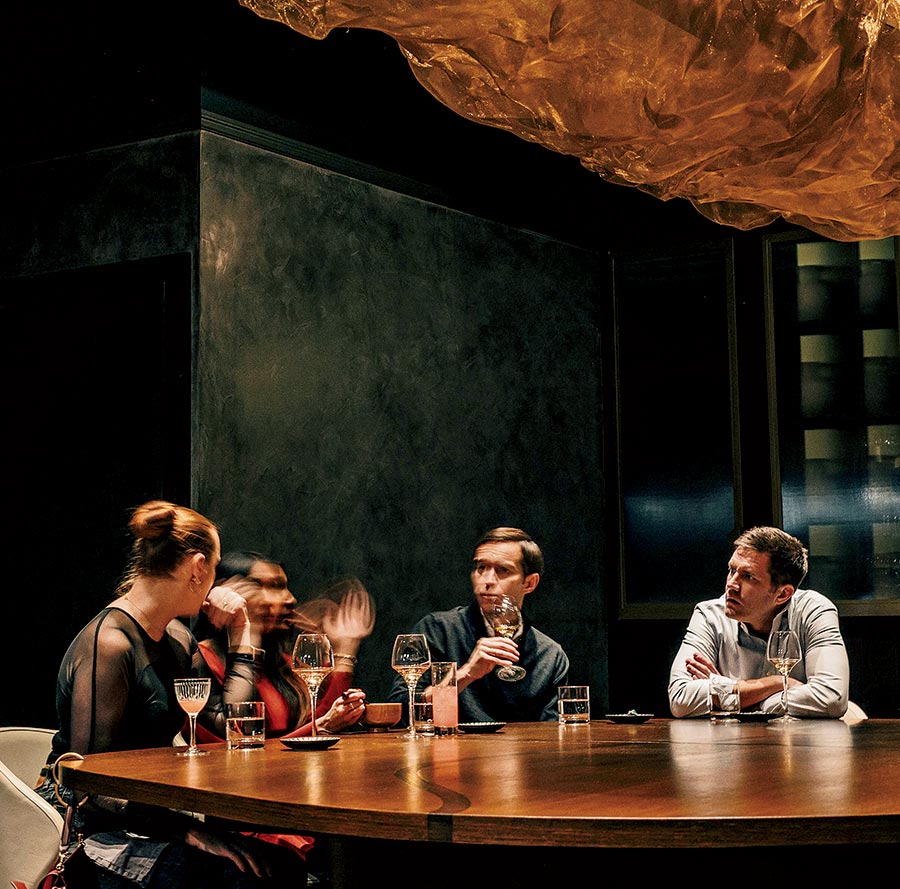
For a diner, the experience is akin to attending a themed dinner party where you don’t know anyone. You start in a small vestibule with cocktails and canapés as you contemplate the dawn of prehistory. Doors slide open to reveal the dining room and kitchen, as well as Mlodinow in his black chef’s coat, framed in the portal like David Copperfield onstage at the MGM Grand. After gathering around one table, you continue your journey through the millennia. Along the way, flames leap from the kitchen, pours of broth scent the room, liquid nitrogen billows smoke. After dessert, you follow the staff to the speakeasy bar, Nightcap, for a round of shots with your new posse.

It’s pure hokum. But it’s also kind of fun to meet people and engage in a novel group activity, like you’re at one of those pottery-painting studios. Unfortunately, the food ranges from cute to dismal. Mlodinow, a self-taught chef who has staged at many of Chicago’s tasting-menu palaces, does not in my experience cook with the skill this restaurant demands. Raw, untempered spices scream from some dishes; others, such as gummy Cantonese dumplings and damp, dense focaccia, seem like a second attempt at a home-cooking project. Nor does the $212 menu buy much in the way of premium ingredients: Three dishes feature chicken, and three are vegetarian.
If you’re feeling game, though, Class Act has its charms. I attribute much to head waiter and emcee Matthew Didier, who narrates the meal with good-natured zeal and manages to sell lines like “When we were hunter-gatherers, we just ran around eating raw things all the time” as he offers beef tartare decorated with microgreens. “Me Zorg,” I think. “Tiny leaf make food pretty.”
Lifting a glass cloche filled with grilled beef skewers wallowing in smoke, Didier announces, “Have a bite to celebrate fire cooking in 780,000 BC!” These slips of smoky wagyu picanha come in a tasty honey-raspberry glaze. Mlodinow later tells me that his chefs wanted to refine the sauce by pressing it through a chinois, a fine-mesh strainer, but he was compelled to stop them, saying, “They didn’t have chinois in 780,000 BC.” Good call: One must stay true to Paleolithic sauce-finishing practices.
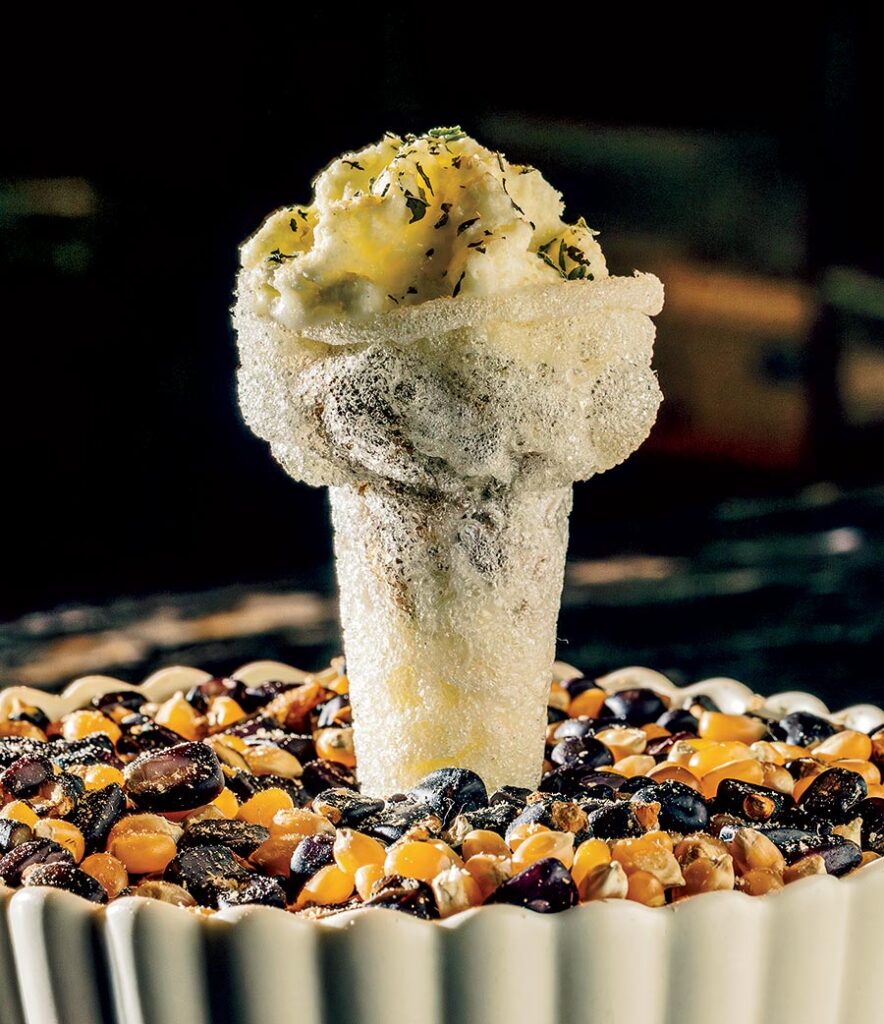
After these bites, we settle in at the table. We eat monkfish in strong-smelling broth to welcome the invention of vessels and munch crunchy lentils in curried coconut sludge because we’ve learned to farm. (My dining companion eats just enough of the latter to not appear rude.)
Everyone pays rapt attention as Didier clinks a glass to announce the next burst of cheerful hoo-ha: “Around 6000 BC, someone left the porridge outside, and then someone else came over and said, ‘Maybe I should put this in the oven.’ We have bread.”
Someone also left the milk outside, thankfully, so there is Délice de Bourgogne and Red Dragon, a Welsh mustard seed cheddar. I enjoy this course, particularly with the brilliant wine that sommelier Jonas Bittencourt poured, a still Champagne from Domaine Les Monts Fournois, the kind of rare bottle you hardly ever see offered by the glass. Bittencourt, previously of John’s Food & Wine and Asador Bastian, is one of the best wine communicators in Chicago dining today. On my first visit to Class Act, I indulged in Bittencourt’s $135 pairing. Called “Ancestry of Amphora,” it explores how vessels of clay, concrete, oak, and stainless steel affect the wine: fun, educational, delicious. This time I want to linger over the Champagne and leave my footprints in the sands of time right here, eating nice cheese, drinking good wine.
Alas, the age of noodles (4000 BC) beckons. Mlodinow and company bring out Chinese steamer baskets — chicken noodles, chicken dumplings, a flabby rice paper roll oozing raw tuna — and have us consider this seminal culinary development. “Here’s something to discuss,” the chef proffers. “Do you think a dumpling is a noodle?” “Huh,” we all go.
The menu leaps from the Bronze Age to the Industrial Revolution, skipping over the usual signposts of food history. No spice routes, no New World explorers. We do, however, get an Uncrustable filled with mushroom barbacoa as well as a disquisition on the Earl of Sandwich. The whimsy continues with a tasty dessert of housemade Dippin’ Dots and freeze-dried ants, as well as a milkshake that combines hazelnuts, cucumbers, and Kaluga caviar into thick, creamy punishment.
By the time we get to those shots in the back bar, we’ve had enough. I can’t remember what they were apart from being sweet and alcoholic, for which I was grateful. Our group bonded over experiencing — enduring? — all this together; we agreed the food was “Interesting!” We left through a side door, clutching paper bags holding vegan chicken sandwiches on spongy rolls that represent the future. It was a cute idea that almost hit the mark. But what I really wanted at that moment was a hot dog from the all-night stand over on Armitage. Hmm. There’s no time like the present.